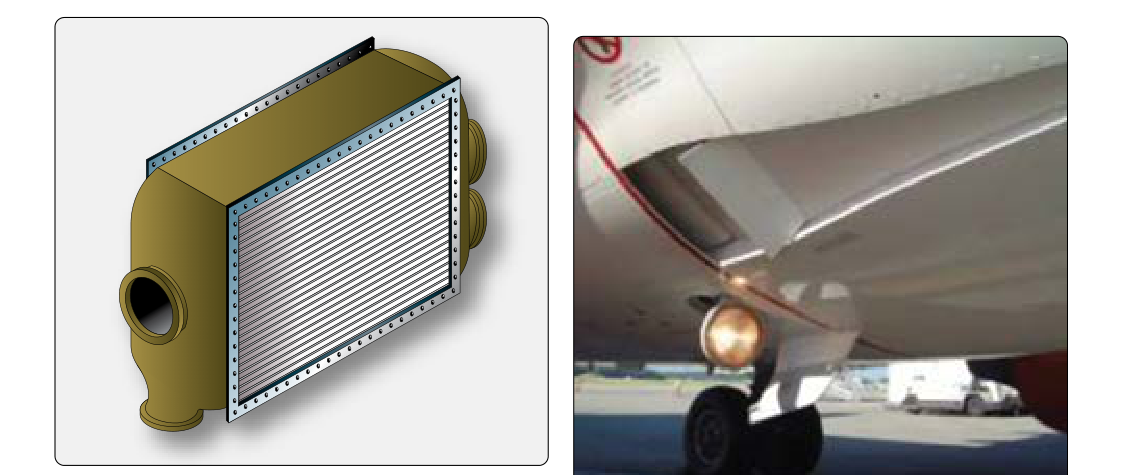
Keeping aircraft occupants warm at altitude is more than a matter of comfort — it is a fundamental airworthiness concern. Prolonged exposure to cold, high-altitude air impairs crew judgment, reduces dexterity, and can be life-threatening. For airframe mechanics and aviation maintenance technicians (AMTs), understanding how cabin heating systems are designed, how they fail, and how to inspect and maintain them is a core competency tested on the FAA Airframe Knowledge Exam and evaluated during practical tests.
Two primary technologies dominate general aviation and small transport aircraft: the combustion heater, used widely in piston-powered aircraft, and the bleed-air heat exchanger, standard on turbine-powered aircraft. Each has a fundamentally different operating principle, and each carries its own set of inspection requirements and failure modes. This article covers both in depth.
Combustion Heaters: How They Work
A combustion heater is essentially a small, self-contained furnace mounted in the aircraft — most commonly in the nose section, wing, or an unpressurized fuselage bay. It burns aviation gasoline or a dedicated fuel supply drawn from the aircraft's fuel system. The key design principle is that the combustion gases never mix with the cabin air. Instead, two separate airflow paths run through the heater:
- Combustion air circuit: Outside ram air enters the heater, supports combustion inside a sealed combustion chamber, and is then exhausted overboard through a dedicated exhaust tube.
- Ventilation air circuit: A separate stream of outside air (or in some designs, recirculated cabin air) passes over the outside of the combustion chamber, picks up heat by conduction through the chamber walls, and then flows into the cabin.
The combustion chamber itself is typically a steel or stainless-steel tube or canister. A spark igniter or glow plug initiates combustion. Fuel is metered through a solenoid-controlled valve, which is wired so that fuel cannot flow unless the blower motor is running — a basic safety interlock ensuring airflow is always present before heat is introduced.
Combustion Heater Controls and Safety Switches
Because a combustion heater is an open-flame device installed inside an aircraft, the design must include multiple safety interlocks. Standard features include:
- Overheat switch: A thermal sensor mounted on or near the combustion chamber. If the chamber temperature exceeds a safe limit (because airflow has been lost or fuel metering has malfunctioned), this switch cuts fuel flow automatically and may illuminate a cockpit warning light.
- Fuel-shutoff valve: Electrically operated, normally closed. Opens only when the blower fan is confirmed running, preventing fuel from pooling in a non-operating heater.
- Ventilating air blower: A motor-driven fan that ensures steady airflow over the combustion chamber. Loss of this blower must trigger an automatic fuel cutoff.
- Duct limit switch: Some designs include a secondary thermal switch in the outlet duct that shuts the system down if discharge air is too hot.
The Critical Danger: Combustion Heater Exhaust Leaks
The most serious threat posed by a combustion heater is a crack or perforation in the combustion chamber or exhaust system. If combustion gases — which contain carbon monoxide (CO) — leak into the ventilating air path, those gases will be delivered directly into the cabin. Carbon monoxide is colorless, odorless, and lethal at relatively low concentrations. Pilots and passengers may lose consciousness with no warning other than headache or dizziness, which are easily attributed to other causes.
This is why combustion heaters must receive a thorough inspection of their components as part of each annual or 100-hour inspection, consistent with the general scope items for powerplant and related systems required under 14 CFR Part 43 Appendix D. The combustion chamber must be checked for cracks, pinholes, and corrosion. The standard inspection method is a pressure test: the combustion air inlet and exhaust outlet are sealed and the chamber is pressurized with low-pressure air (typically 1–2 psi) while the inspector listens and feels for leaks around seams and welds, or applies a soap solution to detect escaping air. Any leakage condemns the combustion chamber — it must be repaired by the manufacturer or replaced. AMTs must consult the applicable aircraft maintenance manual and the heater manufacturer's overhaul manual for specific pressure values and procedures.
Exhaust tubes must also be inspected for security of attachment, cracks, chafing against structure, and separation at joints. A loose exhaust connection inside a wing or fuselage cavity can allow CO to migrate toward the cabin even if the combustion chamber itself is sound.
Bleed-Air Heat Exchangers: How They Work
Turbine-powered aircraft — including turboprops and jets — use a fundamentally different approach. Compressor bleed air is tapped from one or more stages of the engine's compressor section. This air is already hot and pressurized; the challenge is usually cooling it down and regulating it rather than heating it further, though in cold conditions it provides ample heat directly.
In a bleed-air heating system, hot compressor air is routed through a heat exchanger — a device that transfers thermal energy between two airstreams without mixing them. In its simplest form relevant to heating, bleed air passes through a series of tubes or channels while ram air (or fan-driven air) passes over those same passages in a cross-flow or counter-flow arrangement, cooling the bleed air to a comfortable cabin temperature. A temperature control valve (sometimes called a modulating valve or temperature control unit) mixes hot bleed air with cooler bypassed air to achieve the desired discharge temperature.
In pressurized aircraft, this bleed air also serves as the primary source of pressurization. The pneumatic system, the air-conditioning pack (which uses a bootstrap refrigeration cycle for cooling in warm conditions), and the heating function are all fed from the same bleed-air supply. AMTs maintaining these integrated systems must understand how the air-conditioning pack, heat exchangers, and flow control valves interact as a system.
Heat Exchanger Types and Configurations
Several heat exchanger configurations appear in aircraft systems:
- Primary heat exchanger: Cools the very hot initial bleed air using ram air drawn through a dedicated duct, often in the wing root or fuselage belly. This is the first stage of cooling.
- Secondary (or reheater) heat exchanger: Used in air-cycle machine (ACM) refrigeration systems; it performs additional cooling after the air-cycle turbine stage.
- Inline duct heaters: On some regional turboprops, a simpler arrangement routes bleed air directly into a mixing manifold where it blends with recirculated or ram cabin air.
Inspection and Maintenance of Bleed-Air Systems
Bleed-air systems operate at high temperatures and pressures, making duct integrity a top priority. Key AMT inspection tasks include:
- Inspecting all bleed-air ducting for cracks, delamination (in composite ducts), and chafing against airframe structure or wiring bundles. Even small cracks in hot-air ducts can cause structural damage to surrounding structure through localized heating.
- Checking duct clamp torque values and seal condition at each duct coupling per the maintenance manual.
- Verifying operation of the flow control and shutoff valves, including confirming that bleed-air isolation valves close promptly on command — critical for engine fire containment.
- Functionally testing overheat detection systems in the bleed-air ducts, which typically use continuous-loop sensing elements routed alongside hot-air ducting.
- Inspecting heat exchanger cores for blockage, corrosion, and physical damage. Blocked ram-air inlets reduce heat exchanger efficiency, causing overtemperature conditions downstream.
Why These Systems Matter for Airworthiness
Both heating system types are directly linked to continued airworthiness. A failed combustion heater that leaks CO has caused fatal accidents. Leaking bleed-air ducts have started in-flight fires and caused structural damage. These are not abstract risks. The FAA requires that all heating system components be maintained in accordance with the aircraft's Type Certificate Data Sheet (TCDS), the approved Airplane Flight Manual (AFM), and the manufacturer's maintenance and overhaul manuals. When a component lacks an overhaul time limit in the ICA (Instructions for Continued Airworthiness), the AMT must still apply airworthiness judgment — condition-monitoring alone is not a justification to ignore obvious deterioration.
Key Numbers and Rules
- Combustion chamber pressure tests are typically performed at 1–2 psi; exact values come from the specific heater manufacturer's manual.
- Any crack, pinhole, or measurable leakage in the combustion chamber is cause for removal from service — no field repair without manufacturer approval.
- Bleed-air duct temperatures commonly exceed 400°F (204°C), and can run substantially higher — often 450–500°F or more depending on compressor stage and engine power setting — requiring high-temperature seals and insulation blankets.
- Overheat detector systems in bleed-air ducts must be functionally tested at intervals specified in the applicable maintenance manual or approved maintenance program, which vary by aircraft and are not tied to a single universal check interval.
- Carbon monoxide detector cards or electronic CO detectors are often required or recommended per aircraft AFM supplements — the AMT should verify serviceability during inspection.
Common Test Traps
- Mixing the two airflows in a combustion heater: A frequent exam distractor suggests that combustion gases heat the cabin air directly. They do not — the two airstreams are always physically separated. Only heat is transferred through the chamber walls.
- Assuming a cracked combustion chamber is a minor defect: Any leakage in the combustion chamber is an immediate airworthiness concern. There is no minimum acceptable crack size — the system must be taken out of service.
- Confusing the overheat switch function: The overheat switch cuts fuel flow; it does not cut blower power. The blower continues to run to cool the chamber after shutdown.
- Bleed air and cabin air mixing in a heat exchanger: In a properly functioning heat exchanger, bleed air and cabin/ram air do NOT mix — heat is transferred across the exchanger walls. A cracked heat exchanger core can allow contamination, however, which is why core integrity inspection is essential.
- Ignoring duct chafing: AMT candidates sometimes focus only on valves and heater cores. Chafed ducts are a leading cause of bleed-air duct failures and must receive the same attention as major components.