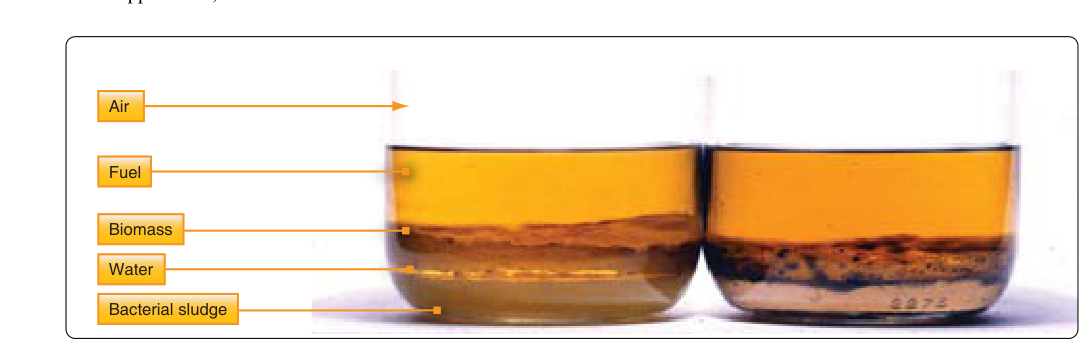
Water contamination in aviation fuel is one of the most insidious threats to aircraft safety. Unlike a mechanical failure that may give visible warning signs, a fuel system saturated with water can cause an engine to quit with almost no prior indication — and it can happen to any aircraft, from a single-engine trainer to a turbine-powered transport. For the Aviation Maintenance Technician (AMT) working on airframe systems, understanding how water gets into fuel, how to find it, and how to keep it out is not merely an exam topic — it is a fundamental duty of care to every passenger and crew member who depends on that aircraft.
This article covers the full picture: the physics of water in aviation fuel, the points of entry, practical detection methods, and the maintenance procedures that prevent water from becoming a fatal contaminant. Every concept is grounded in FAA guidance applicable to airframe certification and the AMT knowledge test.
How Water Gets Into Aviation Fuel
Water enters aviation fuel through several distinct pathways, and recognizing each one is the first step toward controlling contamination.
Condensation
The most common and most misunderstood source of water is simple condensation. Fuel tanks are rarely completely full; the airspace above the fuel — called the ullage — contains moist ambient air. As temperatures drop overnight or at altitude, that moisture condenses on the cool interior metal surfaces of the tank and drips directly into the fuel. Partially filled tanks have more ullage and therefore more potential for condensation. This is why topping off tanks after flight — particularly in humid climates or when an aircraft will sit overnight — is a standard and widely recommended practice. More fuel in the tank means less ullage and less surface area exposed to moist air.
Refueling Operations
Contaminated fuel can be introduced directly during refueling. Water can be present in fuel truck tanks, underground storage tanks, or transport containers. Bulk fuel storage tanks that are not properly sump-drained and maintained are a well-known source. The FAA and fuel quality guidelines require that fuel-delivery equipment be regularly inspected and sumped. An AMT should be aware that the fuel arriving in the aircraft tank is only as clean as the entire upstream supply chain.
Seals, Caps, and Structural Leaks
Worn or improperly installed fuel filler caps allow rain and wash water to enter tanks directly. A damaged O-ring on a filler cap can admit a surprising amount of water during a rainstorm or even during aircraft washing. Similarly, cracked or deteriorated fuel tank bladders and sealant can create pathways for moisture infiltration in wet-wing or bladder-type tank configurations. Inspecting filler caps, their sealing surfaces, and surrounding tank structure is a critical part of any fuel system inspection.
Water in Dissolved and Free Forms
Water exists in aviation fuel in two states that behave very differently. Dissolved water is water held within the fuel itself at the molecular level — fuel can hold a small amount in solution, and this dissolved water is not immediately harmful, though it can drop out of solution as temperatures fall. Free water is water that has separated from the fuel and exists as droplets or a distinct layer, typically settling to the lowest point of the tank or fuel line because water is denser than aviation fuel (both AVGAS and Jet-A). Free water is the dangerous form: it can flow directly into fuel lines, carburetors, or fuel controls and cause immediate engine stoppage.
Detection Methods
Detecting water contamination is a multi-layered process that happens at the maintenance level, the preflight level, and at the fuel supply chain level.
Sumping — The Primary Detection Tool
Sumping is the process of draining a small amount of fuel from the lowest points in the fuel system using quick-drain valves called sump drains or fuel drains. Because free water is heavier than fuel, it settles to the lowest accessible point. By opening each sump drain and collecting fuel into a clear sampler container, the technician or pilot can visually inspect the sample for the presence of water.
Water in AVGAS (100LL) is relatively easy to see: free water typically appears as clear or slightly opaque droplets or beads that sink to the bottom of the sampling cup, usually separated from the blue-dyed fuel — though in a small sample the droplets may appear as beads within the fuel rather than a fully distinct layer. If the entire sample is cloudy or hazy, that cloudiness indicates water dispersed throughout the fuel — also a contaminated sample that must be addressed before flight. Jet-A fuel is clear to straw-colored, and water contamination similarly appears as a distinct clear layer at the bottom of the sample or as haziness throughout.
Sumping should be performed at every sump drain point the aircraft has — wing tip drains, main sump drains, header tank drains, gascolator or fuel strainer drains, and any other low point identified in the aircraft's maintenance manual. A sample that shows contamination at one drain but not others can help isolate the source.
Water-Detection Paste and Capsules
A traditional field method uses a water-finding paste applied to the end of a dipstick or measuring stick. The paste changes color — typically from a neutral color to a bright pink or red — when it contacts free water. This method is particularly useful when checking the bottoms of fuel storage tanks and bulk fuel containers. While not a substitute for sumping, it provides a quick indication of whether water is present at the bottom of a tank before drawing a sample.
Electronic and Chemical Water Detectors
Modern fuel quality testing can include electronic water-detection devices that provide quantitative readings of water content in parts per million (ppm). These are more commonly used in commercial fueling operations and by FBOs managing large fuel inventories than by individual AMTs on line aircraft, but awareness of their existence is part of a complete understanding of the fuel quality assurance system.
Prevention Procedures
Detection is reactive; prevention is the preferred strategy. AMTs can implement and verify several practices that minimize water contamination risk.
- Top off tanks after flight: Filling tanks to capacity reduces ullage volume and the condensation it enables — especially important when an aircraft will sit overnight or in humid conditions.
- Inspect and replace filler caps and seals: Worn O-rings, cracked cap bodies, or improperly seated caps are a direct pathway for rain and wash water. Cap condition should be verified at every inspection.
- Inspect fuel cap screens and vents: Clogged vent lines can cause vacuum conditions in tanks that draw in moisture; clear vents are part of the contamination prevention system.
- Verify fuel storage tank integrity: When fuel is received from a bulk source, that source's tank must be properly maintained and sumped before fuel is dispensed. AMTs who manage facility fueling operations bear responsibility for the entire supply chain.
- Inspect bladder tanks and sealant: Wet-wing integral tanks rely on sealant that degrades over time. Bladder tanks can develop porosity or seam failures. Regular inspection for leaks and deterioration catches water entry points before they become hazards.
- Perform fuel system inspections per maintenance manual: Aircraft manufacturers specify inspection intervals and procedures for fuel system components including filters, strainers, and sumps. Following these intervals ensures systematic detection.
Key Numbers and Rules
- Free water settles to the lowest point of the fuel system because water is denser than both AVGAS and Jet-A fuel.
- AVGAS 100LL is dyed blue; Jet-A is clear to straw-colored. Color alone does not confirm the absence of water — visual clarity and the absence of a separate water layer in a sump sample are the key indicators.
- Contamination found in a sump sample means the aircraft is not airworthy until the source is identified, the fuel system is drained and flushed as necessary, and clean uncontaminated fuel is confirmed by repeated sumping.
- All sump drain points specified in the aircraft's Pilot's Operating Handbook (POH) and, for maintenance-level draining, the manufacturer's maintenance manual must be sampled — sampling only one or two drains is not sufficient.
- Water-finding paste changes to pink or red in contact with free water — but a negative result does not guarantee the absence of dissolved water that may later drop out of solution.
- 14 CFR Part 43 governs maintenance, preventive maintenance, and alteration requirements. Fuel system inspections and repairs fall under these regulations, and all work must be properly documented in aircraft maintenance records.
Why It Matters for AMTs
From a regulatory and safety perspective, an AMT who releases an aircraft to service with known or unresolved fuel contamination has violated the standard for return to service. Under 14 CFR 43.13(a)-(b), maintenance must be performed using methods that ensure the aircraft is returned to a condition at least equal to its original or properly altered condition, meeting its type design and being in a condition for safe operation, per the airworthiness requirement of 14 CFR 91.7. A water-contaminated fuel system fails that standard entirely. The consequences range from certificate action against the AMT to — in the worst case — a fatal accident.
The AMT's role extends beyond the maintenance hangar. Educating pilots and line personnel about the importance of thorough sumping, proper cap installation, and topping off tanks is part of the safety culture that prevents accidents before they happen. The FAA's Aviation Maintenance Technician Handbook – Airframe (FAA-H-8083-31) and related airframe resources emphasize that fuel system integrity is a cornerstone of overall aircraft airworthiness.
Common Test Traps
- Assuming only one sump drain is enough: Test questions may describe a scenario where sumping is done at only one location. The correct answer always involves sumping at every designated drain point, because water can be isolated in one section of the fuel system.
- Confusing dissolved water with free water: A hazy or cloudy sample indicates dissolved or emulsified water and is also a contaminated sample — students sometimes think only visible droplets at the bottom count as contamination.
- Misidentifying fuel color as a water check: The blue color of 100LL confirms fuel grade, not cleanliness. Water contamination does not change the blue color of AVGAS in a way that is obvious until you see the separate water layer in a clear cup.
- Forgetting to sump after refueling: Even fresh fuel delivered from a truck can contain water. Sumping should always be performed after any fueling event, not just at preflight.
- Overlooking filler cap condition: Test scenarios about repeated water contamination despite proper sumping are a clue to look at the source — a faulty filler cap seal is a classic root cause that AMT candidates must recognize.