Every drop of aviation fuel that reaches an aircraft engine must pass through a series of filtration devices designed to catch water, sediment, and particulate matter before they can cause engine roughness, fuel starvation, or catastrophic failure. For the Airframe AMT candidate, understanding the purpose, construction, location, and inspection of fuel filters, strainers, and sediment bowls is both a practical necessity and a heavily tested knowledge area. These components are deceptively simple in appearance but absolutely vital in function — and their maintenance directly affects flight safety.
This article walks through the complete subject: how each device works, where it sits in the fuel system, what a thorough inspection looks like, what regulations govern the maintenance, and what examiners typically try to trick students on.
The Fuel Contamination Problem
Aviation fuel is handled dozens of times between the refinery and the aircraft — transported in tankers, stored in underground or above-ground tanks, pumped through hoses, and transferred into the aircraft's own tanks. At every handoff, the opportunity for contamination exists. The most dangerous contaminants are water (which can freeze fuel lines or cause engine flameout), dirt and rust particles (which can clog metering jets or damage fuel pumps), and microbial growth (which produces sludge that clogs filters rapidly). Aircraft fuel systems are designed with multiple filtration stages specifically because no single filter can be counted on to catch everything under all conditions.
Types of Filtration Devices and How They Work
Fuel Strainers (Main Strainers)
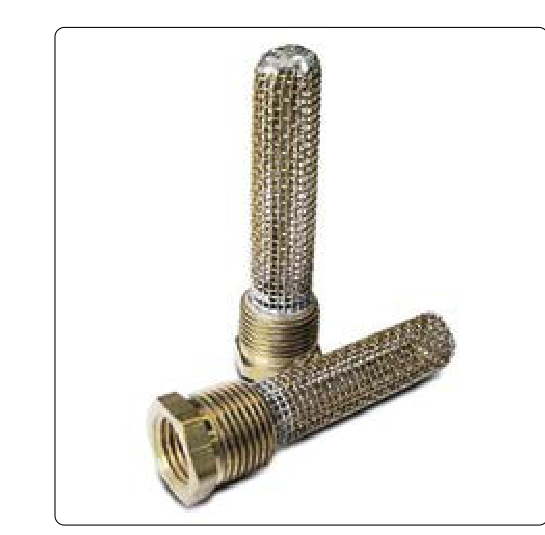
The main fuel strainer — often called the gascolator or main line strainer — is typically located at the lowest point of the fuel system, between the fuel selector valve and the engine-driven fuel pump. Its position at a low point is deliberate: water and sediment, being denser than aviation fuel, naturally settle downward and collect here. The strainer consists of a metal bowl (the sediment bowl) topped by a fine-mesh screen element, usually made of stainless steel mesh sized to trap sediment and water droplets while allowing adequate fuel flow; exact mesh sizing is specified by the aircraft and component manufacturer rather than a single universal figure. Fuel flows through the screen, which traps particles, then into the carburetor or fuel control unit. The bowl collects anything that settles out of the fuel before it reaches the screen.
The bowl is typically transparent or translucent (in older designs using glass or clear plastic) so that water and contamination can be visually detected without disassembly. Many modern strainers use an opaque metal bowl, requiring actual draining to inspect contents. A drain valve at the bottom of the bowl allows the technician or pilot to drain a sample — a procedure that is part of every preflight inspection and is required by most POH/AFM checklists.
Inline Fuel Filters
In addition to the main strainer, aircraft fuel systems may incorporate one or more inline filters. These are found between the engine-driven pump and the fuel control or carburetor, and sometimes between the boost pump and the engine-driven pump. Inline filters typically use a pleated paper or sintered metal element sized to protect fuel-injected engines, where fuel nozzle orifices are extremely small and very susceptible to blockage; specific filtration ratings vary by manufacturer and are found in the engine or airframe maintenance manual rather than a single standard figure. Turbine engine fuel systems likewise use filters sized to protect the precision components of the fuel control unit, with exact micron ratings specified by the engine or aircraft manufacturer. The filter housing usually incorporates a bypass valve — a spring-loaded check valve that opens if the filter element becomes severely clogged, allowing fuel to flow unfiltered rather than starving the engine. A differential pressure indicator (sometimes called a pop-out button or impending bypass indicator) warns maintenance personnel that the filter is approaching its bypass threshold and needs immediate service.
Sediment Bowls
The sediment bowl is the transparent or metal collection chamber at the bottom of the main strainer assembly. It serves a dual purpose: it provides a collection reservoir for water and sediment that separates from the fuel, and it provides the inspection point for detecting contamination. During a thorough inspection, the technician drains a quantity of fuel from the bowl into a clear container and examines it closely. The presence of water shows up as a distinct layer — water is heavier than avgas and will appear below the fuel, which is tinted according to its grade under current ASTM D910 dye-color standards (for example, 100LL avgas is dyed blue); technicians should always verify the current dye color for the specific fuel grade in use rather than assume older color conventions. Turbine fuel (Jet-A) is typically clear to straw-colored, making water detection somewhat easier visually, though a water-finding paste is often used for more reliable detection in tanks.
Inspection Procedures in Detail
A thorough filter and strainer inspection during scheduled maintenance goes well beyond simply draining the bowl. The complete procedure includes the following steps:
- Drain and collect a fuel sample. Open the drain valve and collect a substantial sample — a minimum of several ounces — into a clear sampling container. Observe for water (distinct lower layer or beads), sediment (dark granules or rust-colored particles), and any unusual odor or color that might indicate fuel contamination or mixing of fuel types.
- Remove and inspect the screen element. With the bowl drained, remove the screen element. Inspect it visually under good lighting for tears, deformation, or excessive clogging. A clogged or damaged screen must be cleaned or replaced. Stainless steel mesh elements can often be cleaned with approved solvents and compressed air (blowing from the clean side outward to dislodge particles). Paper elements are never cleaned — they are replaced at each inspection interval.
- Inspect the bowl itself. Check the sediment bowl for cracks (especially in glass or plastic bowls), cloudiness, or discoloration that could impair visual inspection capability. Inspect the bowl seating surface and O-ring or gasket groove for damage, nicks, or corrosion. A leaking bowl seal is a serious deficiency that can allow air into the fuel system or cause a fuel leak.
- Inspect the drain valve. The drain valve must operate smoothly, seat fully when closed, and show no signs of fuel weeping when shut. A valve that drips when closed is unairworthy and must be repaired before return to service.
- Check for structural security. The strainer assembly itself must be securely mounted. Vibration loosening in this area can cause fuel leaks or allow unfiltered fuel to bypass the screen.
- Reassemble with new seals. Best practice — and often the manufacturer's requirement — is to install a new O-ring or gasket every time the bowl is removed. Reusing old seals invites leaks. Torque the bowl to the manufacturer's specified value.
- Inspect inline filter differential pressure indicators. After reassembly, check any pop-out impending bypass indicators for the inline filters. A popped indicator means the filter element must be replaced before flight.
Why Filtration Inspection Matters
Water in fuel is the most immediate threat. Even a small quantity of water — less than a teaspoon — entering a carburetor can cause complete engine power loss, especially at low temperatures where water freezes before reaching the engine. In fuel-injected engines, particulate contamination clogs individual nozzles, causing uneven fuel distribution, rough running, and lean conditions on individual cylinders that can lead to detonation. A clogged inline filter that forces fuel through the bypass path sends unfiltered fuel directly into the fuel control unit, where precision tolerances measured in thousandths of an inch can be destroyed by a single small particle.
Statistically, fuel contamination is a recurring factor in general aviation accidents. The FAA and NTSB consistently emphasize that proper preflight draining of strainers and sediment bowls — combined with thorough maintenance-interval inspection — is one of the most effective accident prevention practices available. The cost of a replacement filter element is trivial compared to the cost of an engine overhaul caused by contamination damage.
Regulatory and Handbook Basis
The maintenance requirements for fuel system components are governed by 14 CFR Part 43 (maintenance standards and records), and the aircraft manufacturer's maintenance manual is the authoritative source for inspection intervals, torque values, and approved cleaning agents. Under 14 CFR Part 43, Appendix D, the annual inspection scope includes a general requirement to inspect the fuel system for leaks and security of attachment; this is a broad checklist item rather than a detailed mandate covering filters, strainers, or sediment bowls specifically. Advisory guidance on fuel system design and contamination prevention is provided in the Aviation Maintenance Technician Handbook — Airframe (FAA-H-8083-31), which addresses fuel strainers, filters, and sediment bowls in the fuel systems chapter.
- Inspection intervals for filters vary by aircraft type — always consult the aircraft maintenance manual and applicable Airworthiness Directives (ADs).
- Paper filter elements are time- or condition-limited and are never reused after removal for inspection.
- Stainless steel mesh screens may be cleaned with approved solvents if undamaged, then flow-tested before reinstallation.
- An impending bypass indicator that has popped means the filter element must be replaced before the next flight — this is not a deferred item.
- All maintenance performed must be logged per 14 CFR Part 43.9, with a description of work, date, and technician signature and certificate number.
Common Test Traps
- Confusing the strainer location. The main fuel strainer is at the lowest point of the fuel system — not the highest. Students sometimes confuse its location with other components. Its low position is intentional for water and sediment collection.
- Assuming the bypass means the filter is working. A filter bypass valve opening is NOT a safety feature that protects the engine — it allows unfiltered fuel to reach the engine. It is an emergency provision that prevents complete fuel starvation, but the filter must be replaced immediately.
- Reusing O-rings and gaskets. Reassembling a strainer with the old O-ring is a common maintenance mistake and a frequent test question. Manufacturer guidance almost universally requires new seals on reassembly.
- Confusing cleaning methods by element type. Paper elements are replaced, not cleaned. Metal mesh screens can be cleaned with approved solvents if undamaged. The exam will test this distinction.
- Overlooking the drain valve condition. Students focus on the screen and bowl but forget that a seeping drain valve is an airworthiness deficiency in its own right, not just a nuisance leak.