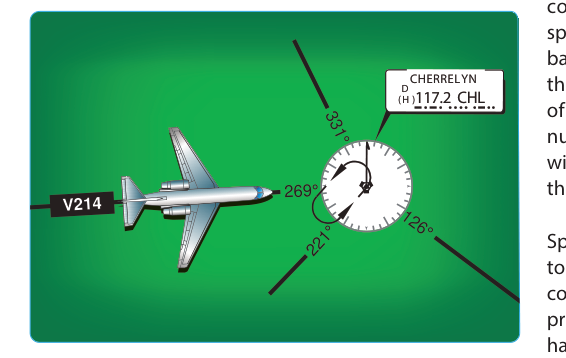
When air traffic control needs to slow the flow of IFR traffic — whether due to weather, runway closures, sequencing, or traffic saturation — pilots receive a holding clearance. Unlike a simple routing amendment, a holding clearance requires the pilot to fly a precisely defined racetrack pattern at a specific location, altitude, and speed until ATC issues a further clearance. Because holding involves flying in a confined block of airspace, often in IMC, every word of the clearance carries operational weight. Misreading or mis-reading-back even one element can place an aircraft outside protected airspace or create a conflict with other traffic.
This article walks through every component of a standard holding clearance, explains the phraseology both ATC and pilots use, covers the read-back requirement, and highlights the common traps that appear on the Instrument Rating knowledge test and in real-world IFR operations.
The Six Components of a Holding Clearance
The FAA's Instrument Flying Handbook (FAA-H-8083-15) and the AIM both specify that a complete holding clearance contains up to six distinct elements. ATC may omit elements that match the published holding pattern at that fix, but pilots must know all six to interpret any clearance correctly.
- Holding fix — The geographic point around which the pattern is flown. This can be a VOR, a named intersection, an NDB, a waypoint, a DME fix, or even a GPS waypoint. Example: "Hold at DUNNE intersection" or "Hold at the KORD 270 radial, 15 DME fix."
- Direction to hold from the fix — Expressed as a cardinal or intercardinal direction (north, northeast, east, etc.). This tells the pilot on which side of the fix the pattern lies. Example: "Hold northeast of DUNNE." The inbound course to the fix always comes from the opposite direction — if you hold northeast, you fly a southwest inbound course.
- Holding course (inbound leg) — Stated as a radial, course, bearing, or airway that defines the inbound track. Example: "On the 270 radial" or "On V-23." This is the track flown toward the fix, not away from it.
- Leg length or time — How long each inbound (or sometimes outbound) leg is. Standard legs are 1 minute at or below 14,000 feet MSL and 1.5 minutes above 14,000 feet MSL. ATC can specify a different leg length in minutes or in nautical miles via DME. If no leg length is stated and no published pattern specifies one, apply the standard.
- Direction of turns — Either right turns (standard) or left turns (non-standard). If ATC says nothing about turn direction, right turns are assumed. Left turns are specifically stated: "Left turns." Published holding patterns always indicate turn direction on the chart.
- Expect Further Clearance (EFC) time — The time at which the pilot can expect to receive a further clearance or routing. The EFC is operationally critical: if radio communication is lost while holding, the pilot uses the EFC time as a trigger to depart the hold and proceed to the destination. ATC should issue an EFC time with every holding clearance per AIM guidance, and pilots should always request one if it is not given.
How the Clearance Sounds in Practice
A fully stated ATC holding clearance might sound like this: "Cessna 4521 Tango, hold northeast of DUNNE intersection on the 252 radial of the ABC VOR, right turns, 5-mile legs, expect further clearance at 1435, maintain 8,000."
Breaking this down: the fix is DUNNE intersection; the direction is northeast; the inbound course is the 252 radial (meaning you track inbound on the 252 radial, i.e., flying toward the VOR from the northeast); turns are right (standard); leg length is 5 miles (DME-based); the EFC is 1435 Zulu; and the altitude is 8,000 feet MSL.
Notice that ATC issued the altitude as a separate instruction. Holding altitude is often embedded in the clearance but is technically a separate clearance element governed by the same IFR altitude rules as any other segment.
Published Versus Non-Published Holding Patterns
Many fixes on instrument approaches and en route charts have published holding patterns depicted with the standard racetrack symbol, including turn direction, inbound course, and sometimes leg length. When ATC clears you to hold at a published pattern and uses the phrase "hold as published," you may omit requesting the full six elements — the chart supplies them. However, if ATC assigns a non-published holding pattern (common during en route delays), all applicable elements must be stated explicitly by ATC and read back by the pilot.
A practical note: even at a published hold, ATC should still issue an Expect Further Clearance time. If they forget, ask for it — your lost-comms procedure depends on it.
The Pilot Read-Back Requirement
Per the AIM, pilots are required to read back holding instructions in their entirety. This isn't optional. ATC uses the read-back to verify that you copied the correct fix, direction, course, altitude, and EFC. A garbled or incorrect read-back gives the controller the opportunity to correct you before you fly the wrong pattern. A correct read-back that ATC acknowledges also establishes a clear record of the clearance in the event of any later dispute or incident review.
The correct read-back sequence mirrors the clearance: fix, direction, inbound course, turn direction, leg length, EFC, and altitude. Many pilots abbreviate, but for the knowledge test and in actual IMC operations, the complete read-back is expected.
Holding Airspeeds
The AIM and FAA-H-8083-15 specify maximum holding airspeeds by altitude to keep the aircraft within the protected holding airspace:
- At or below 6,000 feet MSL: 200 KIAS maximum
- Above 6,000 up to and including 14,000 feet MSL: 230 KIAS maximum
- Above 14,000 feet MSL: 265 KIAS maximum
Turbine aircraft and certain high-performance piston aircraft may have specific holding speed instructions from ATC, which supersede the standard limits. If ATC says "Reduce to holding speed," pilots should comply at or before the holding fix and confirm the appropriate limit for their altitude band. Exceeding holding airspeeds can cause the aircraft to fly outside the protected airspace boundary defined during the charting process.
Why the EFC Time Is Non-Negotiable
The Expect Further Clearance time is not merely a scheduling courtesy. Under 14 CFR 91.185, if an IFR aircraft experiences two-way radio communication failure while holding, the pilot must depart the holding fix at the EFC time (or, if no EFC was received, at the estimated time of arrival over the fix as filed). Without an EFC, the pilot has no regulatory trigger for departing the hold, which could lead to the aircraft remaining in the hold indefinitely or departing at an unpredictable moment — creating an ATC traffic conflict. Always confirm you have an EFC before entering the hold.
Key Numbers and Rules
- Standard holding leg: 1 minute at or below 14,000 feet MSL; 1.5 minutes above 14,000 feet MSL
- Standard turn direction: right turns (unless otherwise specified)
- Maximum holding airspeed below 6,000 feet: 200 KIAS
- Maximum holding airspeed above 6,000 up to 14,000 feet: 230 KIAS
- Maximum holding airspeed above 14,000 feet: 265 KIAS
- EFC time: ATC should provide it with the holding clearance; pilot must read it back and request it if not given
- "Hold as published" is acceptable only if a charted pattern exists at that fix
- Lost comms holding departure: use EFC per 14 CFR 91.185
Memory Aid
A widely used mnemonic for the six components of a holding clearance is "Fix, Direction, Course, Time, Turns, Expect" — sometimes condensed as FDCTTE. While this isn't an official FAA acronym, it maps directly to the six elements: Fix (the holding fix), Direction (from the fix), Course (inbound), Time (leg length), Turns (right or left), Expect (EFC time). Running through these six items as a checklist when writing down the clearance ensures you capture everything before reading back.
Common Test Traps
- Confusing "direction to hold" with inbound course direction. If ATC says "hold east," the inbound course is westbound (toward the fix from the east). Many students draw the racetrack on the wrong side of the fix.
- Assuming right turns when left turns are charted. Published approaches sometimes depict left-turn holding patterns for obstacle clearance. Always check the chart; never assume.
- Forgetting the EFC triggers lost-comms departure. Test questions will ask what the pilot does when comm failure occurs in the hold. The answer is depart at the EFC time per 14 CFR 91.185.
- Applying the wrong standard leg length. Students often use 1 minute at all altitudes. Remember that above 14,000 feet, the standard increases to 1.5 minutes.
- Thinking "hold as published" eliminates the need for an EFC. ATC should still provide an EFC even at published holds. If the question asks what is always required in a holding clearance, EFC is on the list.
Mastering holding clearance components is one of the highest-leverage study areas for the Instrument Rating knowledge test because it combines regulatory knowledge (14 CFR 91.185), AIM phraseology, chart interpretation, and airspace awareness in a single topic. Visualize the racetrack, confirm your six elements, read back completely, and always know your EFC before crossing the holding fix.