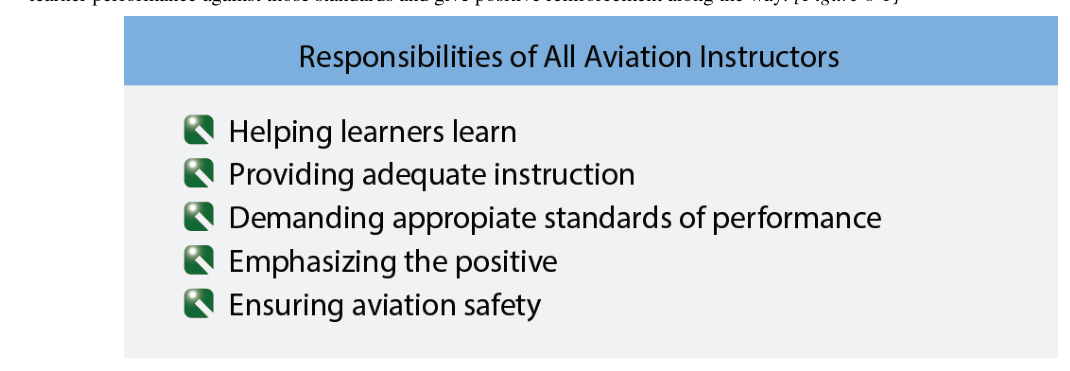
One of the most important—and most overlooked—responsibilities of a flight instructor is managing the emotional and motivational climate of the learning environment. Teaching stick-and-rudder skills is only part of the job. A professional instructor must also recognize when a student is frustrated, stagnating, or losing confidence, and take deliberate action to correct course. The FAA Aviation Instructor's Handbook (FAA-H-8083-9) dedicates significant attention to this topic because a frustrated or plateaued student is not just unhappy—they may be developing unsafe habits or quietly giving up on training altogether.
Frustration in student pilots most commonly arises from a mismatch between expectations and reality. Students often arrive with an idealized picture of how quickly they will master flight. When progress feels slow, or when an instructor consistently points out errors without acknowledging successes, discouragement sets in. The FAA handbook identifies several root causes of frustration: lessons that are too advanced for the student's current level, an instructor who is overly critical or impersonal, physical discomfort (fatigue, illness, or airsickness), and personal problems that distract the student's focus. Stagnation—sometimes called a learning plateau—is a related but distinct problem. A plateau occurs when a student appears to stop making progress despite continued practice. Plateaus are a normal part of skill acquisition, but students who don't understand this can interpret them as evidence that they simply can't learn to fly.
Why it matters
The FAA's Risk Management Handbook (FAA-H-8083-2) and Aviation Instructor's Handbook both emphasize that a student's psychological state directly affects their decision-making and performance in the cockpit. A frustrated student may rush through checklists, become reluctant to ask questions, or mask confusion to avoid appearing incompetent. These behaviors translate into real safety risks, both during training and after certification. An instructor who addresses frustration early is not simply being kind—they are actively managing risk. Professionalism in instructing means treating the development of a confident, thinking pilot as the ultimate goal, not just the accumulation of flight hours toward a checkride.
Practical strategies for instructors
- Set realistic expectations early. Brief students at the outset about the normal shape of the learning curve, including the likelihood of plateaus. When a student knows plateaus are expected, they weather them instead of panicking.
- Use positive feedback deliberately. The FAA handbook stresses that praise must be sincere and specific—pointing out what the student did correctly before addressing errors creates a constructive atmosphere and builds the confidence needed to tackle new challenges.
- Adjust lesson complexity. If a student is struggling, back up to a task they can perform successfully before reintroducing the difficult material. Success breeds motivation. Never pile new maneuvers onto unresolved confusion.
- Vary the lesson content. Monotonous repetition of the same maneuver accelerates plateaus. Introducing a related but different task can re-engage the student's attention and break the stagnation cycle.
- Address personal and physical factors. The IMSAFE checklist (Illness, Medication, Stress, Alcohol, Fatigue, Eating) applies to students as much as to pilots-in-command. An instructor who notices a student seems distracted or unwell should address it directly and, if necessary, reschedule the lesson.
- Maintain instructor professionalism. The FAA handbook is explicit: an instructor's attitude, appearance, and demeanor set the tone for the entire training relationship. Sarcasm, impatience, or inconsistency erodes trust and is incompatible with professional instructing standards.
Memory aid
When evaluating a struggling student, consider these four questions as a practical (not FAA-published) way to organize your thinking: Are expectations misaligned? Is lesson complexity too high? Is the instructor's attitude positive and consistent? Are physical/personal factors present? Working through these four questions gives an instructor a structured way to diagnose and address the source of a student's difficulty.
Common test traps
- Plateaus are NOT signs of failure. FAA test questions may frame a plateau negatively; the correct answer is that plateaus are a normal stage of skill development that instructors should anticipate and explain to students.
- Instructor frustration transfers. A common distractor suggests that showing frustration helps motivate students. The FAA position is the opposite—an impatient instructor actively harms the student's learning environment.
- Praise must be genuine. Empty or exaggerated praise is counterproductive; the handbook specifies that positive feedback must be sincere and tied to specific observed performance.
- Rescheduling is a professional tool, not a failure. Canceling a lesson when a student is clearly fatigued, distracted, or ill is consistent with instructor responsibility—not a sign of weakness or wasted time.