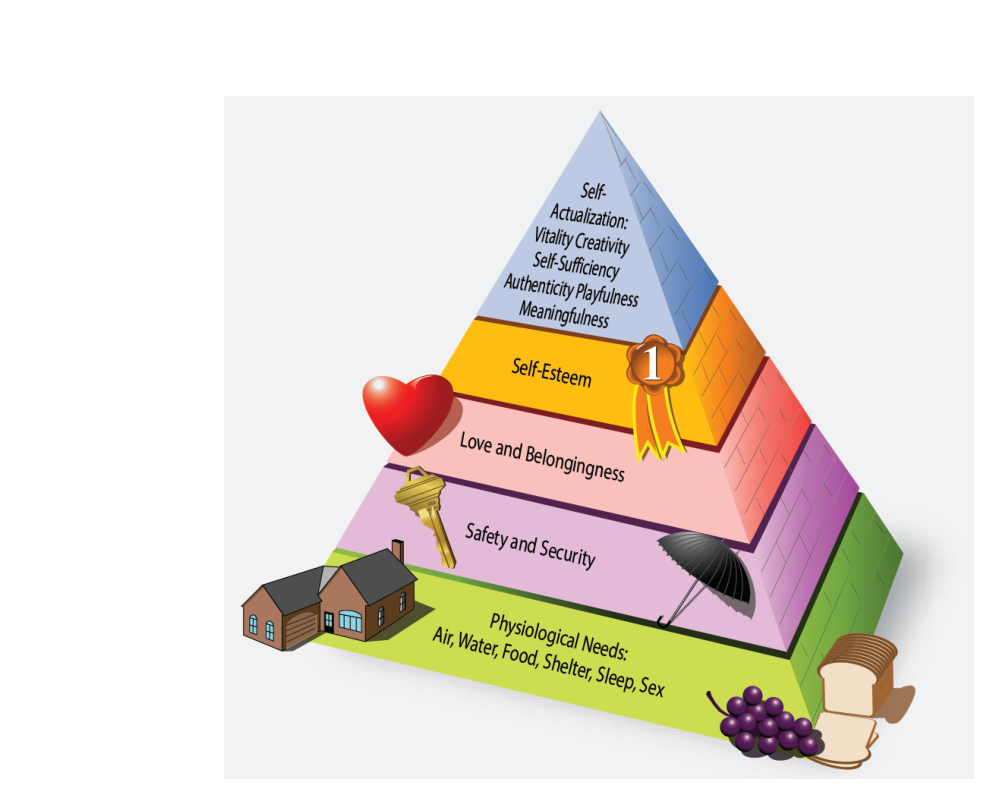
What Is Maslow's Hierarchy of Needs?
Abraham Maslow, a 20th-century psychologist, proposed that human motivation is organized into a tiered structure of needs. The FAA's Aviation Instructor's Handbook (FAA-H-8083-9) incorporates this hierarchy directly into the discussion of the learning process because it explains a fundamental truth about student pilots: a person cannot focus on higher-order goals — like mastering a crosswind landing — if lower-order needs remain unmet. Understanding this framework is not merely academic for a Certificated Flight Instructor (CFI); it is a practical diagnostic tool for recognizing why a student suddenly seems unable to absorb new information or perform skills they demonstrated confidently the day before.
Maslow arranged human needs into five levels, often depicted as a pyramid. From the base upward, they are: physiological needs, safety needs, social or belonging needs, esteem needs, and self-actualization. Lower levels must be reasonably satisfied before a person is motivated to address higher levels. The Aviation Instructor's Handbook presents this model in the context of learning to explain why environmental and emotional conditions in the cockpit directly affect a student's ability to acquire and retain knowledge and skill.
The Five Levels and Their Aviation Significance
Level 1 — Physiological Needs
The foundation of the pyramid consists of the body's basic biological requirements: oxygen, water, food, rest, and comfort. In aviation, this level maps directly to a student's physical condition before and during a lesson. A student who is hypoxic, dehydrated, fatigued, hungry, or physically uncomfortable cannot allocate full cognitive resources to learning. Consider a student who skipped lunch before a two-hour lesson on a hot summer afternoon in an un-air-conditioned trainer: their physiological needs are unmet, and their capacity to learn — and to fly safely — is genuinely compromised.
Practical application: Before every lesson, a competent CFI checks in with the student's physical state. This is also precisely why the FAA endorses the personal checklist concept known as I'M SAFE (Illness, Medication, Stress, Alcohol, Fatigue, Emotion/Eating). Addressing physiological readiness is not a formality — it is the first prerequisite for effective instruction.
Level 2 — Safety Needs
Once physiological needs are met, the individual seeks security and freedom from physical and psychological threat. In flight training, safety needs operate on two dimensions. The first is physical safety: a student who genuinely fears that the aircraft is going to crash, or who perceives the CFI as reckless, cannot move beyond this level. The second, and often more powerful dimension in training, is psychological safety: freedom from humiliation, ridicule, and the fear of failure.
A CFI who openly mocks a student's mistakes, who takes the controls abruptly and without explanation, or who creates an atmosphere of unpredictability is destroying the student's sense of psychological safety. The result is predictable: the student enters a defensive mental state focused on self-protection rather than learning. The Aviation Instructor's Handbook emphasizes that the instructor must create a non-threatening learning environment. Encouragement, honest and respectful critique, and a consistent, calm demeanor are not soft skills — they are prerequisites for learning to occur at all.
Level 3 — Social or Belonging Needs
With physical safety established, humans seek a sense of connection, acceptance, and belonging. In the context of flight training, students want to feel that they are genuinely welcomed into the aviation community — by their CFI, by fellow students at the flight school, and by the broader pilot culture. A student who feels like an outsider, who senses condescension from their instructor, or who is socially isolated in the training environment will struggle to invest fully in the learning process.
For the CFI, this means actively building rapport, showing genuine interest in the student as an individual, introducing the student to other pilots and resources, and celebrating milestones. The solo flight, the first cross-country, and the checkride are not just skill demonstrations — they are rites of passage that anchor the student's sense of belonging to the pilot community.
Level 4 — Esteem Needs
The fourth level involves the individual's need for both self-esteem (confidence, achievement, competence) and recognition from others (respect, status, appreciation). In flight training, this is the level at which most of the motivational work of instruction takes place. Students need to feel competent and to be recognized for their progress. When a CFI acknowledges genuine improvement — even partial mastery — it reinforces esteem and motivates continued effort.
Failure to address esteem needs produces a student who is either falsely compliant (going through the motions without real engagement) or who develops an avoidance relationship with training. Conversely, false praise is equally destructive: it inflates self-esteem without grounding it in real achievement, creating a student who overestimates their own proficiency — a serious safety hazard. The Aviation Instructor's Handbook notes that the goal is honest, specific, and timely feedback that connects the student's efforts to measurable outcomes.
Level 5 — Self-Actualization
The apex of Maslow's pyramid is self-actualization: the realization of one's full potential, the pursuit of personal growth, creativity, and mastery for its own sake. In aviation, this level corresponds to the student who is not simply trying to pass a checkride but is genuinely immersed in becoming the best possible pilot. They seek out additional reading, ask probing questions, voluntarily review maneuvers, and are intrinsically motivated. This is the ideal learning state, and it is only accessible when all lower levels are adequately satisfied.
A CFI's highest aspiration is to guide students to this level — not by pushing them, but by systematically ensuring that all prerequisite needs are met so that authentic mastery motivation can emerge naturally. Self-actualization represents the student working toward their full potential, intrinsically satisfied by the act of learning and mastery itself.
Why This Matters: The Practical Cockpit Implications
Understanding Maslow's hierarchy gives the CFI a structured way to diagnose unexpected performance drops. If a student who has been performing well suddenly seems distracted and unable to retain briefing material, the CFI should mentally run through the hierarchy:
- Physiological: Is the student rested, fed, hydrated, and physically comfortable? Any signs of illness or fatigue?
- Safety: Did a recent rough lesson undermine trust? Is there fear or anxiety about a specific maneuver?
- Belonging: Has something changed in the student's relationship to the school or to the instructor?
- Esteem: Has recent criticism (from a stage check, a family member, or the CFI) damaged the student's self-confidence?
- Self-actualization: Is the student's motivation still connected to a meaningful personal goal?
This diagnostic framework transforms the CFI from a skill-deliverer into a true instructor — someone who understands that the whole person sits in the right seat, not just a set of hands and feet to be trained.
Key Numbers and Rules to Remember
The Aviation Instructor's Handbook does not assign specific percentage values to each level, but it does establish a clear directional rule: lower-level needs must be substantially met before higher-level needs become motivating. There is no hard threshold — a student can function with mild hunger but not with acute hypoxia. The practical takeaway is that unmet needs at any level act as a ceiling on learning at all levels above it. An instructor who ignores a student's anxiety (Level 2) and plunges straight into complex instrument procedures (which require Level 4 and 5 engagement) will see poor results regardless of the quality of the technical instruction delivered.
Memory Aid
To recall the five levels in order from base to apex, remember: Physiological, Safety, Belonging (Social), Esteem, Self-actualization. Picture a pyramid being built from the ground up — each layer must be reasonably stable before the next layer above it can be added, just as a student's needs must be reasonably met at each level before higher-level motivation and learning can take hold.
Common Test Traps
- Trap 1 — Reversing the order: FAA test questions sometimes list the levels out of sequence. Remember the correct bottom-to-top order: Physiological → Safety → Belonging → Esteem → Self-actualization.
- Trap 2 — Confusing esteem with belonging: Esteem is about competence and recognition; belonging is about social acceptance and connection. They are adjacent on the pyramid but distinct in meaning.
- Trap 3 — Treating self-actualization as the CFI's goal to impose: The instructor's role is to enable self-actualization by removing barriers at lower levels — not to demand it. Students reach this level on their own when conditions allow.
- Trap 4 — Ignoring physiological needs as