Clear, concise communication between pilots and air traffic controllers is one of the foundations of safe instrument flight. When a controller issues a clearance or instruction, a simple "roger" or "wilco" is often not enough — for specific categories of information, the FAA and the Aeronautical Information Manual (AIM) require the pilot to read back the instruction, word for word, so the controller can verify that the correct message was received. Missing or mangling a readback is not just a communication courtesy issue; it is a safety event that has contributed to runway incursions, altitude busts, and controlled-flight-into-terrain accidents.
This article covers exactly which items demand a readback, how to structure one properly, what happens when a controller hears an error, and the common traps that trip up instrument rating candidates on the FAA knowledge test and in the oral exam.
What the AIM Says About Readbacks
The Aeronautical Information Manual, Section 4-2-3, is the primary FAA reference for pilot/controller communications and the readback requirement. It establishes that pilots should read back instructions in a way that clearly confirms receipt and understanding. More specifically, the AIM states that pilots should always read back ATC clearances, instructions, and information verbatim when those items contain altitude assignments, heading assignments, runway assignments, and frequency changes, among other safety-critical items. The controller is then responsible for listening to the readback and issuing a correction if anything is wrong.
14 CFR Part 91 does not list every required readback item in a single regulation, but it does establish that pilots must comply with ATC clearances and instructions in controlled airspace (14 CFR §91.123). The readback is the mechanism that confirms compliance is based on a correct understanding of what was actually said — not what the pilot thought was said.
Which Items Require a Readback
The AIM identifies the following categories of ATC instructions as items that must be read back to the controller:
- Runway-in-use assignments — including runway hold-short instructions. This is arguably the most safety-critical readback because an incorrect runway assignment or a missed hold-short instruction is a direct runway incursion hazard.
- Altitude assignments — including initial cruise altitudes, step climbs, and descents. If a controller clears you to "climb and maintain flight level two-four-zero" and you read back "flight level two-four-zero," the controller knows you have the correct target.
- Heading assignments — vectors issued by approach, departure, or center controllers must be confirmed so both parties are certain the aircraft will turn in the intended direction.
- Frequency changes — when instructed to contact a new sector or facility, the pilot reads back the frequency so a transposed digit (e.g., 119.7 vs. 117.9) can be caught before the aircraft switches and disappears from the current controller's frequency.
- Transponder codes — the AIM recommends reading back assigned squawk codes as good practice, since an incorrect code (which could falsely identify your aircraft to ATC radar) can be corrected immediately.
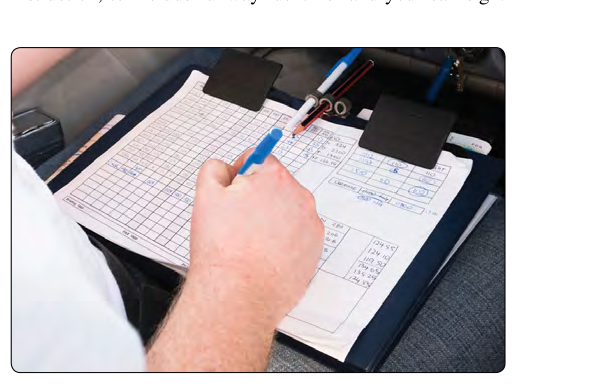
- IFR clearances — when receiving an IFR departure clearance (or an amended clearance in flight), the entire clearance should be read back, including the departure procedure, route, initial altitude, and any special instructions. This is often done using the CRAFT memory aid (see below).
- Hold-short instructions — the AIM is explicit that any instruction to hold short of a runway must be read back in full, including the specific runway identifier (e.g., "hold short of runway two-eight, Cessna three-four-five golf alpha").
Items that are informational in nature — such as weather advisories, traffic calls, or a pilot's report — generally do not require verbatim readback, though acknowledging them with your callsign and "roger" or "traffic in sight" is expected and courteous.
How to Structure a Proper Readback
A good readback has three components: the callsign of the controlling facility, the content of the instruction verbatim, and your own aircraft callsign at the end. For example, if Chicago Approach says "Piper Seven-Sierra-Tango, turn left heading two-seven-zero, descend and maintain four thousand," the correct readback is: "Left heading two-seven-zero, descending to four thousand, Piper Seven-Sierra-Tango." Notice the pilot repeats the critical numbers and the direction of turn, closes with the callsign, and avoids adding editorializing language that might obscure the key data.
For IFR clearances, reading back every element is especially important. Controllers expect to hear the route, altitudes, and any departure instructions played back so they can confirm the pilot wrote it down correctly before ever leaving the ground. A clearance readback that omits the transponder code or the initial altitude could mean the aircraft departs with incorrect information.
Use standard phraseology. Say "two-seven-zero" for headings, "four thousand" for altitudes (not "four-thou" or "four-K"), and use the phonetic alphabet for runway identifiers ("runway two-eight left"). Non-standard language is harder for controllers to parse quickly and increases the chance a subtle error slips through.
The Controller's Responsibility to Correct Errors
The pilot-controller partnership during a readback is not one-sided. When the pilot reads back a clearance, the controller has an affirmative duty to listen and issue a correction if any item is wrong. This is why the system works as a closed-loop safety check. If the controller says nothing after your readback, it is reasonable to infer the readback was correct — but it is never an excuse for the pilot to proceed if something still seems ambiguous. The AIM, as advisory guidance, recommends that if you are uncertain about any portion of an ATC instruction, you request clarification before proceeding.
If you read back an incorrect altitude and the controller does not catch it, both parties share responsibility — but the pilot still bears the legal obligation to comply with the original correct clearance. In the IFR environment, an altitude deviation caused by a misheard clearance is a potential violation of 14 CFR §91.123 and, at altitude, could trigger a loss-of-separation event with another aircraft under positive control.
Why Readbacks Matter in the IFR Environment
In visual conditions, a pilot who mishears a runway assignment can often look out the window and correct course. Under instrument meteorological conditions (IMC), that visual crosscheck is unavailable. The pilot is entirely dependent on correctly received and understood clearances to navigate terrain, traffic, and airspace. An altitude that is 1,000 feet lower than intended may place an aircraft in close proximity to the minimum enroute altitude or other IFR traffic on a crossing route.
Readbacks also serve a secondary safety function at busy airports: they slow the communication pace just enough to ensure both parties are synchronized. Controllers who hear a hesitant or garbled readback know to pause and clarify before the aircraft is committed to the wrong track.
Key Numbers and Rules
- Runway hold-short readbacks are strongly emphasized as critical items in the AIM, though the AIM itself is advisory guidance rather than an enforceable regulation like 14 CFR.
- The AIM reference for pilot/controller communication procedures is Section 4-2-3.
- 14 CFR §91.123 requires compliance with ATC instructions in controlled airspace; readback is the mechanism that confirms correct receipt.
- Transponder codes are recommended for readback — a single transposed digit can mis-identify your flight to radar.
- Frequency changes should be read back, including the frequency itself.
- If any ATC instruction is unclear, AIM guidance recommends the pilot request clarification before proceeding — not after.
Memory Aid: CRAFT
When copying a full IFR clearance, the acronym CRAFT helps ensure every element is written down and read back completely:
- C — Clearance limit (usually the destination airport)
- R — Route (the filed route or any amendments)
- A — Altitude (initial altitude and any intermediate altitudes)
- F — Frequency (departure frequency to contact after takeoff)
- T — Transponder (assigned squawk code)
When reading back the clearance, go through each element in order. This disciplined approach makes it nearly impossible to skip an item, and any deviation from what the controller intended will stand out clearly when both parties follow the same structure.
Common Test Traps
- "Roger" is not a readback. Saying "roger" confirms receipt, not comprehension of specific data. For runway, altitude, heading, and frequency assignments, "roger" alone is insufficient and will not satisfy the readback requirement.
- Hold-short instructions always require readback. Some students believe that only runway assignments need readback; the AIM explicitly extends this to any hold-short instruction, and the FAA test reflects this distinction.
- Transponder codes are often forgotten. It is easy to focus on the routing and altitude elements of a clearance and forget to read back the squawk code. CRAFT prevents this omission.
- An uncorrected readback error is still the pilot's responsibility. If you read back the wrong altitude and the controller fails to catch it, you are still obligated to comply with the original correct clearance. The controller's silence does not authorize a deviation.
- Frequency readbacks should include the frequency. Reading back "one-one-niner-point-seven" satisfies the AIM's guidance on frequency readback, though many pilots also state the facility name as a helpful practice for confirming the handoff.