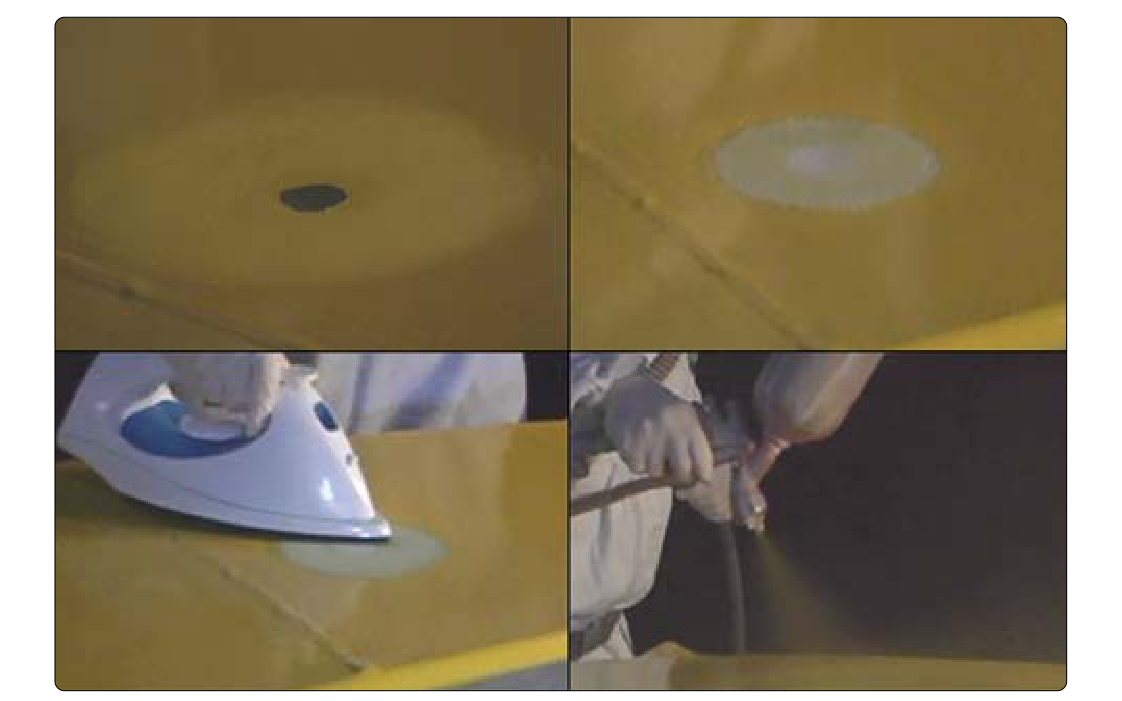
Fabric-covered aircraft occupy a special place in aviation history and remain common among light sport aircraft, vintage biplanes, ultralights, and classic trainers. Unlike metal or composite structures, fabric skin is a flexible, organic material that degrades over time from ultraviolet radiation, moisture, chemical exposure, and mechanical abrasion. When damage or deterioration occurs, the maintenance technician faces a fundamental decision: can the area be repaired with a patch, or does the entire covering need to be replaced? Getting this decision right is not simply a matter of convenience — it is the foundation of continued airworthiness and is governed by specific FAA criteria found in the Aviation Maintenance Handbook for Airframe (FAA-H-8083-31).
This article walks through the engineering logic behind fabric repair decisions, the specific criteria the FAA uses to separate acceptable patch repairs from situations requiring full recovering, the approved materials and methods, and the practical considerations every AMT must keep in mind when working fabric-covered aircraft.
Understanding Fabric Condition: The Baseline Test
Before any repair decision can be made, the technician must assess the condition of the existing fabric. The FAA recognizes that fabric strength diminishes over time, and a patch applied over already-weakened fabric provides a false sense of security. The primary tool for this assessment is the fabric strength test, typically performed with a hand-held mechanical punch tester, such as the Seyboth or Maule tester, or a tensile strip test conducted in a laboratory setting.
FAA standards, published in Advisory Circular AC 43.13-1B (Acceptable Methods, Techniques, and Practices — Aircraft Inspection and Repair), establish the minimum acceptable tensile strength for aircraft fabric based on the aircraft's never-exceed speed (VNE). For aircraft with a VNE at or below 160 mph, the minimum acceptable strength for the installed covering is 56 pounds per inch width. For aircraft with a VNE above 160 mph, a higher standard applies. When the installed fabric tests below these minimums across a significant portion of the airframe, patch repairs are no longer appropriate — the entire surface must be recovered. This is the first and most decisive criterion: if the surrounding fabric is substandard, patching is prohibited.
Visual clues also help establish baseline condition. Fabric that is brittle, shows widespread color fading through to the weave, has cracked topcoat, or tears easily under finger pressure is indicating generalized deterioration. Localized damage in otherwise strong fabric, by contrast, is a candidate for patch repair.
FAA Criteria for Acceptable Patch Repairs
When surrounding fabric is confirmed to meet strength minimums, a patch repair becomes potentially appropriate. The FAA's criteria for acceptable patch repairs focus on four areas: the size and location of the damage, the patch material, the patch dimensions, and the method of attachment.
Size and Location Limits
Not all damage, even in strong surrounding fabric, qualifies for a patch. AC 43.13-1B establishes that damage should generally be no larger than 16 inches in any direction to be considered for a patch repair rather than a panel replacement or full recovering. Damage that is larger, or damage that occurs over a structural member such as a rib, spar, or former, requires more extensive repair because adhesion over structure is critical to aerodynamic load transfer. Damage near the leading edge, where aerodynamic loads are high and fabric tension is greatest, demands additional scrutiny. Multiple damaged areas in close proximity that collectively compromise a large surface may also necessitate full panel or full covering replacement even if each individual area is small.
Patch Material Requirements
The patch fabric must be of the same or better grade than the original covering. If the aircraft is covered with Grade A cotton (the most common traditional material, with a minimum tensile strength of 80 pounds per inch when new), the patch must be Grade A or better. Polyester fabrics such as Ceconite, Poly-Fiber, and Dacron are widely accepted under FAA-approved Supplemental Type Certificates (STCs) and can be used as patch material on fabric of equivalent specification. The technician must never use inferior-grade or household-type fabric as a patch material.
Critically, the patch fabric must be oriented so that its weave threads run parallel to the original fabric's weave threads. This alignment ensures that stress distributes uniformly across the repair and that the patch behaves mechanically like the surrounding material under aerodynamic loads.
Patch Dimensions: The Overlap Rule
The single most tested rule in fabric patch repairs is the minimum overlap requirement. According to AC 43.13-1B, a fabric patch must overlap the undamaged surrounding fabric by a minimum of 2 inches on all sides for patches applied with dope or adhesive. In practice, many manufacturers and repair stations apply 3 to 4 inches of overlap to provide additional strength margin, but 2 inches is the FAA-specified minimum. This overlap is measured from the trimmed edge of the damage, not from the original perimeter of the torn or abraded area.
For patches that are machine-sewn rather than adhesive-bonded, the stitching itself bears the load, and the dimensional requirements are governed by stitch spacing and seam allowance standards rather than overlap alone.
Method of Attachment
Approved attachment methods for fabric patches include doping (applying fabric cement or dope to bond the patch to the surrounding fabric), stitching, and combinations of both. The key requirement is that the patch must be fully bonded across its entire area — no air pockets, lifting edges, or unbonded zones that could allow the patch to peel under aerodynamic loading. Multiple coats of dope must be applied, allowing each coat to dry properly, until the patch is fully faired into the surrounding surface. The final finish coats must match the existing aircraft finish in type and color as closely as practicable.
When Patch Repairs Are Not Enough: Criteria Requiring Full Recovering
The FAA and AC 43.13-1B identify several conditions under which patch repairs are categorically insufficient and full recovering is required:
- Fabric tests below minimum strength anywhere on the surface to be repaired, as described above.
- Damage exceeding size limits, particularly exceeding 16 inches in any dimension or covering more than half of any individual panel between structural members.
- Widespread deterioration — brittleness, cracking, or pervasive UV damage that cannot be attributed to a single localized event.
- Evidence of moisture damage or mold penetrating the underlying structure, which requires full inspection of ribs, spars, and formers before any new covering can be applied.
- Previous improper repairs — patches applied with unapproved materials or without required overlap that have altered the structural integrity of the original covering.
- Manufacturer instructions — if the aircraft's Type Certificate Data Sheet or maintenance manual specifies that only full recovering is acceptable for certain types of damage, that requirement supersedes general AC guidance.
Why This Distinction Matters for Airworthiness
The stakes of this decision are not bureaucratic — they are aerodynamic. Fabric skin on a wing or control surface contributes to the smooth, efficient passage of air over the airframe and, in many designs, transmits aerodynamic loads to the underlying structure through tension. A patch that fails in flight can create a sudden, large hole, causing asymmetric drag, loss of control response, and potentially structural flutter. Conversely, condemning an entire surface when only a localized patch is needed imposes unnecessary cost and time on the operator. The FAA criteria are therefore carefully calibrated to protect safety while keeping general aviation economically viable.
Key Numbers and Rules
- Minimum fabric strength (VNE ≤ 160 mph): 56 lb/inch width — below this, patching is not acceptable.
- Maximum damage size for a patch repair: generally 16 inches in any direction per AC 43.13-1B.
- Minimum patch overlap: 2 inches on all sides beyond the trimmed damage edge for adhesive-bonded patches.
- Patch material grade: must equal or exceed the original fabric grade (Grade A cotton minimum strength: 80 lb/inch new).
- Weave alignment: patch threads must run parallel to original fabric threads.
- Approval basis: fabric repairs on certificated aircraft are Major Repairs requiring FAA Form 337 unless accomplished under a manufacturer's STC or approved data; patch repairs on experimental aircraft follow the operating limitations.
Common Test Traps
- Forgetting to test surrounding fabric first. Many test questions present a scenario where the damage looks small and patchable, but the correct first step is always confirming surrounding fabric strength. A small patch in weak fabric does not restore airworthiness.
- Confusing the 2-inch overlap with the maximum damage size. The 2-inch overlap is the minimum bond margin beyond the trimmed edge; the 16-inch rule governs whether a patch is appropriate at all. These are two separate criteria.
- Assuming any polyester fabric can patch any other fabric. The patch must match or exceed the original specification — not all polyester fabrics are interchangeable, and proprietary STCs govern which systems are approved on which aircraft.
- Ignoring the regulatory classification. A fabric patch on a certificated aircraft is typically a Major Repair, requiring approved data and a Form 337 sign-off. Treating it as a minor repair is a regulatory error the test exploits.
- Overlooking weave orientation. Test items sometimes present a patch applied at an angle to the original weave as an acceptable shortcut. It is not — misaligned weave creates uneven stress distribution and is not an approved technique.