The Private Pilot Oral Exam: What to Expect
What Is the Private Pilot Oral Exam — and Why Does It Matter?
The private pilot oral exam is one of the most misunderstood parts of earning your private pilot certificate. Many student pilots spend months perfecting their flying skills, then feel blindsided when a Designated Pilot Examiner (DPE) starts firing questions about weather, airspace, regulations, and aerodynamics. The good news? This exam is completely predictable in structure, and with the right preparation you can walk in confident rather than anxious.
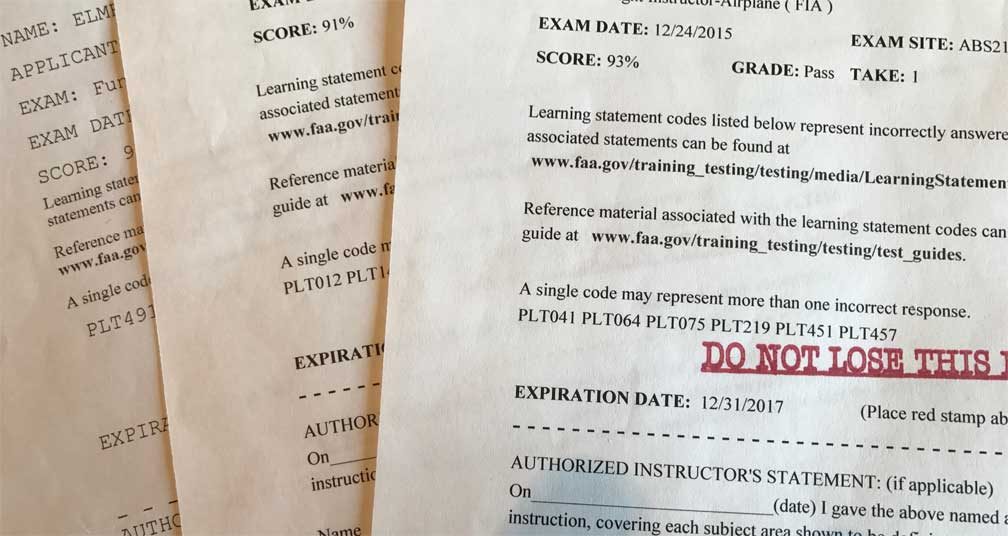
Unlike the FAA Knowledge Test, which is multiple-choice and taken at a testing center, the oral exam is a live, face-to-face conversation between you and your DPE. It is the first phase of your practical test — commonly called the checkride — and it sets the tone for everything that follows. Understanding what the examiner is looking for, and how to prepare systematically, is the key to passing on your first attempt.
The Role of the ACS in Your Private Pilot Oral Exam
The DPE does not make up questions at random. Every topic covered during your oral exam is anchored to the Airman Certification Standards (ACS) for the Private Pilot certificate. The ACS is a public document published by the FAA that lists every knowledge area, risk management concept, and skill you are expected to demonstrate. Think of it as the official blueprint for your checkride.
Each ACS task is organized around three columns: Knowledge, Risk Management, and Skills. During the oral exam, the DPE will focus primarily on the Knowledge and Risk Management columns. They want to know that you understand why procedures exist, not just how to execute them mechanically. This means rote memorization alone will not carry you through. You need to be able to explain concepts in your own words and connect them to real-world decision-making.
You can explore how ACS codes map to specific knowledge areas at Aviation Test Prep's ACS code reference, which is a useful tool for identifying gaps in your understanding before your checkride.
Common Topics Covered in the Oral Exam
While every DPE has their own style, the subject matter they can draw from is defined by the ACS. Here are the major areas you should be prepared to discuss in depth:
- Certificates and documents: What documents must be onboard the aircraft? What certificates must you carry as a pilot? Be ready to explain the purpose of each requirement, not just list them.
- Weather: Reading METARs, TAFs, winds-aloft forecasts, PIREPs, and understanding phenomena like icing, thunderstorms, and low-level wind shear. Expect scenario-based questions about go/no-go decision making.
- Airspace: Class designations, equipment requirements, weather minimums for VFR flight, and special-use airspace. The DPE will often use a sectional chart and ask you to identify airspace and plan accordingly.
- Performance and limitations: Using your Pilot's Operating Handbook (POH) to calculate takeoff distance, density altitude, weight and balance, and fuel requirements. Bring your aircraft's POH and know how to navigate it quickly.
- Navigation: VOR navigation, GPS basics, pilotage, dead reckoning, and how to interpret a sectional chart. You will typically plan a cross-country flight as part of the oral.
- Aerodynamics: How lift is generated, what causes a stall, how load factor changes in a bank, and the effects of ice or contamination on aircraft performance.
- Airport operations: Traffic pattern procedures, runway markings and lighting, taxiway signs, and communication procedures at both towered and non-towered airports.
- Emergency procedures: Engine-out scenarios, fires, electrical failures, and your decision-making process when things go wrong. The DPE will want to see calm, methodical thinking.
How Long Does the Oral Exam Last?
The oral portion of a private pilot checkride typically lasts somewhere between one and three hours, though the exact duration varies by examiner and by how the conversation flows. A well-prepared applicant who answers clearly and confidently often moves through topics more quickly than one who hesitates or gives incomplete answers. That said, do not rush. It is far better to take a moment, organize your thoughts, and give a complete answer than to blurt out something partially correct.
If you genuinely do not know an answer, say so — and then explain how you would find it. DPEs appreciate intellectual honesty and the ability to use references like the FAA Aeronautical Information Manual (AIM), the POH, or a sectional chart. Bluffing is never a good strategy.
What Examiners Are Really Looking For
A common misconception is that the DPE is trying to fail you. In reality, examiners are looking for one thing: evidence that you are a safe, competent pilot-in-command who can make sound decisions. They want to see:
- Conceptual understanding — You know the why behind the rules and procedures.
- Situational awareness — You can apply knowledge to realistic scenarios, not just recite facts.
- Resource use — You know how and when to consult references rather than guessing.
- Calm under pressure — You can think clearly when asked something unexpected.
- Aeronautical decision-making — You consider risk, alternatives, and consequences before acting.
Many DPEs use scenario-based questioning throughout the oral. For example, instead of asking
Ready to pass your FAA written exam?