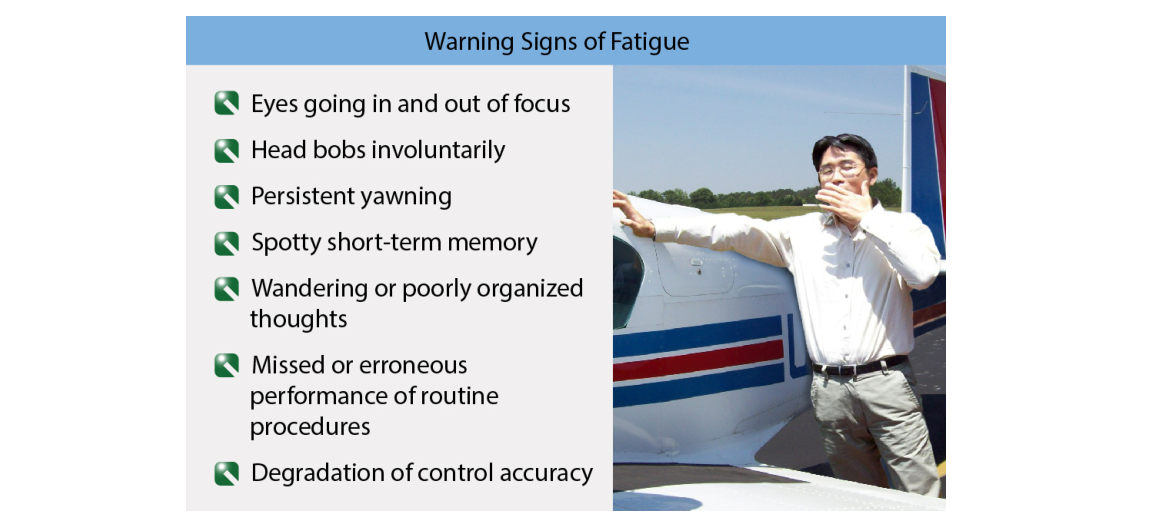
Fatigue is one of the most insidious threats in commercial aviation. Unlike a mechanical failure that announces itself with a warning light or an unusual noise, fatigue degrades performance silently — impairing judgment, slowing reaction time, narrowing attention, and eroding the very self-awareness a pilot needs to recognize that something is wrong. For Airline Transport Pilot (ATP) candidates and working airline crews alike, understanding Fatigue Risk Management Systems (FRMS) is not merely an academic exercise. It is a foundational element of Crew Resource Management (CRM) and a subject the FAA has codified in both regulation and guidance.
This article walks through the physiology of fatigue, the regulatory framework governing flight and duty time, the components of a formal FRMS, and — critically — the practical alertness strategies crews can employ when fatigue cannot be entirely avoided. Every concept here is grounded in FAA guidance and the human factors research that underlies it.
The Physiology of Fatigue
To manage fatigue effectively, pilots must first understand what drives it. Two primary biological processes interact to determine alertness at any given moment: the circadian rhythm and the homeostatic sleep drive.
The circadian rhythm is an approximately 24-hour internal clock regulated by the suprachiasmatic nucleus in the brain, primarily synchronized by light exposure. It creates predictable peaks and troughs in alertness throughout the day. For most people, alertness is lowest in the hours between roughly 0300 and 0500 local time and experiences a secondary dip in early afternoon — the so-called post-lunch dip. These are periods of heightened vulnerability even for a well-rested pilot, but the risk multiplies dramatically when a crew member is also sleep-deprived.
The homeostatic sleep drive, sometimes called sleep pressure, accumulates with every hour of wakefulness. The longer a person has been awake, the stronger the biological pressure to sleep. Extended duty periods, early show times that truncate sleep, and back-to-back late departures all build this pressure. When homeostatic pressure is high and a circadian trough coincides — a condition common on red-eye flights — performance degradation can be severe and rapid.
A third factor is sleep inertia, the grogginess and impaired performance that occurs immediately upon waking. Sleep inertia typically lasts from a few minutes up to about 30 minutes, though it can occasionally persist longer depending on prior sleep debt and the sleep stage at the moment of waking, and it is most pronounced after waking from deep (slow-wave) sleep. This matters operationally because a pilot who naps in a crew rest seat and is then called back to the flight deck may be significantly impaired for a period after resuming duty — a point directly addressed in controlled rest protocols.
Regulatory Framework: Flight Time and Duty Limitations
The FAA's primary regulatory response to fatigue is the system of flight time, duty time, and rest requirements found in 14 CFR Part 117 for Part 121 air carrier operations, which took effect in 2014 after years of research and advocacy following high-profile fatigue-related accidents. Part 117 was a significant departure from the older rules it replaced, specifically because it is physiology-based rather than purely prescriptive.
Key elements of Part 117 include:
- Flight Duty Period (FDP): The period from when a crew member reports for duty with the intention of flying until the engines are shut down at the end of the final flight. Maximum FDP lengths vary by number of flight segments, time of report (accounting for circadian factors), and whether the operation involves a single or augmented crew.
- Rest requirements: Under 14 CFR 117.25, a minimum 10-hour rest period must be provided prior to a flight duty period, and that rest period must afford the pilot an opportunity for at least 8 uninterrupted hours of sleep.
- Cumulative limits: Pilots may not fly more than 100 hours in any 672 consecutive hours (28 days) or 1,000 hours in any 365 consecutive calendar days under 14 CFR 117.23; Part 117 also imposes additional cumulative flight-duty and flight-time limits (such as a 60-hour limit in 168 consecutive hours) that candidates should be aware of beyond these two figures.
- Fitness for duty: Part 117 places an affirmative responsibility on the pilot to report fit for duty. A crew member who knows they are too fatigued to fly safely is required under 14 CFR 117.5 to report that condition to the certificate holder.
Part 135 and Part 91 Subpart K operations have their own duty and rest rules under 14 CFR Part 135 and relevant sections of Part 91, though they are generally less stringent than Part 117. Understanding which regulatory framework applies to a given operation is itself a testable ATP knowledge area.
Fatigue Risk Management Systems (FRMS)
Beyond prescriptive rules, the FAA and ICAO recognize that no fixed schedule of limits can account for every combination of schedule, individual variation, and operational circumstance. A Fatigue Risk Management System is a data-driven, performance-based approach that allows an air carrier to manage fatigue risk scientifically, potentially using alternative limits where supported by evidence, while maintaining safety.
An FRMS is built on several pillars:
- Hazard identification: Systematic collection of fatigue reports, safety data, scheduling patterns, and biomedical evidence to identify where fatigue risk is elevated.
- Risk assessment: Evaluating the probability and consequence of fatigue-related errors on identified routes, pairings, or duty patterns. Biomathematical models of fatigue — validated computational tools that predict alertness levels based on sleep history and circadian timing — are often used here.
- Risk mitigation: Implementing scheduling changes, crew augmentation, strategic rest opportunities, or training to reduce identified risks to acceptable levels.
- Safety assurance: Continuous monitoring of mitigation effectiveness, including analysis of incident reports and performance data.
- Promotion and training: Educating crews and schedulers about fatigue science, countermeasures, and the reporting culture that makes the system work.
For FRMS to function, crews must actively participate by filing fatigue reports and honestly assessing their own fitness for duty. This requires a just culture in which reporting fatigue is supported rather than penalized — a core tenet of effective CRM.
Crew Alertness Strategies
Even with robust scheduling rules and an FRMS, operational realities mean that fatigue will sometimes be present in the cockpit. Proven countermeasures can mitigate — though never fully eliminate — its effects.
Strategic Sleep and Pre-Duty Rest
The most effective fatigue countermeasure is adequate sleep before duty. The FAA and sleep science consistently point to 7–9 hours of sleep per 24-hour period as the target for most adults. Before early morning departures, pilots should anchor sleep earlier in the evening rather than maintaining a normal schedule and hoping for a shortened night. Caffeine use in the late afternoon and evening should be minimized to protect sleep quality.
Controlled Rest on the Flight Deck
For augmented crews where regulations permit, controlled (or strategic) rest on the flight deck — sometimes called cockpit napping — is an FAA-recognized mitigation tool. Research shows that naps of 10–40 minutes meaningfully improve alertness and performance. Crews should plan controlled rest to occur during lower workload cruise segments, never during critical phases of flight, and must account for sleep inertia by allowing a recovery period before the rested pilot resumes active duties. Carriers that permit controlled rest will have specific procedures in their Operations Specifications and Flight Operations Manuals.
Caffeine
Caffeine is the most widely used psychoactive countermeasure to fatigue. It works by blocking adenosine receptors, temporarily suppressing the subjective feeling of sleepiness. However, caffeine does not eliminate the underlying sleep debt — it masks it. Strategic use (timing consumption to coincide with periods of anticipated low alertness) is more effective than continuous consumption throughout a duty period. Caffeine use close to planned rest periods should be avoided because it reduces sleep quality.
Crew Cross-Monitoring
One of the most important CRM elements in fatigue management is mutual monitoring. A fatigued pilot may not recognize their own impairment — this is precisely why self-assessment of fatigue is unreliable. The other crew member, and in augmented operations the relief crew, serve as critical checks. Crews should brief each other on their sleep history and any known fatigue risk factors at the beginning of a pairing, creating an environment where raising a fatigue concern is normalized and expected.
Key Numbers and Rules
- Minimum rest (Part 117): 10-hour rest period before an FDP, which must afford at least 8 hours of uninterrupted sleep opportunity within it.
- Cumulative flight time (Part 117): 100 hours in 28 days; 1,000 hours in 365 days (additional cumulative limits, such as 60 hours in 168 hours, also apply).
- Fitness for duty (14 CFR 117.5): Pilot bears personal responsibility to report unfit if too fatigued to fly safely.
- Circadian low points: Approximately 0300–0500 (primary trough) and early-to-mid afternoon (secondary trough) — periods of highest vulnerability.
- Sleep inertia duration: Typically impairs performance for a few minutes up to about 30 minutes post-waking, though it can occasionally last longer; critical consideration for controlled rest protocols.
- Optimal nap length: 10–40 minutes balances alertness benefit against risk of deep sleep and prolonged sleep inertia.
Memory Aid: SAFE
Some operators use SAFE as a quick pre-duty fatigue self-check, adapted from broader human factors frameworks:
- S — Sleep: Did I get adequate sleep in the past 24 hours and the past week?
- A — Awake: How many hours have I been continuously awake? Am I approaching or exceeding safe limits?
- F — Fatigue: Do I feel subjectively fatigued, or am I relying on caffeine or motivation to mask sleepiness?
- E — Eating and environment: Have disruptions to my routine, time zone changes, or nutrition affected my alertness?
If any SAFE element raises concern, the pilot should communicate with their crew and, where impairment is significant, invoke the fitness-for-duty provisions of Part 117.
Common Test Traps
- Confusing FDP with flight time: The Flight Duty Period includes pre-flight duties and post-flight shutdown, not just time in the air. Candidates sometimes apply flight time limits to FDP calculations, or vice versa.
- Assuming the regulations are a ceiling, not a floor: Meeting Part 117 minimums does not guarantee a pilot is adequately rested. The fitness-for-duty obligation in 14 CFR 117.5 can apply even when a pilot is legally within all prescribed limits.
- Overconfidence in self-assessment: Research consistently shows that fatigued individuals underestimate their own impairment. Test questions may probe whether candidates understand that self-reported alertness is an unreliable fatigue metric.
- Ignoring cumulative fatigue: Single-duty-period limits are necessary but not sufficient. Candidates must recognize that multi-day accumulations of sleep debt — even with each individual night above the minimum — can produce significant performance degradation.
- Sleep inertia after controlled rest: A common distractor scenario involves a pilot who naps and is then considered immediately available for critical duties. The correct answer recognizes the need for a recovery period before resuming full responsibilities.