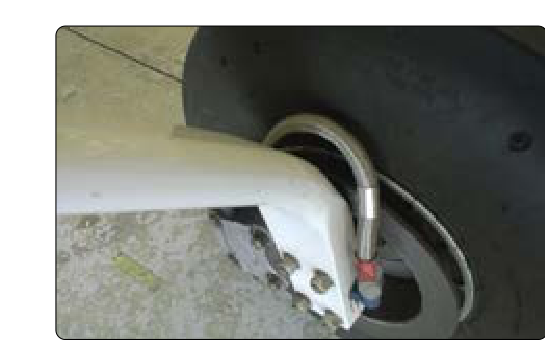
Flexible hoses are a critical component of aircraft fluid systems, providing the necessary movement, vibration isolation, and routing flexibility that rigid metal tubing simply cannot offer. Wherever an engine vibrates relative to an airframe, wherever a control surface moves, or wherever installation geometry demands a curve that would fatigue a hard line, a properly selected flexible hose bridges the gap. For the Aviation Maintenance Technician (AMT), understanding the three primary hose material categories—rubber, polytetrafluoroethylene (PTFE), and Teflon (a trade name for PTFE)—is fundamental to both safe maintenance practice and success on the FAA General knowledge exam.
The FAA's Aviation Maintenance Technician Handbook—General (FAA-H-8083-30) dedicates detailed coverage to flexible hose construction, identification, and installation requirements. Every hose type is engineered to balance flexibility with pressure containment, chemical resistance, and temperature tolerance. Choosing the wrong hose for a given application is not merely a maintenance error—it is a potential flight-safety hazard.
Rubber Hose Construction and Types
The most widely used aircraft flexible hose is the rubber assembly, which is actually a composite structure rather than plain rubber. A standard rubber hose consists of three concentric layers: an inner tube, a reinforcement layer (or layers), and an outer protective cover.
The inner tube is the fluid-contact layer. Its compound is selected specifically for compatibility with the fluid it carries—engine oil, hydraulic fluid, fuel, or water. Using a hose with an incompatible inner tube material can cause the tube to swell, delaminate, or deteriorate, contaminating the system fluid and risking structural failure of the hose.
The reinforcement layer provides the hose's pressure-bearing strength. Depending on the pressure rating required, reinforcement may be a single braid of cotton or synthetic fiber, multiple layers of braided fiber, or spirally wound wire braid for very high-pressure applications. Wire-braid reinforcement is common in hydraulic hoses that must withstand thousands of pounds per square inch. The number and arrangement of reinforcement layers directly determines the hose's rated working pressure and burst pressure.
The outer cover protects the reinforcement from abrasion, weather, fuel spillage, and UV degradation. It is typically a synthetic rubber compound—often neoprene—and may be color-coded or marked for identification purposes.
Rubber hoses are manufactured to military and industry specifications that define construction, pressure ratings, and testing requirements. The applicable specification, along with date of manufacture and size, is printed or embossed along the outer cover at regular intervals—typically every few inches. This layline marking is critical: it allows the technician to verify the hose specification, identify the installation date, and check whether the hose is being twisted during installation (the line should remain straight once the hose is properly routed and secured).
PTFE (Teflon) Hose Construction
Polytetrafluoroethylene hoses—universally known by the DuPont trade name Teflon, though the underlying chemistry applies regardless of manufacturer—represent a significant engineering step beyond conventional rubber. PTFE is an advanced fluoropolymer characterized by an exceptionally low coefficient of friction, outstanding chemical inertness, and a very wide service temperature range.
A PTFE aircraft hose typically consists of a smooth-bore PTFE inner tube extruded in a continuous, seamless form, surrounded by one or more layers of stainless steel wire braid that provide both pressure containment and mechanical protection. The stainless steel outer braid gives these hoses their distinctive bright metallic appearance and distinguishes them visually from rubber assemblies.
The inner tube of a PTFE hose is essentially chemically inert—it will not react with, absorb, or be degraded by virtually any aircraft fluid, including fuels, oils, hydraulic fluids, solvents, and even many acids. This makes PTFE hoses the preferred or required choice whenever fluid compatibility is a concern or when the system carries aggressive chemicals. Equally important, PTFE does not support permeation of hydrocarbons the way rubber does, so fuel odor inside an aircraft cabin—sometimes caused by micro-permeation through rubber fuel hoses—is greatly reduced or eliminated.
PTFE hoses operate across a broad temperature range, typically rated from approximately −65°F to +450°F (−54°C to +232°C), depending on the specific assembly and end fittings. This range far exceeds what rubber hoses can tolerate, making PTFE the correct choice near high-temperature areas such as engine firewalls or exhaust systems. The trade-off is that PTFE hoses are stiffer, more expensive, and require careful handling to avoid kinking—a kinked PTFE liner may crack and fail in service.
Identification and Markings
Proper identification of flexible hose is one of the most test-critical and safety-critical skills for an AMT. The FAA handbook emphasizes that hose assemblies must be installed within their shelf life and service life limits. Rubber hoses have both a manufacturing date and a service expiration requirement—hoses that have exceeded the shelf life specified by the manufacturer or applicable specification must be rejected even if they appear undamaged, and technicians should always consult the specific manufacturer or MIL-SPEC documentation rather than assume a single universal limit.
- Layline: The continuous stripe or printed line along a rubber hose's outer cover. It serves two purposes: it carries the identification code (spec, size, date of cure), and it reveals twist—if the layline spirals after installation, the hose has been twisted, which can reduce service life and cause fitting leak.
- Date code: Rubber hoses are stamped with a cure quarter and year (e.g., 2Q22 = second quarter of 2022). Hose older than its rated shelf life must not be installed.
- MIL-SPEC designator: Identifies the construction standard and fluid compatibility. Never substitute one spec for another without engineering authorization.
- Color coding: Certain hose types use colored tracer threads woven into the outer braid (on older designs) to indicate fluid type, though reliance on color alone is discouraged—always verify the printed specification.
- PTFE hose identification: The stainless steel braid and the markings on the end fittings or attached tags are the primary identification points. Many PTFE assemblies carry an identification tag rather than a printed layline, since printing on a stainless braid is impractical.
Why Hose Selection Matters for Safety
An improperly selected hose can fail in several catastrophic ways. A fuel hose rated for low pressure installed in a high-pressure hydraulic system will balloon and burst. A rubber hose with an incompatible inner tube compound will swell and shed material into the fluid, clogging filters and valves. A hose installed in an area exceeding its temperature rating will harden, crack, and eventually leak. Each of these failure modes has been implicated in real accidents, which is why the FAA requires that hose replacements be made with a hose that meets or exceeds the original equipment specification.
The AMT must also account for minimum bend radius. Every hose has a manufacturer-specified minimum radius to which it may be curved without damaging the inner tube or reinforcement. Bending a hose tighter than its minimum radius can cause the inner tube to collapse or kink internally—a defect that may not be visible externally but will restrict flow and can lead to sudden failure under pressure. PTFE hoses generally have a larger minimum bend radius than comparably sized rubber hoses due to the rigidity of the liner material.
Key Numbers and Rules
- Rubber hose shelf life limits vary by hose type and manufacturer specification; always consult the specific MIL-SPEC and manufacturer data rather than assume a single fixed figure.
- PTFE hoses are rated to approximately −65°F to +450°F depending on assembly—far wider than rubber's typical range.
- Hose length must allow for adequate slack (the FAA handbook notes that hoses should not be installed in a taut condition, as they tend to shrink in length and increase in outside diameter when pressurized).
- A hose should never be twisted during installation—the layline must remain straight along the hose's installed path.
- End fittings for flexible hose assemblies are typically reusable swaged or field-attachable fittings; both types must be proof-pressure tested per the applicable specification before the hose assembly is placed in service.
- Hose assemblies must be proof-pressure tested as specified by the applicable standard after fabrication; the required multiplier over rated working pressure varies by specification and must be verified against that standard.
Common Test Traps
- Confusing shelf life with service life: A rubber hose that sat in a parts bin beyond its rated shelf life is unairworthy even if it was never installed. Shelf life limits apply from the date of cure, not from the date of installation.
- Assuming Teflon is always better: PTFE hoses are superior in temperature and chemical resistance, but they are stiffer, more prone to kinking if mishandled, and have larger minimum bend radii. The correct hose is the one that matches the application specification—not simply the most expensive or newest technology.
- Ignoring the layline: The FAA test frequently targets whether students know the layline's dual function—identification and twist detection. Many test-takers know only one of these functions.
- Failing to account for pressure-related dimensional change: A hose installed under slight tension will pull fittings loose when it shrinks in length under internal pressure. The correct installation always allows adequate slack.
- Substituting hose specifications: Replacing a hose with a visually similar hose of a different spec without engineering approval is an airworthiness violation, even if the outside diameter looks the same.