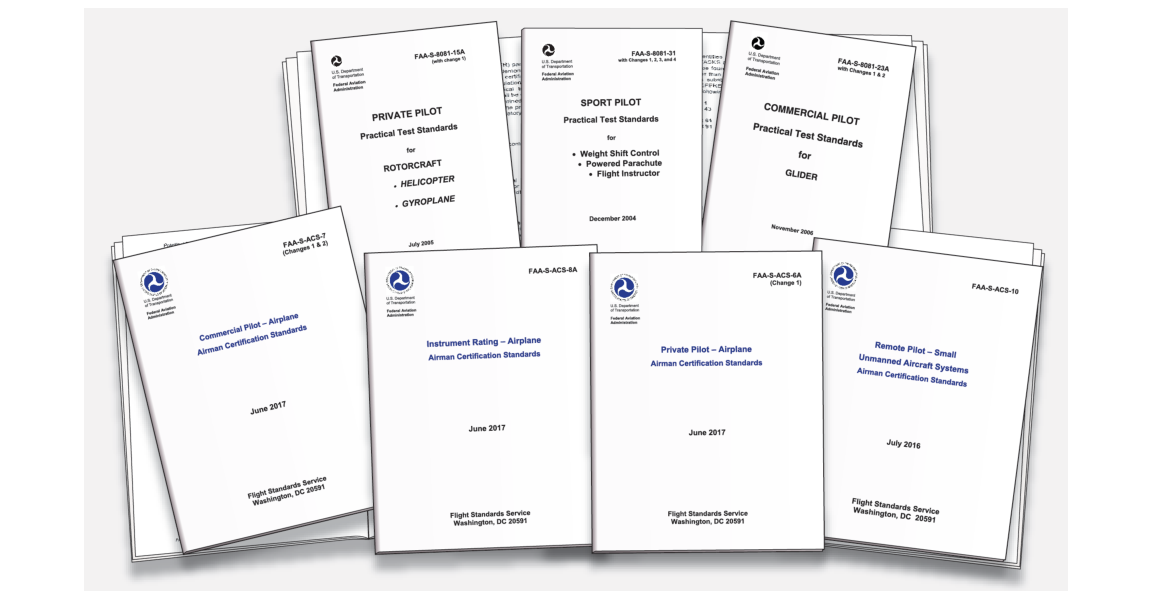
One of the most powerful tools in a flight instructor's kit is the ability to define — precisely and in advance — what a successful maneuver looks like. Setting measurable performance standards transforms vague coaching like "do better next time" into specific, actionable benchmarks that both the instructor and the student can evaluate against. This objectivity is not merely a pedagogical nicety; it is the foundation of safe, fair, and effective flight instruction. The Aviation Instructor's Handbook (FAA-H-8083-9) makes clear that criteria for evaluating student performance must be specific, measurable, and appropriate to the student's current stage of training. Understanding how to build, communicate, and apply those standards is a core competency for every flight and ground instructor certificate candidate.
What a Measurable Performance Standard Actually Is
A performance standard answers the question: How well must the student perform this task to demonstrate acceptable mastery? It is distinct from a learning objective, which describes what the student will do. The learning objective for a power-off stall might read, "The student will execute a full power-off stall and recovery." The performance standard adds the measurable layer: heading within plus or minus 10 degrees of the entry heading, airspeed not to exceed the published stall speed by more than the ACS tolerance, and altitude loss minimized throughout the recovery. Without that second layer, evaluation is entirely subjective.
The Airman Certification Standards (ACS) — which replaced the legacy Practical Test Standards for most certificates and ratings — codify these quantitative tolerances for every evaluated task. Familiar examples include maintaining altitude within plus or minus 100 feet during level-off maneuvers, airspeed within plus or minus 10 knots of a target, and bank angle within plus or minus 5 degrees during steep turns. The FAA derived these numbers to represent the minimum precision required for safe flight operations, not an aspirational ideal. That distinction matters enormously in instruction.
Why the FAA Emphasizes Measurable Standards
The Aviation Instructor's Handbook identifies subjectivity as a persistent barrier to productive critique. When two people disagree about whether a maneuver was acceptable, they have no common reference for a constructive conversation. Objective, pre-stated standards solve that problem by providing a neutral third party — the written benchmark — against which both the instructor and the student can honestly compare the actual performance. This is especially important because students are acutely sensitive to perceived fairness; an instructor who shifts the standard arbitrarily, consciously or not, erodes trust and undermines motivation.
Measurable standards also directly support the learning process itself. Research in educational psychology, reflected throughout FAA-H-8083-9, shows that learners progress faster and retain skills longer when they engage in deliberate practice — effortful repetition aimed at a clearly defined target. A student who knows they must hold altitude within 100 feet is not simply repeating motions; they are actively monitoring the altimeter, diagnosing deviations, and making corrections. That conscious engagement accelerates skill development far more effectively than unstructured flying. The ACS tolerances, precisely because they represent real-world safety requirements, give this deliberate practice genuine meaning.
How Standards Fit Into Lesson Planning
Every formal lesson plan contains three evaluation-related components: the objective, the completion standards, and the assessment method. The completion standard is where measurable performance criteria live. When an instructor prepares a lesson on rectangular courses, for example, the completion standard should specify: maintains altitude within plus or minus 100 feet, maintains coordinated flight throughout, rolls out on each leg within plus or minus 10 degrees of the desired heading, and adjusts bank angle appropriately for wind correction. These numbers come directly from the ACS for the applicable certificate level being trained toward.
Critically, completion standards must also be appropriate to the student's training stage. A student on their third flight in the traffic pattern cannot reasonably be expected to immediately achieve the same tolerances as a student preparing for a private pilot practical test. The Aviation Instructor's Handbook explicitly supports using wider initial tolerances for early-stage practice, progressively tightened as proficiency develops. However, this adjustment must be deliberate and documented, not a quiet accommodation made because the instructor feels bad about giving critical feedback. The ultimate target is always the ACS standard; early-stage latitude is a scaffolding technique, not a lowered expectation.
Communicating Standards Before Every Maneuver
The sequence of effective maneuver instruction in FAA-H-8083-9 proceeds through explanation, demonstration, student practice, and critique. The performance standard must be communicated — verbally and explicitly — during the explanation phase, before the student ever touches the controls. Critiquing a student against a standard you never stated is both unfair and ineffective. It puts the student in the position of defending a performance they had no way to calibrate, and it poisons the feedback loop that accelerates learning.
A practical pre-maneuver briefing for a steep turn might sound like this: "We're going to roll into a 45-degree banked turn and maintain our entry altitude within plus or minus 100 feet throughout a full 360-degree turn, rolling out within plus or minus 10 degrees of our original heading. I'll demonstrate first, and I'll narrate each parameter while I fly it. Then it's your turn, and after the maneuver we'll debrief each of those three items specifically." That briefing takes about 20 seconds, yet it transforms the subsequent practice and critique from vague to precise.
Applying Standards During Critique
The Aviation Instructor's Handbook describes an effective critique as objective, flexible, acceptable, comprehensive, constructive, organized, and thoughtful. Every one of those qualities depends on having a pre-established measurable standard. "You lost 200 feet — the standard is 100 feet" is objective, specific, and immediately actionable. "Your altitude control needs work" is none of those things. When structuring the debrief, address each measured parameter in turn: what the standard required, what actually occurred, and what technique adjustment would close the gap. This mirrors the four-step teaching process and reinforces the habit of self-assessment in the student.
Instructors should also be alert to the difference between a student who understands what went wrong and a student who simply nods. Asking the student to restate the standard and identify their own deviation — rather than just receiving the instructor's analysis — engages higher-order thinking and deepens retention, consistent with the FAA's discussion of the Socratic method in FAA-H-8083-9.
Key Numbers and Rules to Know
- ACS altitude tolerance for most maneuvers: plus or minus 100 feet (some tasks specify tighter limits).
- ACS airspeed tolerance: plus or minus 10 knots for most private and commercial tasks; instrument tasks may specify plus 10 / minus 5 knots for approach speeds.
- ACS heading tolerance: plus or minus 10 degrees for most heading-holding tasks; plus or minus 5 degrees for some instrument tasks.
- ACS bank angle tolerance for steep turns: plus or minus 5 degrees of the specified bank angle.
- Three qualities of a valid performance standard (FAA-H-8083-9): Specific, Measurable, Appropriate — sometimes remembered as SMA.
- Completion standards vs. learning objectives: The objective states what the student will do; the completion standard states how well. Both are required elements of a formal lesson plan per FAA-H-8083-9.
Common Test Traps
- Treating ACS tolerances as checkride-only standards: FAA-H-8083-9 is explicit that ACS standards should guide training from the beginning, not just final evaluations. Instructors who introduce them only at the end of training deprive students of the deliberate-practice benefit throughout training.
- Confusing the learning objective with the performance standard: The knowledge test for instructor certificates frequently asks candidates to distinguish these two lesson plan elements. Remember: objective = what; standard = how well.
- Assuming wider tolerances for beginners are optional: Early-stage flexibility is a deliberate instructional technique described in FAA-H-8083-9, not carelessness. But it must trend toward ACS minimums as training progresses, and it should always be communicated explicitly so the student knows where the target ultimately lies.
- Omitting the standard from the pre-maneuver briefing: Critiquing against an unstated standard is unfair and unproductive. Always brief the specific parameters before the student attempts the maneuver.
- Using qualitative language in a completion standard: Words like "smoothly," "appropriately," or "well" do not constitute measurable standards. Every parameter in a completion standard should be expressible as a number (degrees, knots, feet, seconds).