Introduction
Transport-category aircraft operate at high gross weights and approach speeds that demand sophisticated braking systems far beyond the simple hydraulic brakes found on light aircraft. Two interconnected systems — the anti-skid system and the autobrake system — are standard equipment on virtually every modern airliner and large turboprop. Together they protect tires from blowout, shorten stopping distances, and reduce crew workload during one of the most demanding phases of flight. Understanding how each system works, how they interact, and where they can fail is essential knowledge for the Airline Transport Pilot (ATP) certificate and for safe line operations.
The FAA Aircraft Systems handbook (FAA-H-8083-31B) provides the authoritative framework for these systems. This article expands on that foundation with the operational and systems-knowledge depth an ATP candidate needs.
Anti-Skid System Operation
The anti-skid system continuously monitors wheel rotational speed and modulates hydraulic brake pressure to keep each wheel rolling at the threshold of maximum friction — the point just before a full skid develops. This is analogous to the anti-lock braking system (ABS) found on modern automobiles, but aircraft anti-skid systems operate at much higher hydraulic pressures and with considerably greater sophistication.
Wheel Speed Transducers
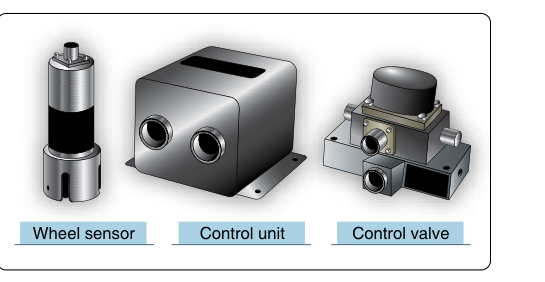
Each braked wheel is equipped with a wheel speed transducer (sometimes called a wheel speed sensor), typically a tachometer-generator type device. As the wheel rotates, it generates an analog or digital electrical signal proportional to wheel rotational speed. The anti-skid control unit (ASCU) compares each wheel's signal against a computed reference speed — derived from the aircraft's actual ground speed or from comparisons among multiple wheels — to detect the onset of skidding.
Skid Detection and Pressure Modulation
When the ASCU determines that a wheel is decelerating faster than the computed slip threshold (indicating an impending skid), it signals a anti-skid control valve in the hydraulic brake line to reduce pressure to that wheel. Pressure is reduced only until the wheel recovers to a safe rotational speed, at which point pressure is restored. This modulate-and-restore cycle can occur dozens of times per second, allowing the system to maintain braking near the peak of the friction curve throughout a stop. The result is a shorter stopping distance on both dry and contaminated runways compared with manually applied braking, where a pilot cannot react quickly enough to prevent intermittent skids.
Special Skid Protection Modes
Modern anti-skid systems include several protective sub-modes beyond basic skid control:
- Touchdown protection: Prevents brake application for a brief period immediately after touchdown — typically about one to three seconds — giving the wheels time to spin up before full braking is commanded. This prevents flat-spotting tires on a non-spinning wheel at high ground speed.
- Locked-wheel protection: If a wheel is fully locked (zero speed signal), the system dumps hydraulic pressure to that wheel entirely. A locked wheel generates almost no useful stopping force and will rapidly destroy the tire.
- Hydroplaning protection: Some advanced systems incorporate estimated hydroplaning speed (approximately 9 times the square root of tire pressure in psi) and reduce braking commands near that speed to avoid total loss of friction. On contaminated runways, this feature is particularly valuable.
- Fail-safe design: Anti-skid system failures are designed to fail in a manner that allows full manual braking. A loss of the anti-skid system does not remove hydraulic pressure from the brakes; it removes only the automated modulation, leaving the crew with conventional braking capability.
Autobrake System Operation
The autobrake system extends the concept of automatic braking by applying a pre-selected, constant deceleration rate throughout the landing roll without requiring the pilot to press the brake pedals. It uses the aircraft's hydraulic system to command brake pressure automatically once armed and activated, working in conjunction with the anti-skid system to maintain the selected deceleration while preventing wheel skid.
Deceleration Rate Settings
Autobrake selector panels typically offer several discrete settings labeled by deceleration rate or by descriptive name. Common configurations on large transport jets include:
- Low (1 or LO): Approximately 4–6 ft/s² deceleration. Used for long runways, good conditions, and passenger comfort-focused stops.
- Medium (2, 3, or MED): Moderate deceleration in the range of 7–11 ft/s². The most common setting for normal operations on standard runway lengths.
- Maximum (MAX or High): The highest automated deceleration available, typically 12 ft/s² or more. Reserved for short runways, contaminated surfaces, or rejected takeoff (RTO) scenarios.
- RTO (Rejected Takeoff) Mode: A separate armed position selected before takeoff that commands maximum braking immediately upon deployment if the crew initiates a rejected takeoff. RTO mode is armed only on the ground and is automatically disarmed after liftoff.
Exact deceleration values vary by aircraft type and must be confirmed in the aircraft's Airplane Flight Manual (AFM) or aircraft-specific systems documentation. The values above represent typical ranges for study purposes.
Arming and Activation Logic
Autobrakes are armed by the crew prior to landing by selecting the desired setting on the autobrake panel. Armed status alone does not apply the brakes. The system activates — actually begins commanding brake pressure — when specific ground contact conditions are met. These typically include: weight-on-wheels (squat switch closed), ground spoiler deployment, and airspeed above a minimum threshold. The use of ground spoilers is critical because they dump lift rapidly, increasing the normal force on the tires and making braking effective much sooner after touchdown. Without spoilers extending, the wings continue to carry a portion of the aircraft's weight and effective braking is reduced.
Disengagement
The autobrake system disengages automatically or manually in several scenarios:
- Pilot application of manual brake pedal pressure exceeding the autobrake command (the pilot's input overrides the system).
- Throttle lever advancement above idle (indicating a go-around or RTO abort decision).
- Aircraft decelerating to taxi speed, at which point the system releases to prevent jerky braking at very low speeds.
- Pilot selection of the autobrake panel to the OFF position.
- System fault or loss of hydraulic pressure.
Why These Systems Matter
The practical importance of anti-skid and autobrake systems for ATP-level operations extends well beyond examiner test questions. On wet or contaminated runways, the difference between an anti-skid-protected stop and a manually-braked stop can be hundreds of feet — the difference between stopping on the runway and a runway excursion. NTSB accident records include multiple runway overrun events where anti-skid system malfunctions, or crew failures to recognize an inoperative anti-skid system, contributed directly to the accident.
For autobrakes, consistent and predictable deceleration improves passenger comfort, reduces brake and tire wear, and — critically — allows the crew to focus on aircraft control and directional management rather than modulating foot pressure. In RTO scenarios at high speed, the autobrake system can apply maximum braking faster than the human motor response time allows, potentially critical to a successful stop within the accelerate-stop distance.
Key Numbers and Rules
- Touchdown protection window: Typically 1–3 seconds of brake inhibit after main gear touchdown to allow wheel spin-up.
- Hydroplaning speed formula: Vp ≈ 9 × √(tire pressure in psi). For a typical airliner tire at 200 psi, hydroplaning can begin around 127 knots.
- Anti-skid failure: System fails SAFE — hydraulic pressure remains available for manual braking, but automated modulation is lost.
- Autobrake RTO: Must be armed before takeoff roll; automatically disarms at liftoff.
- Spoiler interlock: Autobrake effectiveness is directly tied to spoiler deployment — no spoilers means significantly degraded autobrake performance because lift is not fully dumped.
- Manual override: Pilot pedal pressure greater than the autobrake command always takes priority — the crew retains ultimate authority.
Common Test Traps
- Anti-skid failure equals no brakes: FALSE. A failed anti-skid system leaves the crew with full manual hydraulic braking; it only removes the modulation capability. Selecting an incorrect answer that says braking is lost entirely is a common trap.
- Autobrakes replace the crew: Pilots must still monitor deceleration, confirm ground spoiler deployment, and be ready to override. The autobrake system does not eliminate the need for an active stop assessment.
- RTO autobrakes can be selected in flight: FALSE. RTO mode is only available on the ground before rotation. It typically arms while taxiing and automatically disarms at liftoff — attempting to set RTO after airborne has no effect.
- All deceleration settings feel the same: Higher autobrake settings can create noticeably firm braking. Crews must brief the setting appropriate for the runway length and conditions — setting LO on a wet, short runway is an operational error.
- Anti-skid and ABS are identical: While conceptually similar, aircraft anti-skid systems operate at much higher hydraulic pressures, with aircraft-specific skid thresholds, multiple protection modes (touchdown, locked-wheel, hydroplaning), and integration with the autobrake and spoiler systems not found in automotive ABS.