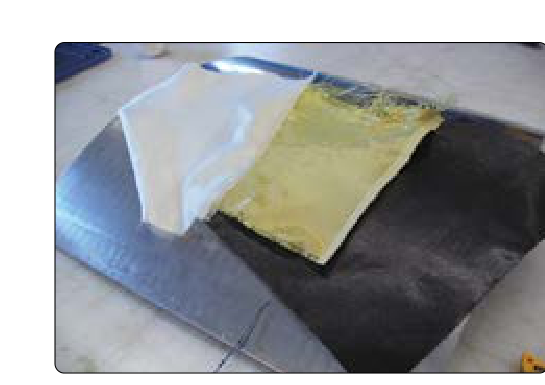
Modern aircraft structures increasingly rely on composite materials — combinations of strong reinforcing fibers embedded in a polymer matrix — to achieve exceptional strength-to-weight ratios that metals simply cannot match. Whether you are working on a Cirrus SR22 fuselage, a Boeing 787 wing skin, or a helicopter rotor blade, you will encounter one or more of the three dominant reinforcement fiber types: fiberglass, aramid (sold commercially as Kevlar), and carbon fiber (also called graphite fiber). Understanding how each material behaves, why designers choose it for specific applications, and how you as an aviation maintenance technician (AMT) must treat it during inspection and repair is essential both for the FAA Airframe Knowledge Test and for safe, effective shop practice.
Each of these reinforcement materials begins as individual filaments — microscopic threads of engineered material — that are bundled into yarns, woven into fabric, or arranged in unidirectional tapes. Those fiber preforms are then combined with a resin matrix (epoxy, polyester, or similar) to create a cured composite structure. The matrix holds the fibers in position and transfers loads between them, but it is the fibers themselves that carry the primary structural loads. Choosing the right fiber is therefore a critical engineering decision, and as an AMT you are responsible for using the exact approved material specified in the manufacturer's Structural Repair Manual (SRM) — substitution is never acceptable without engineering approval.
Fiberglass: The Workhorse of Aviation Composites
Fiberglass, made by drawing molten silica-based glass into very fine filaments, was the first advanced composite reinforcement widely adopted in aviation. It remains the most common and least expensive of the three materials. The FAA's Aviation Maintenance Handbook — Airframe (FAA-H-8083-31) recognizes several grades; the two most commonly encountered in aircraft are E-glass (electrical grade, general purpose) and S-glass (structural grade, notably stronger than E-glass). S-glass is preferred in more demanding structural applications because of its higher tensile strength and better retention of properties at elevated temperatures.
Fiberglass offers a number of practical advantages. It is electrically non-conductive, which makes it ideal for radomes and antenna fairings where RF transparency is required. It is relatively easy to wet out with resin, bonds well, and is forgiving during layup. Repairs are straightforward and well within the skill set of a competent AMT using standard hand-layup techniques. Fiberglass also exhibits good impact resistance — it tends to deform plastically before fracturing, giving visible warning of damage. Its primary disadvantage is relatively low stiffness (modulus of elasticity) compared to carbon fiber. In structures where rigidity matters more than raw tensile strength, fiberglass alone may not be sufficient.
Carbon Fiber: Stiffness and Strength at Minimum Weight
Carbon fiber (graphite fiber) is produced by the controlled thermal oxidation and carbonization of precursor materials — most commonly polyacrylonitrile (PAN). The resulting filaments are primarily carbon atoms arranged in a crystalline structure that gives carbon fiber its remarkable mechanical properties. Carbon fiber composites have a higher specific stiffness and specific strength than aluminum, steel, or fiberglass — meaning they deliver more stiffness and strength per unit of weight. This is why carbon fiber is chosen for primary structure on high-performance aircraft: wing skins, fuselage panels, spars, and control surfaces.
From a maintenance standpoint, carbon fiber presents unique challenges. First, it is electrically conductive, which means galvanic corrosion becomes a real concern when carbon fiber contacts aluminum or other less-noble metals. Approved barrier materials (fiberglass plies, sealants, isolation bushings) must always be used at metal-to-composite interfaces, and the AMT must verify these barriers are intact during inspection. Second, carbon fiber is brittle compared to fiberglass or aramid — it does not yield before fracturing, so impact damage may be internal and invisible from the surface. This is why NDT methods such as tap testing, ultrasonic inspection, and thermography are so important for carbon fiber structures. Third, carbon fiber dust and particles generated during cutting or sanding are electrically conductive and can damage nearby avionics if contamination is not controlled. Always use proper personal protective equipment (PPE) and contain the work area when machining carbon fiber.
Carbon fiber is available in several grades classified by their modulus: standard modulus, intermediate modulus, and high modulus. Higher-modulus fibers are stiffer but more brittle; the SRM will specify exactly which grade is required for a given repair, and substitution with a different modulus is not permitted.
Aramid Fiber: Toughness and Damage Tolerance
Aramid fiber — best known by the trade name Kevlar, a product of DuPont — is a synthetic aromatic polyamide. It is produced by extruding a liquid polymer solution through a spinneret and then stretching and heat-treating the resulting filaments. Aramid fiber has an outstanding tensile strength-to-weight ratio, comparable to or exceeding carbon fiber in pure tension, and it exhibits exceptional toughness — the ability to absorb energy before fracturing. This makes it the material of choice for applications where impact resistance and damage containment are paramount: helicopter rotor blades, flooring panels, leading edge structures, fuel tanks, and ballistic protection panels.
The toughness of aramid is both its greatest asset and the source of its primary limitation. Because aramid fibers are extremely tough and flexible, they are very difficult to cut cleanly — they tend to fuzz and delaminate rather than sever. Special scissors, razor blades, or diamond-coated cutting tools are required. More importantly, aramid fibers have poor compressive strength. In compression loading, aramid fibers buckle and kink rather than carrying load effectively. For this reason, aramid is rarely used alone in primary structure subject to compressive loads; it is often combined with carbon fiber in a hybrid layup that exploits the tensile toughness of aramid and the compressive stiffness of carbon.
Aramid also absorbs moisture more readily than carbon fiber or fiberglass, which can degrade its mechanical properties over time. Inspection and repair procedures for aramid structures must account for moisture intrusion, and the material typically must be dried thoroughly before bonded repairs are made. Additionally, aramid is sensitive to ultraviolet light degradation and must be protected by an opaque surface coating or paint system.
Why the Distinctions Matter in Maintenance
The FAA is explicit that AMTs must use approved materials and procedures from the manufacturer's data. Using fiberglass cloth to repair a carbon fiber primary structure, or substituting one fiber grade for another, can drastically change the stiffness distribution of the component, potentially overloading adjacent structure or producing flutter susceptibility. Composite repairs that restore appearance but not structural integrity are a well-documented hazard in aviation.
Another critical maintenance consideration is interlaminar shear strength and the risk of delamination. All three fiber types can develop hidden delaminations from impact, overstress, or moisture. The tap test (coin tap or electronic tap hammer) remains the most widely used field method: a clear, ringing tone indicates good bonding; a dull thud indicates a void or delamination. More sophisticated methods — ultrasonic C-scan, radiography, thermographic inspection — are required by many SRMs for structural areas and for damage exceeding certain size limits.
Key Numbers and Rules
- E-glass vs. S-glass tensile strength: S-glass is the higher-performance structural grade, with notably higher tensile strength than E-glass; exact published values vary by manufacturer and test method, so consult the specific material specification rather than a single fixed figure.
- Carbon fiber specific stiffness: significantly higher than aluminum, with the exact multiple varying by fiber modulus grade — the primary reason it dominates high-performance primary structure.
- Aramid tensile strength-to-weight: among the highest of any structural fiber, but compressive strength is only a fraction of its tensile strength — never use aramid as the primary compressive member.
- Galvanic concern: carbon fiber is more noble (cathodic) relative to aluminum in the galvanic series; always verify isolation barriers at metal-composite joints.
- Moisture sensitivity: aramid absorbs moisture most readily of the three; dry at manufacturer-specified temperature and time before bonded repairs.
- Material substitution: always prohibited without FAA-approved engineering data (SRM, repair drawing, or DER approval).
- PPE: carbon fiber dust is electrically conductive and a respiratory hazard; fiberglass and aramid fibers are also respiratory hazards — always use respirator, gloves, and eye protection when machining composites.
Common Test Traps
- Galvanic corrosion confusion: Students sometimes assume composites are immune to galvanic issues. Carbon fiber is electrically conductive and more noble (cathodic) than aluminum — aluminum touching carbon fiber will corrode. Fiberglass and aramid are non-conductive and do not create galvanic couples.
- Aramid compressive strength: A common distractor suggests aramid is superior to carbon fiber in all load directions. Aramid has excellent tensile properties but very poor compressive strength — the test will exploit this.
- Visible damage assumption: Carbon fiber damage from impact is often internal and invisible on the surface. Unlike metals, which show visible deformation, carbon fiber can have significant internal delamination with no surface indication — NDT is essential.
- S-glass vs. E-glass: The test may ask which is the structural grade. S-glass (Structural) is stronger and used in more demanding applications; E-glass (Electrical) is the more common, lower-cost general purpose grade.
- Fiber substitution: A scenario question may imply that using a