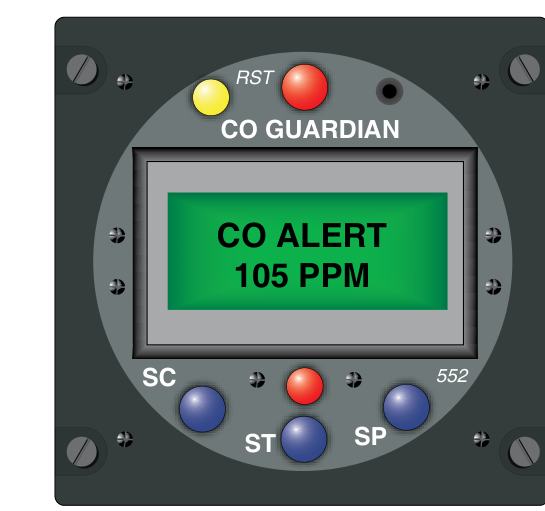
Carbon monoxide (CO) is one of the most insidious hazards in general aviation. Unlike smoke or fuel fumes, it is completely invisible and has no smell, meaning a pilot or passenger can be overcome before any warning signs appear. For airframe technicians, understanding how CO enters the cabin, how detection systems work, and what maintenance practices prevent CO intrusion is not just a regulatory obligation — it is a genuine life-safety responsibility. The FAA places carbon monoxide awareness squarely within the domain of fire protection and environmental control systems, and AMT Airframe candidates are expected to understand this topic in depth.
This article covers the chemistry and sources of CO in aircraft, the types of detection equipment used in general aviation and transport-category aircraft, installation and maintenance considerations, and the regulatory framework that governs CO safety. Pilots and technicians alike benefit from a thorough grounding in this subject because the consequences of failure are irreversible.
What Carbon Monoxide Is and Why It Is Dangerous
Carbon monoxide is produced whenever a carbon-containing fuel burns with insufficient oxygen — a condition called incomplete combustion. In aircraft, the primary sources include the engine exhaust system, cabin heaters that use exhaust heat (combustion heaters and shroud-type heat exchangers), and supplemental cabin heaters burning aviation gasoline or other fuels directly. CO is dangerous because it bonds to hemoglobin in red blood cells with approximately 200 times the affinity of oxygen, forming carboxyhemoglobin (COHb). This blocks the blood's ability to carry oxygen to the brain and other tissues, causing hypoxia at the cellular level even while the lungs are breathing air that contains adequate oxygen.
Symptoms progress rapidly with increasing CO concentration and duration of exposure. At low levels — on the order of tens of parts per million (ppm) — a person may notice a mild headache, slight dizziness, or fatigue. These early symptoms are easy to dismiss as normal fatigue or the early onset of motion sickness, which is precisely what makes CO so dangerous in an aviation context. At higher concentrations or with prolonged exposure, judgment becomes impaired, muscular coordination deteriorates, confusion sets in, and loss of consciousness can follow. Because CO impairs the very cognitive faculties a pilot needs to recognize the danger and take corrective action, the window between first symptom and incapacitation can be alarmingly short. Death can result from very high concentrations within minutes.
Sources of Carbon Monoxide in Aircraft Cabins
The most common pathway for CO intrusion in piston-engine aircraft is a cracked or leaking exhaust system. Exhaust gases forced through even a small crack in a muffler, exhaust stack, or exhaust manifold can be drawn into the cabin through the cabin heat system. Most single-engine light aircraft use a shroud-type heat exchanger, in which outside air passes around the engine's muffler or a section of the exhaust system and is then routed into the cabin. If the muffler or exhaust pipe develops a crack — a common result of the thermal cycling and vibration that exhaust components endure — combustion products mix directly with the air destined for the cabin. This is why a thorough exhaust system inspection is one of the most critical items in any annual inspection or 100-hour inspection performed under 14 CFR Part 43.
Other sources include:
- Combustion heaters (Janitrol-type and similar): These burn fuel directly to produce heat and rely on a heat exchanger to keep combustion gases separate from cabin air. A cracked heat exchanger in one of these units allows CO-laden combustion products to flow directly into the occupied space.
- Exhaust leaks near air inlets: Even without a shroud heater, exhaust fumes can enter the cabin through fresh-air vents or structural gaps if an exhaust leak exists near an air intake location.
- Doors, windows, and structural gaps: Negative pressure areas on certain airframes can draw exhaust gases toward cabin openings, particularly during engine-out glides or specific power/airspeed combinations.
- Ground operations: Operating in a confined area or hangar with an exhaust leak can allow CO to accumulate quickly.
Carbon Monoxide Detection Systems
Because CO cannot be sensed by smell or sight, mechanical or electronic detection is essential. Detection systems used in aircraft fall into two broad categories: passive chemical detectors and active electrochemical or solid-state electronic detectors.
Passive Chemical Detectors
The simplest and most widely used detection method in light general aviation aircraft is the chemical color-change detector, often called a CO spot detector or CO card. These devices contain a chemical compound — typically a silica gel treated with a heavy-metal salt such as palladium chloride — that reacts with CO to change color, usually from a tan or yellow baseline to a progressively darker brown or black. The speed of the color change is proportional to the CO concentration. These detectors are inexpensive, require no power, and are placed in the cockpit where the crew can observe them.
However, passive detectors have significant limitations. They must be inspected visually, meaning they only warn if the pilot actively looks at them. They can give false positives from humidity or other contaminants, and they have a finite service life — typically specified by the manufacturer — after which sensitivity degrades. An AMT must ensure that passive detectors are within their expiration date and that their installation location is per the manufacturer's guidance. These devices are not approved as the sole means of CO protection in transport-category aircraft but are widely accepted in general aviation as a cost-effective alert tool.
Active Electronic Detectors
Electronic CO detectors use either electrochemical cells or metal oxide semiconductor (MOS) sensors to continuously sample cabin air and provide an audible and/or visual alarm when CO reaches a specified threshold. Electrochemical sensors measure the electrical current produced when CO reacts with an electrolyte solution; MOS sensors detect changes in electrical resistance in a metal oxide material when CO is present. Electronic detectors provide continuous monitoring, do not rely on crew vigilance to observe a color change, and can be calibrated to alarm at specific CO concentrations — typically in the range of 35 to 70 ppm depending on the device and its certification basis.
TSO-C241 (Technical Standard Order) establishes the minimum performance standards for aircraft CO detection equipment in the United States. Technicians installing or replacing certified CO detectors must ensure the device meets the applicable TSO and that the installation is accomplished in accordance with the manufacturer's instructions and an approved data source. Installation in transport-category aircraft is subject to the aircraft's type certificate data and the requirements of 14 CFR Part 25 for crew alerting systems.
Maintenance and Inspection Considerations
For the AMT, CO safety is primarily achieved through diligent inspection and maintenance of the exhaust system and any heating systems that use combustion or exhaust heat. Key maintenance practices include:
- Exhaust system inspection: Each inspection should include a careful visual and, where practical, a pressure or smoke test of the exhaust system. Hairline cracks in mufflers are often invisible without disassembly and close inspection. Replacement of mufflers and exhaust components on a time-or-condition basis is strongly recommended.
- Heat exchanger integrity: Combustion heaters must have their heat exchangers inspected per the manufacturer's instructions. Many manufacturers specify pressure testing with the heater reassembled but before reinstallation in the aircraft.
- Detector serviceability: Passive chemical detectors must be replaced before their expiration date. Electronic detectors must be tested per the manufacturer's instructions and calibrated or replaced on schedule.
- Airworthiness directives: Numerous ADs have been issued against specific muffler assemblies and combustion heaters due to CO intrusion incidents. AMTs must ensure all applicable ADs are complied with on every applicable aircraft.
- Documentation: All CO-related inspections and detector replacements must be properly documented in the aircraft maintenance records per 14 CFR 43.9 and 43.11.
Why It Matters: Regulatory and Safety Context
The FAA has investigated numerous accidents in which CO incapacitation was identified as a contributing or causal factor. The NTSB has repeatedly cited cracked exhaust systems and deferred maintenance on heat exchangers in accident reports involving CO exposure. Because CO impairment mimics hypoxia and can degrade pilot performance before the pilot is aware of any problem, there is no reliable behavioral cue — the system must detect the hazard automatically. This places the burden squarely on the technician to ensure the aircraft's barriers against CO intrusion are intact and that detection equipment is functional.
The FAA's Aviation Maintenance Technician Handbook — Airframe (FAA-H-8083-31) covers environmental control and fire protection systems, and CO detection is treated as part of those systems. Understanding both the detection technology and the preventive maintenance that makes detection a last resort — rather than the first line of defense — is the professional standard expected of certificated airframe technicians.
Key Numbers and Rules
- ~200×: The approximate affinity of hemoglobin for CO compared to oxygen — the basis of CO's extreme toxicity at low concentrations.
- 35–70 ppm: Typical alarm threshold range for certified electronic CO detectors; prolonged exposure even at 35 ppm can cause symptoms in sensitive individuals.
- TSO-C241: The FAA Technical Standard Order governing minimum performance standards for aircraft CO detection equipment.
- 14 CFR Part 43: Governs maintenance, preventive maintenance, and alteration recordkeeping, including exhaust system inspections.
- Annual/100-hour inspection: Exhaust system integrity inspection is a required element; the inspection checklist in 14 CFR Part 43, Appendix D, includes powerplant and exhaust components.
- Passive detector service life: Manufacturer-specified expiration dates must be observed; an expired detector may show no color change even in dangerous CO concentrations.
Common Test Traps
- Confusing CO symptoms with hypoxia: Both produce headache, confusion, and impaired judgment, but CO poisoning occurs at normal altitude pressures through chemical binding, not reduced oxygen partial pressure. Supplemental oxygen from an onboard system does NOT rapidly reverse severe CO poisoning the way it reverses altitude hypoxia, because COHb must dissociate over time.
- Assuming a smell means CO is present: CO has no odor. If an odor is detected, it may indicate other exhaust gases (hydrocarbons, sulfur compounds), but the absence of odor does NOT mean CO is absent. Students sometimes invert this logic on exam questions.
- Thinking the color-change detector is always reliable: An expired detector or one exposed to high humidity may not respond accurately. Serviceability and replacement intervals matter.
- Overlooking the exhaust system as the primary CO source: Questions may describe combustion heater failures or other exotic scenarios, but in light aircraft the cracked muffler or shroud heat exchanger is by far the most common real-world source.
- Ignoring ADs on exhaust components: Failure to comply with an applicable AD renders the aircraft unairworthy. AMT exam questions test whether candidates know that AD compliance is mandatory and must be documented, not optional or deferred.