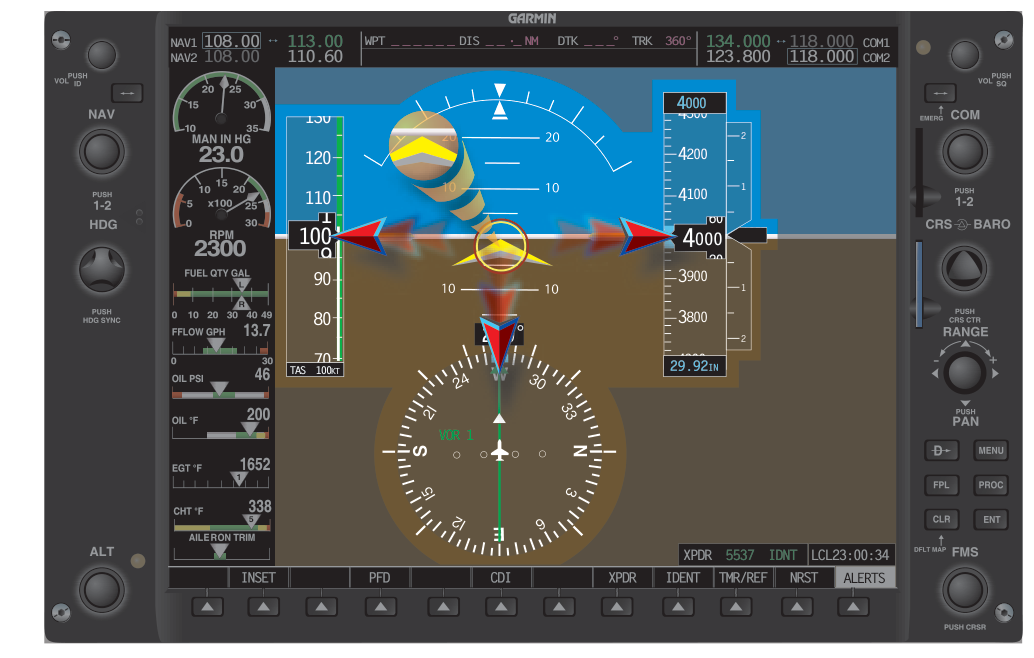
Aviation's safety record did not improve by accident. One of the most powerful forces behind the dramatic reduction in airline accident rates over the past four decades is the systematic practice of cross-checking and verification in multi-crew cockpits. At its core, this practice means that neither pilot operates in isolation — every critical action, configuration change, and flight parameter is subject to independent review by the other crew member. For Airline Transport Pilot (ATP) candidates, understanding the mechanics, the psychology, and the regulatory underpinning of crew cross-checking is not only essential for the knowledge test, but is the foundation of a professional flying career.
The FAA's Risk Management Handbook (FAA-H-8083-2) and Aviation Instructor's Handbook (FAA-H-8083-9) both treat crew coordination as a core competency. These references draw a direct line from crew resource management (CRM) principles — developed after landmark accident investigations in the 1970s and 1980s — to the specific behaviors pilots must practice on every flight. Cross-checking and verification are the practical expression of CRM in real time.
How Cross-Checking and Verification Work
In a multi-crew environment, the two pilots divide responsibilities into two distinct roles that rotate with each flight leg: the Pilot Flying (PF) and the Pilot Monitoring (PM), sometimes still called Pilot Not Flying (PNF). The PF manages aircraft control inputs — maintaining aircraft attitude, following departure or approach procedures, and directing the automation. The PM handles communications, reads checklists, monitors instruments, and — critically — cross-checks the PF's actions and the aircraft's state against what is expected.
Cross-checking is both continuous and event-driven. On a continuous basis, the PM scans primary flight instruments to verify that altitude, airspeed, vertical speed, and track are within expected parameters. This is not a passive scan; the PM actively compares the readout to the clearance, the published procedure, and the anticipated aircraft performance. If a deviation appears — say, the aircraft is descending through an assigned altitude — the PM calls it out immediately.
Event-driven cross-checking occurs at specific, defined moments: mode selections on the flight management system (FMS), configuration changes such as flap and gear extension, fuel cross-feed selections, engine start sequences, and checklist completion. At each of these gates, the PM independently verifies the action rather than simply trusting that the PF performed it correctly. This independence is not a sign of distrust; it is the engineered redundancy that two-pilot crews exist to provide.
The Challenge-Response and Do-Verify Methods
Two primary checklist techniques appear in airline standard operating procedures (SOPs) and are discussed in FAA guidance. In the challenge-response method, the PM reads a checklist item aloud (the challenge), the PF or PM who owns that item physically touches or operates the control and then states the response (e.g., "Landing gear — down and locked"). The other crew member verifies the cockpit state matches the response before moving on. This two-step loop closes the verification circuit.
The do-verify (or flow-then-check) method is common during normal, time-compressed phases such as takeoff preparation. The PF runs a memory flow — a sequence of actions performed from memory in a logical cockpit scan — then the PM reads the checklist as a verification tool to confirm every item was correctly completed. Both methods demand that the PM not simply hear the response but visually confirm it. Hearing "flaps set" without looking at the flap indicator is not verification; it is assumption.
Why Cross-Checking Matters: The Human Factors Case
The human brain is susceptible to a cluster of cognitive tendencies that make individual pilot performance unreliable in isolation. Confirmation bias leads a pilot to see what they expect to see rather than what is actually there. Fixation — sometimes called channelized attention — narrows focus so completely on one problem that other critical information goes unnoticed. Fatigue degrades both vigilance and working memory. Stress and high workload narrow the attentional field. These are not character flaws; they are documented properties of human cognition described in FAA-H-8083-2 and FAA-H-8083-25.
Cross-checking by a second crew member serves as a real-time error detection system that operates independently of the PF's cognitive state. If the PF has become task-saturated during a complex non-normal procedure, the PM's independent monitoring may be the only barrier between an error and an accident. The FAA's Risk Management Handbook frames this in terms of the Swiss cheese model of accident causation: multiple layers of defense, each with holes, must align before an accident occurs. The PM's cross-check is one of the most important defensive layers in the multi-crew environment.
Historical accident analysis reinforces this point. A recurring theme in airline accidents is the breakdown of monitoring and cross-checking — one pilot's error was not caught by the other because the monitoring role was abandoned, the culture discouraged speaking up, or the PM became task-absorbed themselves. The Pilot's Handbook of Aeronautical Knowledge (FAA-H-8083-25) and associated CRM research consistently identify inadequate crew coordination as a top causal factor in multi-crew accidents.
Assertiveness, Authority Gradients, and Speaking Up
Cross-checking is only effective if the PM who detects a deviation is willing and empowered to say so. This is where authority gradient becomes a critical concept. An authority gradient is the perceived power differential between the captain and the first officer. When the gradient is very steep — when the first officer perceives the captain as unapproachable or infallible — deviations may go unreported even when the monitoring pilot notices them. FAA-H-8083-2 addresses this directly: effective CRM requires a culture where all crew members feel both responsible and safe to voice concerns.
Modern CRM training emphasizes a structured escalation for raising concerns. A common framework moves through levels of assertiveness: first, a crew member states an observation ("I show us passing through our assigned altitude"); if not addressed, they express concern ("Captain, I'm concerned we're descending below our clearance"); if still unaddressed, they make a direct statement ("Stop the descent — we have a clearance altitude to maintain"). This graduated approach respects authority while ensuring critical information is communicated. The Aviation Instructor's Handbook (FAA-H-8083-9) frames assertiveness as a required CRM competency, not an optional personality trait.
Key Numbers, Rules, and Regulatory Anchors
- 14 CFR Part 121 Subparts N and O govern training, qualification, and certification requirements for air carriers, including CRM training for flightcrew. Operators must include crew coordination in their approved training programs.
- 14 CFR § 121.542 (the "Sterile Cockpit Rule") restricts non-essential duties, activities, and communications during critical phases of flight — including taxi, takeoff, landing, and all flight operations conducted below 10,000 feet except cruise flight — directly protecting the quality of the cross-check by reducing distractions when it matters most.
- 14 CFR § 91.3 establishes pilot-in-command authority and responsibility as a general operating rule; Part 121 operations also carry their own PIC authority provisions (14 CFR § 121.533). CRM does not dilute PIC authority under either rule — it leverages the full crew's capabilities within that authority structure.
- Airline SOPs commonly define numeric callout thresholds for deviations from assigned altitude, target airspeed, and heading to prompt PM callouts — precise values are operator-specific conventions rather than standardized FAA figures, and reflect the sensitivity required in high-altitude, high-speed operations.
- Checklist discipline is not optional: FAA-H-8083-9 emphasizes that skipping or hurrying checklists is a leading precursor to configuration-related accidents.
Memory Aid: STAR
A useful framework for the PM's monitoring role in multi-crew operations is STAR:
- S — Scan: Continuously scan flight instruments and aircraft state against expected parameters.
- T — Talk: Verbalize observations, call out deviations, and confirm checklist responses aloud.
- A — Assert: Speak up when something is wrong, using graduated assertiveness if needed.
- R — Resolve: Confirm that the deviation has been corrected before returning to normal monitoring.
STAR captures the active, dynamic nature of the PM role — monitoring is not passive watching, it is engaged, communicative, and corrective when necessary.
Common Test Traps
- Confusing monitoring with passive observation. The ATP knowledge test may frame PM duties as simply "watching." In reality, the PM role is actively comparative — always checking actual state against expected state and communicating findings.
- Misidentifying who owns which checklist item. Some items are PF-initiated, others are PM-initiated. Understanding SOP flow and the challenge-response loop prevents confusion about responsibility during a test scenario.
- Overlooking the Sterile Cockpit Rule's scope. 14 CFR § 121.542 applies during critical phases of flight, including all operations below 10,000 feet except cruise flight. Questions may test whether you know both the altitude reference and the types of operations it applies to (Part 121 air carrier operations).
- Assuming CRM only applies to abnormal situations. Cross-checking and verification are normal, every-flight disciplines. The FAA tests understanding that effective CRM prevents abnormal situations from developing, not just manages them after they arise.
- Conflating crew coordination with shared authority. The PIC retains final authority under 14 CFR § 91.3 and, in Part 121 operations, 14 CFR § 121.533. CRM leverages all crew members' input within that structure; it is not a democratic vote on aircraft control decisions.
Mastering cross-checking and verification means internalizing a fundamental truth of multi-crew flight: two well-coordinated pilots using disciplined monitoring and clear communication are dramatically safer than two highly skilled pilots each operating independently. The FAA's entire CRM framework, the sterile cockpit rule, and crew coordination training requirements in Part 121 all point toward the same goal — keeping the second set of eyes fully engaged, empowered, and effective at every moment of every flight.