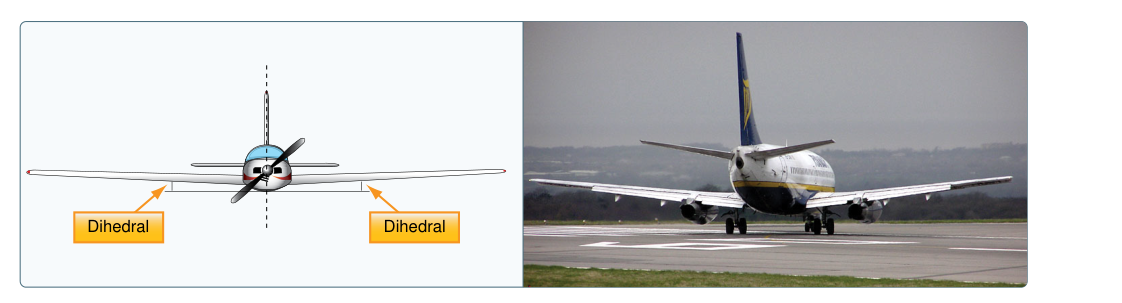
When an aircraft rolls off an assembly line or returns from major structural repair, one of the most critical checks an Aviation Maintenance Technician (AMT) must perform is the verification of wing dihedral and incidence angles. These two geometric measurements directly govern how the aircraft flies — influencing lateral stability, lift distribution, stall behavior, and trim. Getting them wrong by even a small margin can produce an aircraft that flies with one wing low, requires constant control input to maintain heading, or develops asymmetric stall tendencies. Understanding what these angles are, how they are measured, and what tolerances the manufacturer specifies is fundamental to airframe assembly and rigging.
Both angles are defined relative to a reference plane established during the design of the aircraft. The reference plane is typically either the aircraft's waterline (a horizontal datum defined in the manufacturer's maintenance manual) or the longitudinal axis of the fuselage. Every measurement taken during rigging is compared against this datum, making accurate establishment of the reference plane the essential first step in any wing-rigging procedure.
What Dihedral Angle Is and How It Works
Dihedral is the upward angle of a wing relative to the horizontal plane of the aircraft. When you stand in front of an airplane and look toward the tail, dihedral is the amount by which each wing tips upward from the wing root to the wingtip. Most conventional light aircraft have positive dihedral — the tips sit higher than the roots — which is a primary contributor to lateral (roll) stability.
The stability mechanism works like this: if a gust or control input causes the aircraft to roll to the right, the right wing descends and the left wing rises. The descending right wing momentarily presents a greater effective angle of attack to the relative wind (because its lift vector is now tilted slightly forward as well as down), generating more lift on that side. The rising left wing simultaneously loses effective angle of attack and generates less lift. This imbalance creates a restoring rolling moment that tends to return the aircraft to wings-level flight without pilot input. The greater the dihedral angle, the stronger this self-correcting tendency — though excessive dihedral can lead to Dutch roll or over-sensitivity.
Some aircraft designs use anhedral (negative dihedral, wings angled downward), typically high-wing aircraft or certain swept-wing designs where other geometric factors already provide more-than-adequate lateral stability. Low-wing aircraft generally need more positive dihedral to compensate for the destabilizing pendulum effect that comes from having the center of gravity above the wing attachment point.
What Incidence Angle Is and How It Works
Incidence angle (also called the angle of incidence or wing setting angle) is the fixed angle between the wing chord line and the longitudinal axis of the fuselage. Unlike the angle of attack — which changes constantly during flight — the incidence angle is a rigid structural relationship built into the airframe during manufacture and verified during assembly and rigging.
Designers select the incidence angle so that when the aircraft is in normal cruise flight, the fuselage sits at a low drag attitude (close to level) while the wing simultaneously operates at an efficient, moderate angle of attack. A typical light general aviation aircraft might have an incidence angle of one to four degrees, positive (leading edge higher than trailing edge relative to the fuselage datum). This allows the fuselage to be nearly level in cruise while the wing produces sufficient lift.
Some aircraft also incorporate washout — a gradual reduction in incidence from root to tip — built into the wing's twist. Washout is not separately verified as a rigging adjustment but is a manufacturing characteristic confirmed during inspection. It ensures the wing root stalls before the tip, preserving aileron effectiveness during the early stages of a stall.
Verification Procedures in the Shop
The actual procedure for measuring dihedral and incidence follows the steps outlined in the specific aircraft's maintenance manual, but common principles apply across most types. The AMT must first level the aircraft in both the lateral and longitudinal planes, using the leveling points specified in the manufacturer's manual and a precision spirit level or electronic inclinometer. This is non-negotiable — every subsequent angular measurement is meaningless if the aircraft datum is not accurately established.
Measuring Dihedral
Once the aircraft is leveled, dihedral is typically measured by placing a precision inclinometer or dihedral board on the lower surface of the wing — either at a specific spanwise station or along the main spar — and reading the angle directly. Some manufacturers specify measuring at the front spar; others at the rear spar or a specific rib station. The technician compares the measured value against the manufacturer's specification and acceptable tolerance, which is commonly stated in the maintenance or structural repair manual. A discrepancy beyond tolerance indicates an asymmetric or improperly rigged wing that must be corrected before the aircraft is returned to service.
Measuring Incidence
Incidence is measured by placing an inclinometer on the upper or lower surface of the wing skin at a designated chord-wise station (often a location specified relative to a known rib or spar). The reading gives the angle of the wing chord relative to horizontal. Because the aircraft is already leveled to its fuselage datum, the instrument reading directly equals the incidence angle relative to the fuselage longitudinal axis. Again, the measured value is compared to the manufacturer's published specification and tolerance.
Many manufacturers provide a special rigging fixture or incidence board tailored to their specific aircraft geometry. Using these manufacturer-approved tools — rather than improvised substitutes — is essential for accuracy and is required under 14 CFR Part 43 and the applicable maintenance manual data.
Why Correct Angles Matter for Safety and Airworthiness
An aircraft with out-of-tolerance dihedral will exhibit asymmetric roll tendency. One wing produces more restoring force than the other, causing the aircraft to consistently fly with one wing low or requiring constant aileron trim input. This increases pilot workload and fatigue, and in severe cases can mask or worsen stall/spin tendencies.
Incorrect incidence angle on one wing (common after asymmetric structural repair) causes one wing to generate more lift than the other at any given airspeed, producing a chronic roll or yaw. Incorrect incidence on both wings shifts the aircraft's trim speed, potentially causing it to fly nose-high or nose-low in cruise, degrading performance and efficiency. In extreme cases, an incidence error could cause the wing to reach a stall angle of attack at an airspeed higher than published, reducing safety margins.
These are the reasons that after any repair that might affect wing attachment geometry — such as a wing spar repair, wing replacement, or recovery from gear-up landing damage — the manufacturer's rigging verification procedure must be completed and documented in the maintenance records per 14 CFR Part 43.
Key Numbers and Rules
- Always level the aircraft first using the manufacturer's specified leveling points before any angular measurement — all other readings depend on this baseline.
- Tolerances are manufacturer-specific; there is no universal FAA tolerance for dihedral or incidence. Always consult the aircraft's maintenance manual or structural repair manual for limits.
- Dihedral is measured in degrees from horizontal; typical light aircraft dihedral ranges from about 1° to 7°, but the correct value for a specific aircraft is found only in its type data.
- Incidence angle is fixed by design and is not a routine adjustment; it becomes a verification item after structural repair or wing reinstallation.
- Approved data required: All rigging and repair procedures must be performed using manufacturer's maintenance manual data, FAA-approved repair data, or other acceptable FAA-approved methods per 14 CFR Part 43, Appendix A.
- Document all findings: Measurements, tools used, and conformance or corrective action must be entered in the aircraft's maintenance records and signed off by the certificated AMT or repairman.
- Bilateral symmetry check: Both wings must be checked independently and compared to each other; even if both are within tolerance of the nominal value, a significant difference between left and right wing readings may indicate a rigging problem worth investigating.
Common Test Traps
- Confusing dihedral with angle of attack: The FAA knowledge test often includes distractors that mix up fixed geometric angles (dihedral, incidence) with dynamic in-flight angles (angle of attack). Dihedral and incidence are structural; angle of attack changes with pitch and airspeed.
- Assuming incidence can be adjusted in the field: Incidence is a fixed structural angle. Unlike control surface rigging (which can be adjusted with turnbuckles or pushrods), incidence is set during manufacture. A discrepancy indicates a structural misalignment, not a rigging adjustment item — although some aircraft designs do allow limited shimming at the wing attach fittings per approved data.
- Skipping the leveling step: Some test questions probe whether the student knows that all angular measurements are meaningless without first properly leveling the aircraft to its published datum. Never assume a parked aircraft is level.
- Mixing up washout with incidence: Washout is a gradual twist built into the wing along its span (root to tip), while incidence is the angle of the wing as a whole relative to the fuselage. They are related concepts but are measured and verified differently.
- Applying one aircraft's values to another: Dihedral and incidence specifications are type-specific. There are no FAA-universal standard values. Always reference the applicable aircraft maintenance manual — a common test question tests whether the student knows the correct authoritative source for this data.