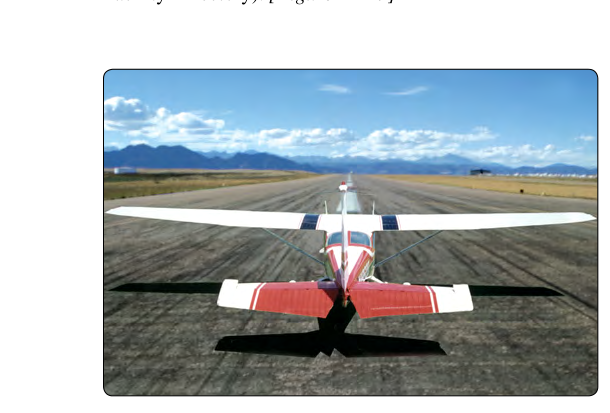
When student pilots first study aircraft performance, attention naturally gravitates toward density altitude, weight, and wind. Yet the surface beneath the wheels plays an equally critical role in determining whether an airplane lifts off safely within the available runway or stops comfortably after touchdown. A soft or contaminated runway can add dozens — sometimes hundreds — of feet to your ground roll, and ignoring that reality has caused countless accidents. This article explains exactly how runway surface affects performance, why the physics work the way they do, and how to account for surface conditions during preflight planning.
The FAA's Pilot's Handbook of Aeronautical Knowledge (PHAK) and the Airplane Flying Handbook (AFH) both emphasize that published performance data in your Pilot's Operating Handbook (POH) is almost always generated on a smooth, dry, hard-surface runway under ideal conditions. Any deviation from that baseline — grass, gravel, mud, standing water, snow, or ice — degrades performance from the moment the throttle opens until the aircraft reaches flying speed or comes to a full stop.
How Runway Surface Affects Performance
The central concept is rolling resistance, also called ground friction or rolling friction. When your tires roll along the ground, the surface pushes back against the forward motion of the aircraft. On a perfectly smooth, dry, hard runway, this resistance is relatively low, allowing the engine's thrust to accelerate the airplane efficiently. On a soft, rough, or contaminated surface, rolling resistance increases dramatically, consuming thrust energy that would otherwise translate into acceleration.
Think of it in terms of Newton's second law: acceleration equals net force divided by mass. If runway friction is eating into your net forward force, your acceleration drops, and it takes longer — and more distance — to reach rotation speed. The same logic applies in reverse on landing: higher rolling resistance helps slow the airplane more quickly, but wet or icy surfaces reduce tire friction and lengthen the stopping distance considerably.
Paved (Hard) Surfaces
A dry, paved runway is the performance baseline. Concrete and asphalt both provide a stable, consistent rolling surface. The AFH notes that wet pavement reduces braking effectiveness significantly because water acts as a lubricant between the tire and the surface. At higher speeds, there is also the risk of hydroplaning — where a thin film of water lifts the tire completely off the pavement — which can reduce braking to nearly zero. The speed at which dynamic hydroplaning begins is approximately 8.6 times the square root of the tire pressure in psi. For a typical light training aircraft with 24 psi tires, that calculates to roughly 42 knots. This means hydroplaning is a genuine risk even at normal landing speeds on wet runways.
Grass Runways
Grass is one of the most common non-paved surfaces student pilots encounter at smaller airports. The PHAK advises that short, dry grass has a relatively modest performance penalty compared to hard pavement, but that penalty grows quickly as grass becomes taller, wet, or soft underneath. Wet grass is particularly treacherous on landing because the slippery surface reduces tire-to-ground friction, extending the ground roll significantly. Conversely, short dry grass provides slightly more rolling resistance than pavement, which can marginally help braking — but that benefit is outweighed in soft or wet conditions.
A commonly referenced planning guideline (noted in many POH performance supplement sections) is to add approximately 7–15% to the published ground roll distance for a firm, dry grass surface. For soft or wet grass, additions of 25–35% or more may be appropriate, depending on aircraft, grass height, and soil conditions. Always consult your specific POH for any correction factors provided by the manufacturer; if none are given, apply conservative estimates and use your best judgment.
Gravel and Unpaved Surfaces
Gravel runways present unique hazards beyond rolling resistance. Loose stones can be thrown by the propeller, damaging the prop tips, belly, and horizontal stabilizer. Gravel also dramatically increases rolling resistance during the takeoff roll. Pilots operating on gravel surfaces should follow the aircraft manufacturer's guidance — some aircraft require specific propeller clearance or placards restricting gravel operations — and anticipate meaningfully longer takeoff distances. The AFH points out that rough surfaces can also induce structural stress by vibrating the airframe during the ground roll.
Snow and Ice
Snow and ice represent the extreme end of the surface contamination spectrum. Dry, packed snow acts somewhat like a soft surface and increases rolling resistance during takeoff. However, it dramatically reduces braking friction on landing, meaning ground roll can more than double compared to a dry pavement baseline. Wet snow or slush is even more problematic because the thick, viscous material resists tire rotation far more aggressively than dry snow. The PHAK emphasizes that slush can impose so much drag that an aircraft may fail to accelerate to rotation speed entirely, a factor that has contributed to fatal accidents.
Ice is the most dangerous surface condition for landing. Braking friction on glare ice can approach zero, making directional control and stopping distance almost entirely dependent on aerodynamic braking (holding the nose up to create drag) and whatever crosswind or headwind component is available. Runway Condition Codes (RwyCC), published in NOTAMs under the Global Reporting Format (GRF) system, provide standardized information about surface conditions at airports. Pilots should review these codes during preflight planning when contamination is possible.
Why Runway Surface Matters
The stakes are straightforward: if you underestimate the performance penalty of a soft or contaminated surface, you may commit to a takeoff and find yourself at the end of the runway with insufficient airspeed, or attempt a landing and discover your airplane will not stop in the available distance. Either scenario can be catastrophic. Runway overruns are among the leading causes of general aviation accidents, and many involve inadequate preflight performance calculations that failed to account for surface conditions.
Surface conditions also affect aircraft control during the ground roll. On a soft or rough surface, the nose can pitch unpredictably, making it harder to track the runway centerline. On a slippery surface, differential braking is less effective, meaning a crosswind can push the aircraft sideways before you have adequate rudder authority. Being mentally prepared for these handling differences — not just the numbers — is part of sound preflight risk assessment.
Key Numbers and Rules
- Dry pavement baseline: All POH performance charts assume a smooth, dry, hard surface unless otherwise noted.
- Wet pavement: Expect significantly degraded braking; hydroplaning can begin around 8.6 × √(tire pressure in psi) knots.
- Firm dry grass: Add roughly 7–15% to published ground roll; consult your POH for manufacturer-specific factors.
- Soft or wet grass: Add 25–35% or more to ground roll and landing distance; conditions vary widely.
- Snow/slush: Can more than double landing distances; takeoff may be impossible in deep slush.
- Ice: Braking friction can approach zero; directional control is severely compromised.
- Runway Condition Codes (RwyCC): Published in NOTAMs under GRF; scale from 6 (dry) to 0 (nil friction — do not land).
- POH primacy: Always use manufacturer-provided correction factors first; generic rules of thumb are planning tools, not substitutes.
Memory Aid
A useful way to remember the factors that compound runway performance penalties is the phrase "SWAP the runway" — Surface type, Wet or dry condition, Available length vs. required distance, Pressure and temperature (density altitude). While this is not an official FAA mnemonic, it captures the four questions every pilot should answer before committing to a takeoff or landing on any runway, particularly non-standard surfaces. Surface type tells you the baseline penalty; wet or dry condition modifies it further; available length confirms you have the margin; and pressure/temperature reminds you that density altitude compounds every surface penalty because a longer ground roll is needed to reach the same airspeed.
Common Test Traps
- Assuming the POH chart always applies directly: FAA knowledge test questions often present scenarios on grass or wet pavement and expect you to recognize that published distances must be corrected upward. The chart alone is not the final answer.
- Confusing landing and takeoff effects: Higher rolling resistance helps shorten landing distance on some soft surfaces, but the same surface can make takeoff much longer or even impossible — the effect works in opposite directions for takeoff vs. landing.
- Forgetting hydroplaning risk on wet pavement: Students often think hydroplaning only happens in heavy rain on highways. It is a documented aviation hazard on any wet paved runway, including at speeds well within normal light aircraft operating ranges.
- Underestimating snow and slush: A dusting of snow looks benign but can still increase rolling resistance substantially, and slush can prevent acceleration to rotation speed.
- Ignoring RwyCC NOTAMs: The FAA expects pilots to use all available information in flight planning. Failing to check NOTAMs for surface condition reports on a winter flight is both a regulatory oversight and a safety failure.