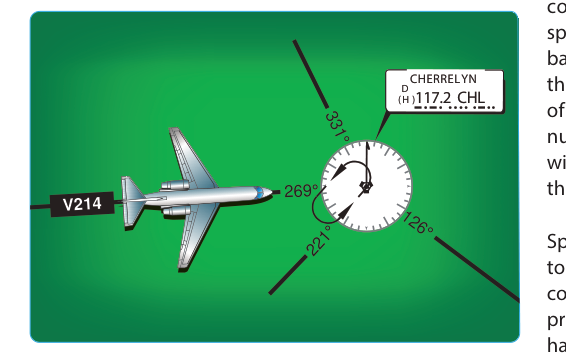
When an air traffic controller assigns a holding clearance, two critical pieces of information shape what happens next: the Expect Further Clearance (EFC) time and the correct method for entering the holding pattern itself. Both are deeply intertwined with IFR lost-communications procedures and with the precision flying required on every instrument approach. Whether you are stacking up in a busy terminal hold or flying a procedure turn published on an approach plate, understanding EFC times and pattern entries is not optional — the FAA knowledge test will probe both, and so will an actual IMC day when the radio goes silent.
This article covers what EFC means legally and operationally, how lost-comm rules interact with EFC, how to identify the three standard holding pattern entry methods, and how to pick the right entry based on your arrival heading. Worked examples are included throughout.
What Is an Expect Further Clearance Time?
An EFC time (sometimes called an expect approach clearance time, or EAC, when given in the context of an instrument approach) is a specific clock time — stated as a Zulu time — that ATC provides when issuing a holding clearance. Its sole purpose is to give you a reference point to use if you lose two-way radio communications while holding. Per the AIM and 14 CFR Part 91, if you experience a communications failure in IMC, you must follow the lost-comm procedures in 14 CFR 91.185, which require you to leave the fix at the expected further clearance time most recently received.
In plain English: if the radio goes dead and you have been told "Expect further clearance at 1435Z," you continue holding until 1435Z and then proceed as if you received a clearance to begin the approach or continue en route. ATC plans traffic around this expectation — they will protect the airspace for you from that time forward. If ATC never gave you an EFC, the regulations say you should proceed after the estimated time of arrival over the fix, based on your flight plan. That ambiguity is exactly why controllers are required to provide an EFC whenever they issue a holding instruction.
Lost-Communications and 14 CFR 91.185
Understanding EFC fully requires understanding the lost-comm rule it supports. Under 14 CFR 91.185, a pilot who loses two-way radio contact in IMC must fly the highest of the following altitudes: the last assigned altitude, the minimum IFR altitude for the route, or the altitude ATC told you to expect. For routing and timing, the pilot must proceed via the last assigned route (or the expected route if no route was assigned), and must leave the clearance limit — the fix where you are holding — at the EFC time if one was given, or at the EAC time if an approach clearance time was provided.
This means the EFC time is not merely a courtesy — it is a safety-of-flight datum baked into federal regulation. If ATC issues a hold without an EFC, best practice is to request one: "N12345, request EFC time." A controller omitting an EFC is not following standard phraseology, and as pilot in command you have both the authority and the responsibility to ask.
Once you depart the holding fix at the EFC time on a lost-comm flight, you squawk 7600 on the transponder, fly the approach, and land as soon as practicable. ATC will have the airspace cleared for you based on that EFC time.
The Holding Pattern: Geometry and Timing
A standard holding pattern is a racetrack-shaped course flown to the right (all turns right unless "left turns" is specified) over a fix. The fix is at one end; you fly outbound for a timed leg, turn 180°, fly back inbound, cross the fix, and repeat. Key dimensions:
- Inbound leg timing: 1 minute at or below 14,000 feet MSL; 1.5 minutes above 14,000 feet MSL.
- Bank angle: standard-rate turns (3°/sec), or 30° bank if that gives a higher rate — whichever produces the lesser bank.
- Airspeed limits (AIM 5-3-8): published maximum holding airspeeds must be observed. Common limits are 200 KIAS at or below 6,000 feet, 230 KIAS 6,001–14,000 feet, and 265 KIAS above 14,000 feet for civil aircraft. RNAV holding may have specific chart-published speeds.
- Outbound timing adjustment: the outbound leg is adjusted so the inbound leg is 1 (or 1.5) minutes. In a headwind on inbound, fly outbound longer; in a tailwind on inbound, fly outbound shorter.
Wind correction is critical. If you have a 20-knot crosswind, you apply a crab angle on both legs. A commonly taught rule of thumb (not a regulatory standard): determine the drift correction angle needed on the inbound leg, then triple that correction angle and apply it to the outbound heading to compensate for drift, adjusting further based on observed groundspeed and drift.
The Three Holding Pattern Entry Procedures
The AIM recommends three entry procedures based on your arrival heading relative to the holding course. To determine which entry to use, you draw — mentally or on paper — a picture of the holding pattern oriented at the fix, then determine which of three entry sectors your arrival heading falls into. The fix is at the bottom of the racetrack; the pattern extends on the holding side (right side for a standard pattern).
Parallel Entry
Use a parallel entry when you arrive from the opposite-end sector — roughly the 70-degree arc on the non-holding side behind the fix (the upper-left quadrant for a standard right-hand pattern). You fly parallel to the inbound course in the outbound direction for one minute, then turn toward the holding side and intercept the inbound course. This entry keeps you on the correct side of the pattern without overshooting the fix dramatically.
Teardrop Entry
Use a teardrop entry when you arrive from the non-holding side at a heading that puts you in the teardrop sector — roughly the 110-degree arc on the non-holding side ahead of the fix (the upper-right area for a right-hand pattern). You fly outbound at approximately a 30-degree angle toward the holding side for one minute, then turn right (for a standard pattern) to intercept the inbound course. The teardrop sets you up beautifully for the inbound leg and is the most intuitive entry geometrically.
Direct Entry
Use a direct entry for all arrival headings in the holding side sector — the remaining 180-degree arc on the holding side of the fix. You simply fly directly to the fix, turn to the outbound heading, and fly the pattern. This works because your arrival heading already puts you on the correct side of the pattern; making a direct turn to outbound keeps you within protected airspace.
The sector boundaries are commonly described this way: stand at the fix facing the inbound course. The holding side is to your right (standard pattern). A line drawn perpendicular to the inbound course at the fix divides front from back. The 70-degree sector behind-and-left is parallel; the 110-degree sector front-and-left is teardrop; the remaining 180-degree sector on the right is direct. The exact boundaries are approximate — the FAA allows reasonable entries so long as you remain within protected airspace, and the FAA does not publish an exact numeric tolerance for these sector boundaries.
Why It Matters: Real-World Scenarios
Imagine you are shooting an ILS approach to a fog-bound airport. ATC tells you to hold at the outer marker, expect further clearance at 1510Z. You acknowledge and begin holding. At 1508Z your radio fails — all frequencies dead, squelch wide open. Now the EFC time is your lifeline. You continue holding, watching the clock. At 1510Z you leave the fix inbound, fly the ILS, land, and taxi clear. ATC, anticipating exactly this on your squawk of 7600, has sequenced traffic accordingly. The system works because you and ATC both trust the EFC time.
Entry procedure errors are a common cause of busting protected airspace in holds. Using a direct entry when a teardrop is correct can put you on the wrong side of the course during the outbound leg, potentially conflicting with IFR traffic or terrain. At busy TRACON facilities, controllers may notice and issue a correction, but in mountainous IMC the margin is unforgiving.
Key Numbers and Rules
- EFC is mandatory phraseology whenever ATC issues a holding clearance (AIM Chapter 5).
- Lost comm: depart the fix at the EFC time per 14 CFR 91.185(c)(2).
- Standard pattern: right turns; non-standard (left) turns must be specifically stated and are charted with an "L" or stated "left turns."
- Inbound leg: 1 minute at or below 14,000 feet MSL; 1.5 minutes above 14,000 feet MSL.
- Airspeed at or below 6,000 feet: 200 KIAS max (civil holding).
- Three entries: Parallel, Teardrop, Direct — chosen by arrival heading relative to the holding course.
- Squawk 7600 immediately upon loss of two-way radio communications in IMC.
Memory Aid
For the three entry sectors, many instrument students use the phrase "PTD — Pick The Door": Parallel (non-holding side, behind), Teardrop (non-holding side, ahead), Direct (holding side, anywhere). Visualize a door on the holding side — if you're already on that side, walk straight through (Direct). If you're on the wrong side heading backward, go parallel. If you're on the wrong side heading forward, teardrop around.
Common Test Traps
- Forgetting EFC is lost-comm specific. The EFC time is NOT a guarantee you will receive a clearance at that moment — it is only the reference time for lost-communication procedures. ATC may clear you earlier or later; the EFC only governs what you do if the radio fails.
- Confusing sector boundaries. The parallel sector is only about 70 degrees wide; it is easy to incorrectly assign parallel to arrivals that should use teardrop, or vice versa. Always draw the pattern and measure from the inbound course, not the outbound.
- Applying inbound timing to the outbound leg. The 1-minute rule governs the inbound leg. The outbound leg is adjusted to achieve a 1-minute inbound, especially in wind.
- Assuming all holds are right-hand turns. Left-hand holds exist and are published. On the knowledge test, read the question carefully for "non-standard" or "left turns" language.
- Mixing up EFC altitude and routing rules. The EFC time governs when to leave the fix; altitude and routing on a lost-comm flight are governed by separate provisions of 91.185 (highest of last assigned, MEA, or expected altitude). Do not conflate the two.