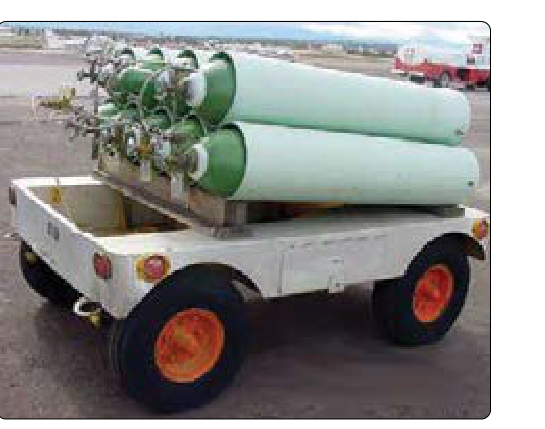
Oxygen systems aboard aircraft — whether supplying supplemental oxygen to cabin occupants at altitude or supporting crew members on high-altitude flights — are among the most carefully regulated and potentially hazardous systems an airframe technician will maintain. The core danger is deceptively simple: pure oxygen does not burn by itself, but it dramatically accelerates the combustion of virtually every other material it contacts. A single drop of petroleum-based lubricant in a high-pressure oxygen fitting can ignite with explosive force. Understanding both gaseous oxygen (GOX) and liquid oxygen (LOX) systems — how they work, how to service them safely, and what the regulations demand — is essential knowledge for any AMT working in the airframe specialty.
This article covers the design principles of each system type, the step-by-step safety disciplines required during servicing, contamination hazards, regulatory grounding, and the exam-focused details examiners consistently test. Mastery here is not optional; mistakes in oxygen system maintenance can be fatal.
Gaseous Oxygen Systems
Most general aviation and many transport-category aircraft use high-pressure gaseous oxygen stored in steel or composite cylinders. Pressures in these systems typically range from approximately 1,800 psi to 2,200 psi for aviator-grade systems. The cylinders are connected through high-pressure tubing to pressure regulators that step the pressure down to a usable level — usually around 60–90 psi for crew masks — and then further reduced or metered by diluter-demand or continuous-flow outlets at each user station.
Three types of gaseous oxygen are relevant in aviation: aviator's breathing oxygen, industrial oxygen, and medical oxygen. Only aviator's breathing oxygen meets the strict moisture specifications required for aircraft use. The maximum allowable moisture content is extremely low — the FAA and the applicable technical specifications require dew-point levels that prevent moisture from freezing and blocking regulators or lines at altitude. Industrial oxygen contains too much moisture and must never be used in aircraft systems. Medical oxygen may appear similar but is approved for different applications and also does not meet the moisture specifications for aviation.
System Components
A typical gaseous oxygen system includes the high-pressure storage cylinders, a filler valve (also called a charging or service valve), a pressure gauge, one or more pressure regulators, distribution tubing, and the individual user outlets. Many systems also include a pressure-relief valve that vents overboard if the cylinder pressure exceeds a safe maximum — an important safety feature during servicing if the system is inadvertently overfilled or exposed to excessive heat. Cylinders must be hydrostatically tested at intervals specified by the manufacturer and 49 CFR (DOT regulations governing pressure vessels): steel cylinders are typically tested every five years and must be permanently removed from service after a defined maximum service life or if they have been involved in a fire.
Liquid Oxygen Systems
Liquid oxygen systems are found primarily in military aircraft and some older transport-category aircraft. LOX is oxygen cooled to its cryogenic boiling point of approximately –297°F (–183°C), which allows a much larger volume of oxygen to be stored in a relatively small, lightweight converter vessel. One liter of LOX expands to approximately 860 liters of gaseous oxygen at standard conditions — this enormous expansion ratio is both the benefit and a major hazard to understand.
The LOX converter (often called the LOX converter assembly) keeps liquid oxygen under slight pressure and converts it to gas on demand using heat exchangers that extract warmth from the ambient environment. Because the storage temperature is so extreme, the converter and all associated lines and fittings are heavily insulated. Contact with LOX or LOX-wetted surfaces can cause severe cryogenic burns (frostbite) within seconds. Additionally, LOX spilled on clothing or materials saturates them with oxygen and creates an extreme fire and explosion risk — even a small spark or static discharge can ignite oxygen-saturated clothing violently.
Servicing Procedures and Safety Rules
The safety rules for oxygen system servicing are not suggestions — they are absolute requirements grounded in physics. The following disciplines must be followed without exception:
- No petroleum-based products near oxygen systems: Never use oil, grease, pipe dope, or petroleum-based thread compounds anywhere in an oxygen system. Any hydrocarbon in the presence of high-pressure oxygen can ignite spontaneously. Only approved oxygen-compatible thread compounds or dry connections are used. Hands must be free of grease before handling fittings, and tools used on oxygen systems must be cleaned of any petroleum residue.
- Use only approved oxygen: Always use aviator's breathing oxygen that meets specification MIL-PRF-27210 or the applicable type certificate data and maintenance manual requirements. Never substitute industrial, medical, or welding oxygen.
- Control the fill rate: When servicing a gaseous oxygen cylinder, open the service valve slowly. Rapid pressurization of an oxygen system causes adiabatic compression heating at the fitting — a phenomenon called heat of compression — which can raise local temperatures high enough to ignite contaminants or even the fitting material itself. Always crack the valve slowly and allow pressure to equalize gradually.
- Ground the aircraft and equipment: Static electricity can ignite oxygen-rich environments. Always bond the oxygen servicing equipment to the aircraft and ground the aircraft before beginning any LOX or GOX servicing.
- No smoking or open flames: Maintain a safety perimeter of at least 50 feet from oxygen servicing operations. Post appropriate warning placards and enforce no-smoking, no-open-flame rules rigorously throughout the area.
- Protective equipment for LOX servicing: When working with liquid oxygen, wear face shields, cryogenic gloves, and clothing with no cuffed trouser legs or open pockets (which can trap and hold LOX). Never allow LOX to contact asphalt surfaces — it reacts with hydrocarbons in asphalt and can cause an explosion.
- Purge before filling: If a gaseous oxygen cylinder or line has been opened to the atmosphere for repair, it must be purged with dry nitrogen or with a small quantity of aviator's breathing oxygen before full charging to remove moisture and atmospheric contaminants.
- Leak testing: Always test connections for leaks using oxygen-compatible leak detection solutions (never petroleum-based soaps) or an approved electronic leak detector. Test at the appropriate pressure per the maintenance manual and never exceed the system's rated working pressure.
Cylinder and Container Care
Gaseous oxygen cylinders must be stored and transported with their protective caps in place to guard the valve. Never drop, strike, or subject cylinders to impacts — damage to the valve or cylinder wall can be catastrophic. Store cylinders upright and secured. A charged cylinder with a broken valve can become a projectile with extraordinary force.
LOX converters must be handled with care to avoid mechanical damage to their insulation. A damaged converter may lose its vacuum insulation and begin venting oxygen rapidly. Never store a LOX converter in an enclosed, unventilated space — even a properly functioning converter vents small quantities of gaseous oxygen continuously, and oxygen accumulation in a closed room creates a severe fire hazard. Always store LOX equipment in well-ventilated areas.
Regulatory and Documentation Requirements
Oxygen system maintenance is governed by the aircraft's Type Certificate Data Sheet, the applicable Aircraft Maintenance Manual (AMM), and 14 CFR Part 43 (maintenance standards). Any repair or alteration that is not a standard practice listed in 14 CFR Part 43 Appendix A requires an approved data source. Cylinder hydrostatic test records must be maintained, and cylinders with expired test dates must be removed from service before further use. All servicing must be documented in the aircraft maintenance records per 14 CFR §43.9 or §43.11 as appropriate, identifying the work performed, the oxygen specification and lot used, and the technician's certificate number and signature.
Why It Matters
At altitude, crew incapacitation from hypoxia can be rapid and subtle — oxygen systems are the last line of defense. A system that leaks due to an improperly torqued fitting, delivers contaminated oxygen because the wrong grade was used, or fails to deliver adequate flow because moisture froze a regulator can incapacitate everyone on board. Equally, an oxygen fire caused by a hydrocarbon contaminant in a high-pressure fitting can be instantaneous and impossible to extinguish in flight. These are not theoretical concerns — oxygen system maintenance errors have contributed to fatal accidents.
Key Numbers and Rules
- Gaseous oxygen storage pressure: approximately 1,800–2,200 psi
- LOX boiling point: approximately –297°F (–183°C)
- LOX expansion ratio: approximately 860:1 (liquid to gas)
- Required oxygen grade: aviator's breathing oxygen (MIL-PRF-27210 or per AMM)
- Steel cylinder hydrostatic test interval: typically every 5 years
- No-smoking safety perimeter: at least 50 feet from servicing operations
- Only oxygen-compatible thread compounds, sealants, and leak-check fluids may be used
- Cylinders opened to atmosphere must be purged before recharging
Common Test Traps
- Wrong oxygen type: Exam questions frequently offer industrial or medical oxygen as a substitute. The answer is always aviator's breathing oxygen — no substitutes are acceptable.
- Rapid filling: Students sometimes assume faster is better when charging cylinders. Heat of compression is a real hazard; the correct procedure is slow, controlled pressurization.
- Petroleum products: Questions may describe a technician lubricating an oxygen fitting — this is always wrong. Even a seemingly harmless smear of hand lotion can be a contamination source.
- LOX storage in enclosed spaces: Storing a LOX converter in a closed shop room is never acceptable, even overnight; the answer always involves adequate ventilation.
- Expired hydrostatic test dates: A cylinder past its test date must be taken out of service before the next flight, regardless of apparent condition — this is a firm regulatory requirement, not a judgment call.