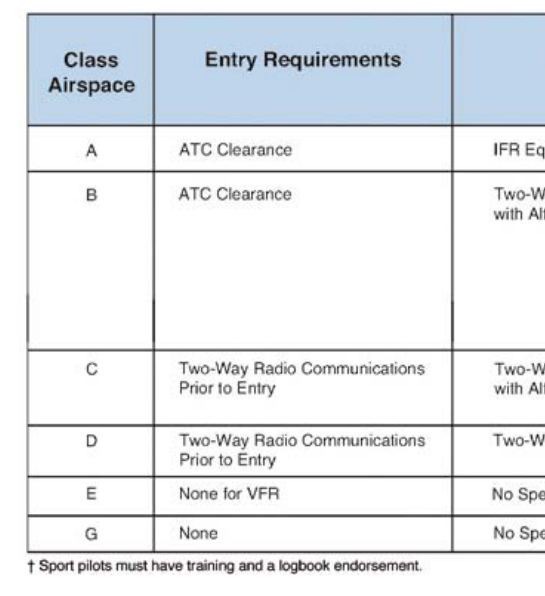
When student pilots first study airspace, they quickly learn that entering Class B airspace requires an ATC clearance and specific equipment. But there is a related rule that surprises many: a large bubble of airspace surrounding every Class B airport — extending 30 nautical miles from its primary airport — imposes its own equipment mandate. This bubble is called the Mode C Veil, and violating it is one of the more common regulatory mistakes made by pilots flying near busy metropolitan areas. Understanding exactly what the Mode C Veil requires, where it applies, and the narrow exceptions to it is essential both for the FAA knowledge test and for safe, legal flight operations.
This article walks through the regulatory foundation, the practical geometry of the rule, how Mode C actually works, and the traps that the FAA loves to test. By the end, you will know not only what the rule says but why it exists and how to apply it in the real world.
What Is Mode C and How Does It Work?
A transponder is an airborne radio receiver/transmitter that responds to interrogation signals from ATC radar. There are several transponder modes, but the two you need to know as a private pilot are Mode A and Mode C. Mode A transmits only a four-digit squawk code that identifies your aircraft on radar. Mode C goes further: it encodes your pressure altitude and automatically sends that altitude data alongside your identity squawk. ATC sees your aircraft as a target on radar with a data block showing both your squawk code and your altitude in hundreds of feet.
The altitude data comes from an encoding altimeter or a separate altitude encoder connected to the transponder. Critically, the encoder measures pressure altitude — altitude referenced to the standard datum plane of 29.92 in. Hg — regardless of what you have set in your Kollsman window. ATC computers then apply the current altimeter setting to convert that pressure altitude into an indicated altitude for display. This is why your transponder altitude and your altimeter may appear to disagree slightly if there is any lag or encoder error; the FAA requires that the encoder output not differ from your pressure altitude by more than 125 feet.
Modern ADS-B Out systems (required in many of the same airspaces since January 1, 2020) use GPS-derived position and pressure altitude, but for the Mode C Veil discussion, the core rule centers on the traditional transponder with altitude reporting capability as specified in 14 CFR 91.215.
The Mode C Veil: Geometry and Legal Basis
Under 14 CFR 91.215(b)(2), no person may operate an aircraft within 30 nautical miles of the primary airport of a Class B airspace area — from the surface up to 10,000 feet MSL — unless that aircraft is equipped with an operable transponder with automatic altitude reporting capability (Mode C). This 30-NM circle centered on the Class B primary airport is the Mode C Veil.
The key insight is that the Veil is not the same thing as Class B airspace. Class B airspace itself typically extends only 10 to 20 NM from the primary airport and is shaped like an upside-down wedding cake with specific floor and ceiling altitudes in each ring. The Mode C Veil is a simple cylinder: 30 NM radius, surface to 10,000 feet MSL. You can be nowhere near the actual Class B shelves and still be inside the Veil — and therefore required to have Mode C.
For example, imagine you are flying a small Cessna at 3,500 feet MSL, 25 NM from a major Class B airport. The Class B airspace may not even extend to your position, meaning you need no ATC clearance to be where you are. But you are inside the Mode C Veil, so you are legally required to have an operating transponder in Mode C (altitude reporting) unless an exception applies.
What Equipment Is Actually Required?
The regulation requires an operable transponder capable of Mode C (altitude reporting). An operable Mode A-only transponder does not satisfy the Veil requirement. The transponder must be switched on and transmitting; a broken or switched-off transponder does not count. Additionally, since 2020, ADS-B Out is required in Class B airspace, in the Class C airspace, and above 10,000 feet MSL (with some exceptions), which overlaps significantly with the Mode C Veil, but the Veil itself is defined by 14 CFR 91.215, not the ADS-B rule.
The transponder must also be in the correct mode while airborne. Under 14 CFR 91.215(c), each person operating an aircraft equipped with a transponder must operate the transponder on the appropriate code (or Mode 3/A and Mode C where required) unless otherwise instructed by ATC. Forgetting to enable altitude reporting — leaving the knob on Mode A rather than ALT — is a common cockpit error and a regulatory violation in the Veil.
Exceptions to the Mode C Veil
There are a handful of specific exceptions worth knowing, and the FAA tests on them:
- Balloons, gliders, and aircraft not equipped with an engine-driven electrical system: Under 14 CFR 91.215(d), aircraft that were not originally certificated with an engine-driven electrical system and have not had one added are exempt. This covers classic gliders and unpowered balloons that simply have no electrical system to power a transponder.
- FAA authorization: The Administrator may authorize deviations from the Mode C requirements. Practically, a pilot can call the TRACON (Terminal Radar Approach CONtrol) facility and request permission to operate without Mode C; ATC may grant this when traffic permits. This is relatively rare and not something to count on routinely.
- Prior to January 1, 1990 (grandfather clause): Certain aircraft operating below the floor of Class B airspace within the 30-NM ring were grandfathered in earlier regulatory versions, but for practical purposes this no longer creates meaningful relief for current pilots.
Importantly, flying below the floor of Class B airspace does not exempt you from the Mode C Veil. The Veil starts at the surface. This is one of the most tested distinctions on the FAA knowledge exam.
Why the Mode C Veil Exists
Class B airspace surrounds the nation's busiest airports — places like Atlanta Hartsfield-Jackson, Chicago O'Hare, Los Angeles International, and Dallas/Fort Worth. These airports handle hundreds of airline operations daily, with aircraft on precise instrument approaches and departures at high speeds and with little time to see and avoid conflicting traffic. ATC needs a complete picture of all traffic in a wide buffer zone around these airports — not just inside the Class B shelves — so they can identify, sequence, and warn pilots of potential conflicts long before they become a danger. The Mode C Veil ensures that every aircraft in a 30-NM buffer is visible to radar with altitude data, giving controllers an early look at traffic that may be climbing into or descending through the Class B structure.
Without altitude reporting, a radar target is just a blip with no altitude — ATC cannot tell if it is at 1,500 feet or 9,500 feet. Mode C transforms that anonymous blip into a fully identified, altitude-tagged contact that controllers can factor into their traffic picture.
Key Numbers and Rules
- 30 nautical miles from the Class B primary airport — that is the radius of the Mode C Veil.
- Surface to 10,000 feet MSL — the vertical extent of the Veil.
- The rule is found in 14 CFR 91.215.
- An operable Mode C (altitude reporting) transponder is required — Mode A alone is insufficient.
- Exemptions exist for aircraft with no engine-driven electrical system (gliders, unpowered balloons).
- Flying below Class B airspace floors does not exempt you from the Veil.
- An encoder must be accurate within 125 feet of actual pressure altitude.
- ADS-B Out (1090 MHz) is additionally required inside Class B and Class C airspace and above 10,000 feet MSL under 14 CFR 91.225, but that is a separate rule from the Mode C Veil.
Common Test Traps
- Confusing Class B airspace with the Mode C Veil. The Veil is always 30 NM regardless of the shape or size of the Class B shelves. You can be well outside the Class B boundaries and still be inside the Veil — and still need Mode C.
- Thinking the floor of Class B airspace creates an escape from the Veil. The Mode C Veil runs from the surface to 10,000 feet MSL. Flying at 1,000 feet beneath the Class B floor does not remove the transponder requirement if you are within 30 NM.
- Assuming Mode A is enough. A test question may describe a transponder without specifying Mode C. Remember: Mode C (altitude reporting) is the explicit requirement. Mode A-only satisfies nothing in the Veil.
- Forgetting the ADS-B distinction. ADS-B Out and Mode C are related but separate requirements governed by different regulations. The Mode C Veil is 14 CFR 91.215; ADS-B Out requirements are 14 CFR 91.225. Do not mix them up when answering questions about which regulation applies.
- Missing the glider/balloon exception. A test stem may describe a sailplane or hot-air balloon without an electrical system operating inside the Veil. These aircraft are exempt. If an aircraft has an engine-driven electrical system or one has been added, the exemption does not apply.
The Mode C Veil is one of those regulations that seems straightforward at first glance but has several layers worth mastering. The bottom line for practical flying: any time you are planning to fly within roughly 30 NM of a major Class B airport — even if you plan to stay well clear of the Class B shelves themselves — ensure your transponder is on, in Mode C (ALT position), and functioning correctly. It protects you, it protects airline traffic in the area, and it keeps you on the right side of 14 CFR 91.215.