Imagine launching on a clear Saturday morning, only to find two F-16s on your wingtip directing you to land immediately — all because a presidential motorcade passed through your destination city. Scenarios like this happen every year, and virtually all of them share a common cause: a pilot who did not check for Temporary Flight Restrictions before departure. TFRs and the Notices to Air Missions (NOTAMs) that publish them are among the most operationally critical items on any preflight planning checklist, and they are tested repeatedly on the FAA Private Pilot Knowledge Test.
This article explains what TFRs are, why they exist, how to find them, and exactly what the regulations require. By the end, you will understand not just the rules but the real-world thinking behind them — which is what separates a pilot who avoids TFRs from one who stumbles into them.
What Is a Temporary Flight Restriction?
A Temporary Flight Restriction is a regulatory tool the FAA uses to protect a specific volume of airspace for a defined period of time. Unlike permanent airspace designations that appear on sectional charts, TFRs are dynamic — they appear, move, expand, and expire on short notice. The legal authority for TFRs comes primarily from 14 CFR Part 91, Sections 91.137 through 91.145, and each section addresses a distinct type of hazard or situation that warrants airspace protection.
TFRs are announced exclusively through NOTAMs — Notices to Air Missions (the FAA updated this terminology from "Notices to Airmen" in 2021). A NOTAM is an official notice containing information about the establishment, condition, or change in any component of the National Airspace System (NAS). TFRs are one of the most serious categories of NOTAM content, but NOTAMs also cover things like runway closures, navigational aid outages, and changes to instrument procedures. Pilots are legally required under 14 CFR 91.103 to become familiar with all available information pertinent to a flight before departure — and that expressly includes NOTAMs.
Types of TFRs and the Regulations Behind Them
Understanding why different TFRs exist helps you anticipate them in the real world and answer scenario-based test questions correctly.
Disaster and Hazard TFRs — 14 CFR 91.137
When a natural or man-made disaster occurs — a wildfire, flood, toxic chemical spill, or earthquake — the FAA may establish a TFR to protect disaster relief aircraft and ground crews from interference. Section 91.137 defines three tiers:
- 91.137(a)(1): Prohibits all flight except relief aircraft. This is the most restrictive tier, typically used when the disaster area itself is actively dangerous.
- 91.137(a)(2): Prohibits flight that is not directly related to and necessary for relief operations. News media aircraft may be permitted at the discretion of the controlling agency.
- 91.137(a)(3): Prohibits flight that creates a hazard to persons or property on the surface. This is the least restrictive tier and often used when the primary concern is spectator aircraft interfering with ground operations.
Wildfire TFRs deserve special mention. When air tankers and helicopters are making low-altitude retardant drops on an active fire, a sightseeing pilot orbiting overhead creates a deadly midair collision hazard. The FAA has issued numerous enforcement actions — including certificate suspensions — against pilots who flew into wildfire TFRs.
Space Operations TFRs — 14 CFR 91.143
Rocket launches and space vehicle operations require large blocks of airspace to be clear of traffic during launch windows. These TFRs are published well in advance for scheduled launches and define both a lateral area and a vertical range. Pilots operating near coastal launch facilities like Cape Canaveral or Vandenberg should check NOTAMs regularly during active launch campaigns.
Defense VFR (DVFR) and National Security TFRs — 14 CFR 91.141
This section protects the airspace in the vicinity of presidential and vice-presidential movements. In practice, the Secret Service coordinates with the FAA to establish a no-fly zone whenever the President or Vice President is traveling. These TFRs are typically depicted as two concentric rings: an inner ring (often 10 nautical miles radius) where flight is generally prohibited, and an outer ring (often 30 nautical miles radius) where flight requires an ATC clearance, an operating transponder, and a two-way radio. The exact dimensions and altitudes are specified in each individual NOTAM, so pilots must read the actual text — never assume standard dimensions.
Aerial Demonstration and Major Sporting Event TFRs — 14 CFR 91.145
Major sporting events — NFL, MLB, NCAA football championship games, and NASCAR races — trigger TFRs that extend 3 nautical miles laterally and up to 3,000 feet AGL, and are active from one hour before the event until one hour after. Air shows, which are also governed by 91.145, typically involve active aerobatic and high-speed flight in the TFR area, so those NOTAMs define a more complex protected volume. Pilots planning cross-country flights over cities on fall weekends should always check whether a major game is scheduled.
VIP and Presidential TFRs — 14 CFR 91.141 and the "SFRA" Concept
The Washington, D.C. area has a permanent Special Flight Rules Area (SFRA) and Flight Restricted Zone (FRZ) that function similarly to a standing TFR. While these are not technically TFRs by the Part 91 definitions above, understanding them is closely related — pilots flying anywhere near the nation's capital must complete specific online training and follow strict procedures.
How to Find TFRs and NOTAMs
The single most important practical skill related to TFRs is knowing where to get current information. The FAA provides several official tools:
- FAA NOTAM Search (notams.faa.gov): The official FAA NOTAM system, accessible free online. You can search by location identifier, radius, or route. This is the authoritative source.
- 1800wxbrief.com (Leidos Flight Service): The FAA's contracted weather and NOTAM briefing service. A standard or abbreviated briefing from a flight service specialist will include TFRs along your route. Obtaining a briefing creates a record that you complied with 91.103.
- tfr.faa.gov: A graphical TFR viewer maintained by the FAA showing active and pending TFRs on a map. Useful for situational awareness but should be used alongside the official NOTAM text, not as a standalone source.
- Electronic Flight Bag apps (ForeFlight, Garmin Pilot, etc.): Pull NOTAMs from official FAA feeds and display TFRs on moving maps. These are excellent tools, but pilots must ensure their app is connected and the data is current — cached data can be dangerously stale.
A critical point: TFRs can be established with very little lead time. Presidential movements in particular can generate a TFR NOTAM just hours before the President arrives in an area. This means checking NOTAMs the night before is not sufficient — a final check on the day of flight, close to departure, is essential.
Consequences of a TFR Violation
The consequences of busting a TFR range from serious to severe. Depending on the circumstances, a pilot may face:
- Military interception — Armed military aircraft will intercept any aircraft that penetrates a presidential TFR. Standard intercept procedures (defined in the AIM) require the pilot to rock wings and follow the intercepting aircraft to a designated airport. Failure to comply can escalate rapidly.
- Certificate action — The FAA routinely suspends or revokes pilot certificates for TFR violations. Even a first-time violation of a presidential TFR has resulted in certificate suspension.
- Civil penalties — Fines can reach into the thousands of dollars per violation.
- Criminal prosecution — In egregious cases involving national security airspace, federal criminal charges are possible.
Key Numbers and Rules
- The legal authority for TFR compliance comes from 14 CFR 91.137–91.145.
- Preflight information requirements, including NOTAMs, are in 14 CFR 91.103.
- Presidential TFRs under 91.141 commonly use a 10 NM inner ring and a 30 NM outer ring, but always verify the actual NOTAM text.
- Sporting event TFRs under 91.145 are typically 3 NM radius, 3,000 feet AGL, active 1 hour before to 1 hour after the event.
- NOTAMs are now officially called Notices to Air Missions (updated 2021).
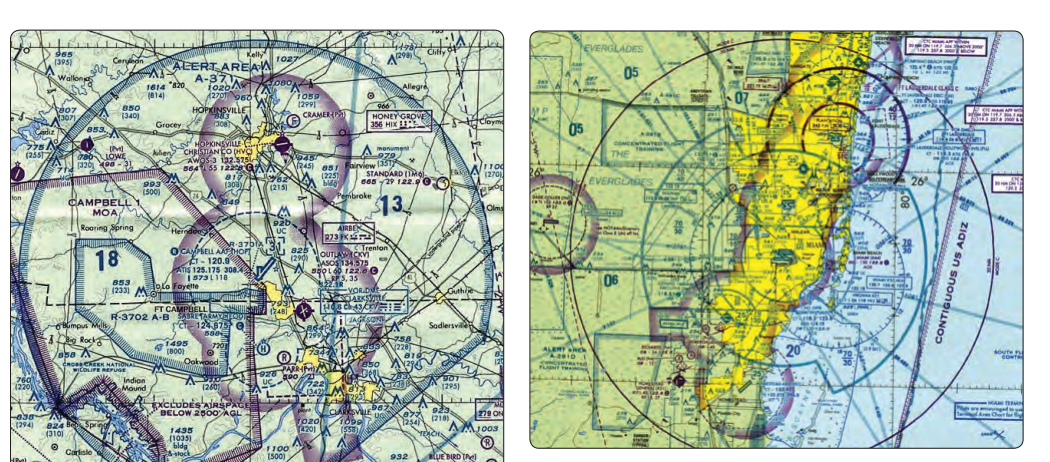
- A TFR does not appear on printed sectional charts — you must check NOTAMs every flight.
Common Test Traps
- Assuming TFRs are shown on sectional charts. They are not. Sectionals show permanent airspace. TFRs are published only via NOTAMs. The FAA tests whether you know to consult NOTAMs, not just charts.
- Confusing the tiers of 91.137. Questions may describe a scenario (e.g., "news media aircraft are permitted") and ask which subsection applies. Remember: (a)(1) is most restrictive — no aircraft except relief operations; (a)(2) allows some news media access; (a)(3) is least restrictive.
- Thinking a phone weather app satisfies the NOTAM requirement. Consumer weather apps like Weather Channel do not provide NOTAM data. Only official aviation sources — flight service, the FAA NOTAM system, or a certified EFB pulling from FAA data — count.
- Underestimating TFR speed of issuance. Test questions sometimes set up a scenario where the pilot checked NOTAMs before bed but not before departure. A TFR issued overnight is still a violation if you fly into it the next morning without checking.
- Forgetting that "temporary" can mean weeks. Wildfire TFRs, for example, may remain active for weeks as firefighting operations continue. Do not assume a TFR seen last week has expired — verify current status every flight.