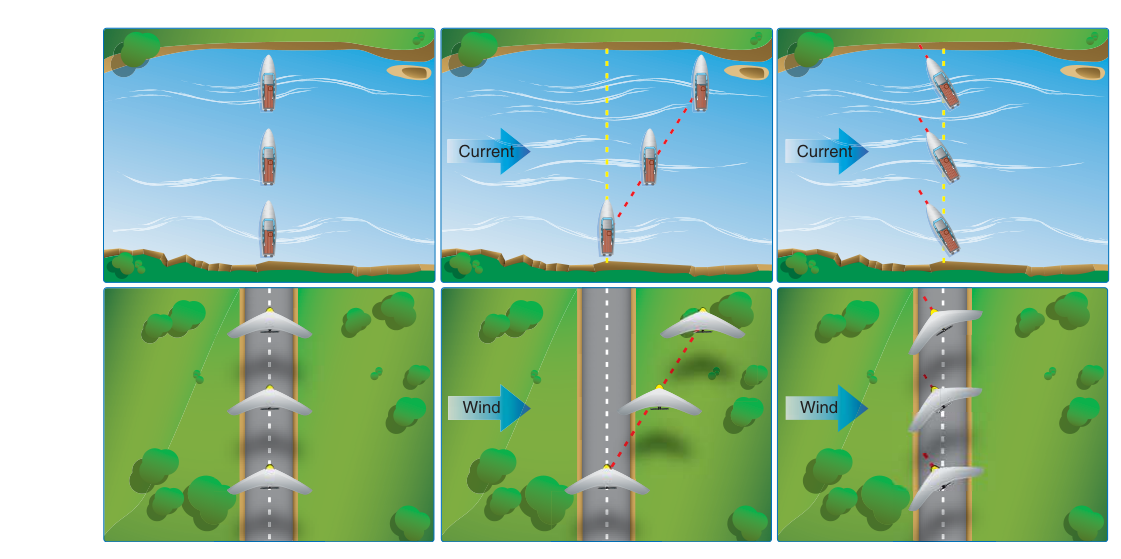
The steep spiral stands apart from most commercial pilot maneuvers because it demands the simultaneous integration of energy management, ground reference tracking, coordination, and traffic awareness — all while the engine sits at idle and altitude continuously bleeds away. It is not simply a tighter version of a private-pilot ground reference maneuver. The commercial Airman Certification Standards (ACS) hold the applicant to exacting tolerances that require genuine planning before the first degree of bank is applied. Understanding the underlying aerodynamics and wind-correction geometry is the difference between a pilot who stumbles through three ragged circles and one who demonstrates true commercial-level precision.
What the Maneuver Requires
As described in the FAA Airplane Flying Handbook (FAA-H-8083-3), the steep spiral is a power-off gliding maneuver requiring a minimum of three 360° turns around a fixed ground reference point while maintaining a constant radius over the ground. The maneuver evaluates coordinated flight, division of attention, and the ability to correct for wind — the same skills needed to execute a precise off-airport approach following an engine failure. The commercial ACS specifies that the pilot must roll out within ±10° of the entry heading, within ±100 feet of the planned rollout altitude, and at the target airspeed within ±10 knots. Meeting all three tolerances simultaneously, after three full revolutions of constantly changing bank angle, is what makes this maneuver a reliable discriminator of pilot skill.
Pre-Maneuver Planning and Setup
Point and altitude selection
Choose a reference point that is clearly identifiable from the air, away from congested areas, and easily visible through all 360° of the circle — an isolated intersection, a lone farmstead, or a distinctive field corner works well. Before reducing power, perform the required clearing turns (typically two 90° or one 180° clearing turn) to scan for conflicting traffic. The ACS treats omission of clearing turns as grounds for an unsatisfactory grade regardless of how well the rest of the maneuver is flown.
Entry altitude is critical. The Airplane Flying Handbook recommends entering at or above 1,500 feet AGL so that the aircraft remains above a safe recovery altitude throughout all three turns. In practice, many commercial applicants enter at 2,500 to 3,000 feet AGL to provide a comfortable margin, because a steeper-than-anticipated glide or a wider-than-expected radius can consume altitude faster than expected. Calculate your anticipated descent rate at the target glide speed and your expected time per revolution to confirm that three full turns are possible above the minimum altitude.
Power and propeller configuration
Reduce the throttle to idle and, in aircraft with a controllable-pitch propeller, advance the propeller control to the high-RPM (low-pitch) position. This reduces propeller drag on the glide slightly and, more importantly, ensures that the engine and propeller can accept an immediate power application during recovery without risking engine shock-cooling damage from a prolonged low-RPM idle. Establish the manufacturer's recommended gliding airspeed — often best-glide speed — before rolling into the initial bank. Entering at the correct airspeed is far easier than chasing it once a 45° bank is established.
Wind Correction: The Core Skill
Wind is the defining challenge of the steep spiral. Without correction, even a modest headwind or tailwind component will distort the circular ground track into an elongated oval, violating the constant-radius requirement. The correction is continuously variable bank angle tied directly to the aircraft's instantaneous ground speed at each point around the circle.
The geometry of variable bank
Ground speed governs how quickly the aircraft sweeps around the circle. On the downwind segment, the wind adds to the aircraft's airspeed over the ground, so the ground track tends to balloon outward. Steepening the bank — up to approximately 50° in a strong wind — increases the rate of turn and counteracts that outward drift. On the upwind segment, the wind subtracts from ground speed, slowing the aircraft's progress around the arc and causing the radius to shrink inward. Shallowing the bank — as little as 20–25° in a strong headwind — reduces the turn rate and allows the radius to remain consistent. The crosswind segments require a smooth, continuous transition between these two extremes. Any abrupt change in bank creates a kink in the ground track that is immediately visible from the cockpit and from the evaluator's perspective on the ground.
Triangulating your position
Effective wind correction requires knowing where you are in the circle relative to the wind at every moment. Before entering, note the surface wind direction and mentally label the upwind, downwind, and crosswind points on the circle. During the maneuver, keep the reference point in peripheral view while cross-checking the airspeed indicator, altitude, and bank angle. A useful technique: watch the rate at which the reference point appears to move beneath the wing. If the point seems to be falling behind quickly (high angular rate), you are on or near the downwind side — steepen the bank. If the point is barely moving relative to the wingtip, you are upwind — shallow the bank.
Altitude Management Throughout the Spiral
Altitude management in the steep spiral is largely a pre-entry calculation, not an in-maneuver adjustment. Because the throttle is at idle, the pilot has no practical way to add energy mid-maneuver without abandoning the power-off requirement. The altitude trend must be monitored continuously, but corrections are limited to small airspeed adjustments within the ±10-knot tolerance. If the altitude is burning off faster than anticipated — perhaps because the wind is lighter than expected and the turns are taking longer — the pilot must recognize the problem early and, if necessary, discontinue the maneuver and re-enter at a higher altitude rather than pressing on to an unsafe recovery altitude.
The FAA Airplane Flying Handbook also emphasizes that the pilot must plan the rollout point so the aircraft is at the pre-selected altitude on the original entry heading. This means mentally tracking heading throughout the spiral and beginning the rollout slightly before the entry heading is reached, accounting for rollout lag.
Recovery
Recovery from the steep spiral follows a logical sequence: roll wings level, smoothly advance the throttle to the cruise or climb setting, and re-establish a positive pitch attitude. In aircraft with a constant-speed propeller, return the propeller control to the normal cruise position after power is stabilized. Monitor engine temperatures during and after recovery — cylinders that have been cooled at idle for several minutes may be sensitive to an abrupt full-power application, which is another reason the high-RPM propeller setting is recommended at entry.
Why This Maneuver Matters Beyond the Test
The steep spiral is a direct rehearsal for the early phase of a forced-landing sequence. A pilot who can maintain a precise gliding radius over a field — adjusting bank to compensate for wind, monitoring altitude against available turns, and keeping airspeed stable — has already practiced the most demanding portion of an off-airport landing approach. The ACS reinforces this connection by placing steep spirals alongside emergency procedures in the commercial knowledge framework. Beyond emergency preparedness, the maneuver builds the habit of continuous cross-checking and energy awareness that defines sound airmanship at every level.
Key Numbers and Rules
- Minimum entry altitude: 1,500 feet AGL (to complete three turns above a safe recovery altitude); many pilots enter at 2,500–3,000 feet AGL for margin.
- Throttle setting: Idle throughout; propeller to high RPM (controllable-pitch aircraft).
- Bank angle range: Approximately 20–25° (upwind) to 45–50° (downwind), adjusted continuously.
- ACS rollout tolerances: ±10° of entry heading, ±100 feet of planned rollout altitude, ±10 knots of target airspeed.
- Minimum turns: Three complete 360° turns.
- Clearing requirement: Area must be cleared of traffic before entry — no exceptions.
Common Test Traps
- Entering too low: Applicants who enter below 2,000 feet AGL frequently cannot complete three full turns above 1,500 feet AGL and must discontinue the maneuver — an automatic unsatisfactory result.
- Flat bank on the downwind side: Forgetting to steepen the bank when ground speed is highest causes the radius to balloon outward. The examiner will note an inconsistent circle immediately.
- Airspeed creep on the upwind side: Shallowing the bank reduces back-pressure needed to maintain glide speed. Without a compensating pitch input, the nose drops and airspeed builds beyond tolerance.
- Skipping clearing turns: Required by the ACS and non-negotiable. Perform them every time, even on a re-demo.
- Late rollout: Rolling out exactly on the entry heading with no lead for rollout lag will result in overshooting the heading beyond the ±10° tolerance.
- Confusing bank adjustment with crabbing: The variable bank corrects for wind by changing turn rate, not by pointing the nose into the wind. Students who try to crab as in cruise flight will mismanage the bank and produce an irregular radius.
Memory Aid
"Fast ground — steepen; slow ground — shallow." On the downwind side your ground speed is fast and the radius wants to grow, so steepen the bank. On the upwind side your ground speed is slow and the radius wants to shrink, so shallow the bank. This single rule, applied continuously and smoothly, is the entire wind-correction strategy for the steep spiral and for every other ground-reference maneuver at the commercial level.