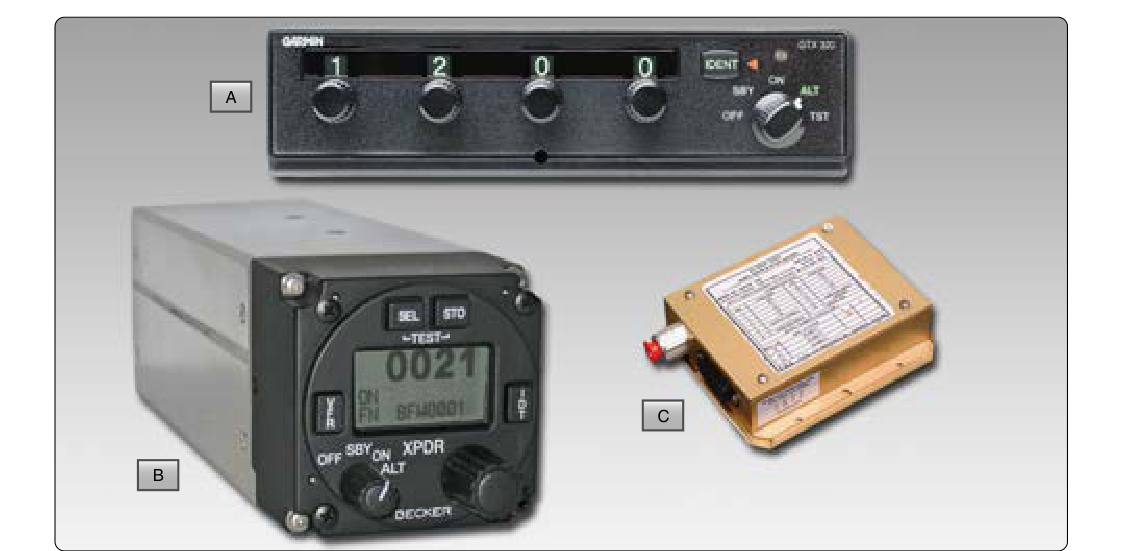
When a crewed aircraft rolls down a runway or cruises at altitude, it is almost certainly broadcasting a four-digit transponder code — a squawk code — that tells air traffic control and other aircraft exactly who and where it is. As a remote pilot operating under 14 CFR Part 107, you are not required to carry a transponder on your small UAS, but you absolutely must understand what those codes mean. Why? Because the airspace you fly in is shared with manned aircraft whose pilots and controllers are relying on those very codes to manage traffic, declare emergencies, and flag potential threats. Knowing how transponders work, what each code signals, and how that affects your situational awareness is both an FAA knowledge test topic and a genuine safety skill.
This article breaks down the transponder system from the ground up — the technology, the universal codes, the specific squawk assignments, and the practical implications for UAS operations in controlled and uncontrolled airspace.
How Transponders Work
A transponder is an airborne radio receiver-transmitter that automatically replies to interrogations sent by ground-based secondary surveillance radar (SSR) and by airborne collision-avoidance systems like TCAS (Traffic Collision Avoidance System). When a ground radar sweeps past an aircraft, it sends an interrogation signal on 1,030 MHz. The aircraft's transponder receives that signal and immediately transmits a reply on 1,090 MHz, encoding a four-digit octal code (each digit can be 0–7, giving 4,096 possible combinations) along with any additional data the transponder mode supports.
The FAA uses three transponder modes that student pilots and remote pilots should know:
- Mode A — Transmits only the four-digit squawk code. ATC can see a target on radar and know its identity, but not its altitude.
- Mode C — Transmits the squawk code and pressure altitude, derived from an encoding altimeter. This is the most common mode in general aviation and is required in many airspace classes.
- Mode S — A more advanced mode that transmits a unique 24-bit ICAO address assigned to each aircraft, along with the squawk code, altitude, and other data. ADS-B Out equipment typically works in conjunction with Mode S transponders. Mode S enables selective interrogation, reducing radio frequency congestion.
ADS-B (Automatic Dependent Surveillance-Broadcast) is related but distinct: rather than replying to a radar interrogation, an ADS-B Out equipped aircraft continuously broadcasts its GPS-derived position, altitude, velocity, and identification on 978 MHz (UAT) or 1,090 MHz (1090ES). Since January 1, 2020, ADS-B Out is required in most controlled airspace where a Mode C transponder was previously required. Remote pilots should understand that many aircraft in their operating area will be broadcasting both transponder replies and ADS-B, making them highly visible to ATC but not necessarily visible to an sUAS that lacks receiving equipment.
The Four-Digit Squawk Code System
Squawk codes are assigned by ATC in octal notation — digits from 0 through 7 only. When a pilot contacts a tower or approach control, the controller assigns a discrete transponder code unique to that flight. The pilot dials it in, selects ALT mode (for Mode C altitude reporting), and ATC's radar display labels that radar return with the flight's call sign, altitude, and other data. This discrete code is what makes modern radar separation possible.
However, certain codes are universally reserved and carry fixed meanings worldwide. These are the codes that every remote pilot must know cold, both for the knowledge test and for real-world situational awareness:
Key Reserved Squawk Codes
- 7500 — Hijacking. A pilot squawking 7500 is signaling an unlawful interference or hijacking. ATC treats this as an immediate security emergency. Any aircraft broadcasting this code will receive a rapid law-enforcement and military response. As a remote pilot, if you notice unusual airspace restrictions or military activity that seems unexplained, a security emergency involving squawk 7500 may be the cause. You must land or avoid the area immediately per any NOTAMs or TFRs that arise.
- 7600 — Loss of Communication (NORDO). A pilot squawking 7600 has lost two-way radio communication with ATC. The phrase sometimes used is "NORDO" (no radio). Controllers will attempt to re-establish contact and will clear airspace to accommodate the aircraft, which will follow established lost-communication procedures per 14 CFR 91.185. Remote pilots near busy airspace should recognize that a NORDO aircraft may be flying a predictable IFR lost-comm route or a standard traffic pattern, and should give it maximum lateral and vertical clearance.
- 7700 — General Emergency. Squawk 7700 is the universal emergency code. A pilot in any emergency — engine failure, medical situation, fire, structural problem — may squawk 7700 to alert ATC. On a radar display, the 7700 return typically flashes or changes color to draw immediate controller attention. Emergency aircraft receive priority handling and may operate outside normal ATC clearances. As a remote pilot, you should be aware that aircraft declaring emergencies may deviate from expected routes and altitudes, sometimes descending rapidly or maneuvering unpredictably at low altitudes where UAS operations often occur.
- 1200 — VFR Flight, No ATC Clearance. Aircraft operating VFR without an ATC-assigned discrete code squawk 1200. This is the standard "default" VFR code in the United States. If you are operating near an airport without a control tower, or in Class G or Class E airspace below 10,000 feet MSL, many of the manned aircraft in your area will be squawking 1200. They are visible to ATC on radar as an unidentified VFR target (a "primary plus 1200 return"), meaning ATC may not know exactly who they are, making self-separation by all pilots — and remote pilots — even more critical.
Two additional codes worth noting: 0000 is sometimes used as a military code and should never be squawked by civil aircraft unless instructed. 7777 is reserved for military interceptor operations and is never assigned to civilian flights.
Why Transponder Awareness Matters for Remote Pilots
Under Part 107, you must yield the right-of-way to all manned aircraft at all times. This is not a suggestion — it is a regulatory mandate found in 14 CFR 107.37. Understanding transponder codes deepens your ability to fulfill that responsibility in three concrete ways.
First, situational awareness through NOTAMs and TFRs. When an emergency is declared or a security event occurs, TFRs (Temporary Flight Restrictions) are often issued rapidly under 14 CFR 91.137 or 91.141. These TFRs may appear with little warning. Understanding that a squawk 7700 can escalate into airspace closure helps you check resources like the FAA's UAS Data Delivery System (LAANC), NotamSearch, or the B4UFLY app before and during operations.
Second, predicting aircraft behavior. A NORDO aircraft squawking 7600 will follow procedural rules that take it to specific locations at specific times. Knowing this helps you anticipate where that aircraft will be. An emergency aircraft squawking 7700 may descend to the nearest runway at maximum speed. Low-altitude areas — exactly where Part 107 operations typically occur — can become very active very quickly during these events.
Third, understanding your own invisibility. Your sUAS almost certainly does not have a transponder. You are invisible to ATC radar and to TCAS-equipped aircraft. This is exactly why Part 107 imposes daylight, visual-line-of-sight, and altitude restrictions — to keep UAS in a zone where visual self-separation is possible. Grasping how conspicuous manned aircraft are to each other (via transponders and ADS-B) while your drone is completely undetected underscores why your vigilance is non-negotiable.
Transponder Requirements: Manned vs. UAS
- Manned aircraft operating in Class A, B, and C airspace, and above 10,000 feet MSL in Class E, are required to have Mode C (or Mode S/ADS-B Out) transponders per 14 CFR 91.215 and 91.225.
- Manned aircraft operating within 30 nautical miles of a Class B primary airport (the "Mode C veil") must have altitude-encoding transponders.
- Part 107 sUAS are not required to carry transponders, though remote identification (Remote ID) rules under 14 CFR Part 89 require UAS manufactured after September 16, 2022, to broadcast basic identification and location data (with operational compliance required by September 16, 2023) — a parallel but separate system from secondary radar transponders.
- Waivers under 14 CFR 107.200 can authorize operations in controlled airspace that would otherwise be prohibited, but a waiver does not grant your drone a transponder exemption from the airspace perspective — it grants permission for your operation in that airspace.
Common Test Traps
- Confusing 7600 and 7700. The FAA knowledge test often presents these two codes together. Remember: 7600 = lost comm (think "can't talk"), 7700 = emergency (think "oh no!"). The digits 6 and 7 at the end are your cue — lost comm comes before a general emergency numerically, just as losing the radio often precedes declaring an emergency.
- Assuming 1200 means ATC is watching closely. VFR aircraft squawking 1200 are known to ATC as generic VFR targets — they are not individually identified in most cases. This means less ATC "protection" around your operation than you might assume.
- Thinking transponders and ADS-B are the same thing. Transponders reply to interrogations; ADS-B Out continuously broadcasts. An aircraft can have a transponder without ADS-B Out (legal in some airspace classes), but ADS-B Out typically requires a Mode S transponder to function.
- Believing Remote ID replaces transponder awareness. Remote ID broadcasts your UAS's position and identity but does not make your drone visible to ATC radar or TCAS. The two systems serve different purposes and different audiences.
- Ignoring TFRs triggered by emergencies. The test may ask what a remote pilot should do when aware of a 7700 situation nearby. The answer always involves checking for TFRs, ceasing operations if within the affected area, and not resuming until the airspace is confirmed clear.