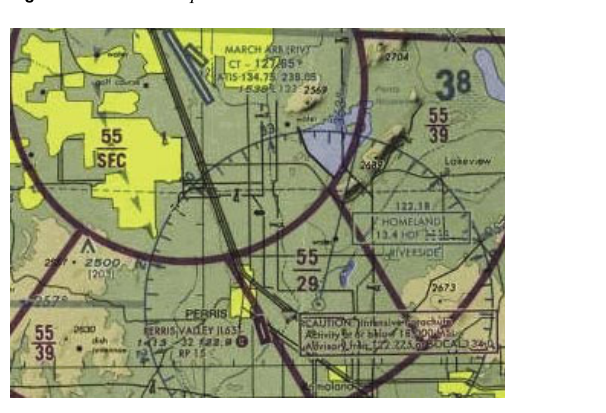
When you look at a sectional chart or the B4UFLY app, the airspace above you is divided into carefully defined layers, each with its own rules and requirements. For remote pilots operating under 14 CFR Part 107, understanding Class G airspace is especially important because it is the one class where you can typically launch and fly without first obtaining an air traffic control (ATC) authorization. That said, "uncontrolled" does not mean "anything goes" — Part 107 still imposes clear weather minimums, altitude ceilings, and operational rules that every remote pilot must know cold before the FAA knowledge test and, more importantly, before every flight.
This article walks through what defines Class G airspace, how it overlaps with Class E, what weather minimums apply to UAS operations within it, and how to use this knowledge safely and legally in the field.
What Is Class G Airspace?
Class G airspace is the uncontrolled airspace that exists from the surface up to the base of the overlying controlled airspace — typically the base of Class E airspace. Unlike Class A, B, C, D, and E airspace, Class G has no ATC separation services. Aircraft operating in Class G are not in radio contact with ATC, and pilots are entirely responsible for see-and-avoid collision avoidance on their own.
The exact vertical extent of Class G varies by location and time of day. In many parts of the United States, Class E airspace begins at 1,200 feet AGL, meaning Class G extends from the surface up to (but not including) 1,200 feet AGL in those areas. In other locations — particularly near airports with instrument approaches — Class E may begin right at the surface or at 700 feet AGL. When Class E starts at 700 feet AGL, Class G occupies only the thin layer from the surface to 699 feet AGL. In remote, rural, and sparsely populated areas far from any airport, Class G can extend all the way up to 14,499 feet MSL, with Class E beginning at 14,500 feet MSL.
This variability is critical for remote pilots. Do not assume that because you are flying low, you are automatically in Class G. Always verify the airspace structure at your specific location using official tools such as the FAA's UAS Data Delivery System (LAANC), the FAASafety.gov B4UFLY app, or the SkyVector sectional chart viewer before any flight.
How Class G Appears on a Sectional Chart
Class G airspace is not depicted with a distinct color or symbol of its own. Instead, it is defined by the absence of controlled airspace markings. When you see the magenta vignette (fading shading) on a sectional chart, that shading marks the lateral boundary where Class E airspace transitions down to 700 feet AGL. Inside that shading, Class G exists from the surface to 700 feet AGL. Outside the shading — in areas with no transition zone — Class G typically exists from the surface to 1,200 feet AGL. Where a dashed magenta line appears around an airport, Class E begins at the surface for instrument operations, and Class G may not exist at all in that immediate area.
Understanding these chart symbols is not just a test question — it tells you whether you need a LAANC authorization or can simply preflight and fly.
Part 107 Operations in Class G Airspace
Under 14 CFR Part 107, a certificated remote pilot may operate a small UAS in Class G airspace without obtaining an ATC authorization. This is one of the most operationally significant benefits of flying in uncontrolled airspace. However, the absence of an authorization requirement does not eliminate other Part 107 obligations.
Altitude Limit
Part 107 restricts all UAS operations to a maximum of 400 feet above ground level (AGL) unless the aircraft is flown within a 400-foot radius of a structure, in which case it may fly up to 400 feet above the top of that structure. This rule applies in Class G airspace just as it does everywhere else. Because Class G in many locations extends to 1,200 feet AGL, the 400-foot Part 107 ceiling is the binding constraint — not the top of the airspace.
Visual Line of Sight (VLOS)
The remote pilot in command (RPIC) or a visual observer (VO) working with the RPIC must maintain unaided visual line of sight with the UAS at all times. This requirement applies in all airspace classes, including Class G. Binoculars and other vision-enhancing devices do not count for VLOS purposes, though they may be used momentarily to inspect the aircraft.
Daylight and Civil Twilight Operations
Part 107 generally limits UAS operations to daylight hours and to the period 30 minutes before official sunrise and 30 minutes after official sunset (civil twilight), provided the UAS has anti-collision lighting that is visible for at least 3 statute miles. Flying at night (outside these twilight windows) requires a waiver unless the operation qualifies under an updated rule allowing nighttime flight with proper lighting. Always confirm current regulations, as Part 107 has been updated since its original 2016 enactment.
Weather Minimums for UAS in Class G Airspace
This is one of the most heavily tested topics on the Part 107 aeronautical knowledge exam. Unlike manned aircraft, which have separate VFR weather minimums for Class G depending on altitude and time of day, Part 107 sets a single, simplified standard for UAS operations in Class G airspace:
- Minimum flight visibility: 3 statute miles from the control station.
- Minimum distance from clouds: 500 feet below clouds and 2,000 feet horizontally from clouds.
These numbers apply regardless of whether the UAS is operating at 50 feet AGL or 400 feet AGL, and regardless of whether you are within the surface-to-700-foot slice of Class G or the surface-to-1,200-foot slice. The rule is consistent and straightforward: 3 SM visibility, 500 feet below, 2,000 feet horizontal from clouds.
Compare this to manned VFR requirements in Class G at and below 1,200 feet AGL during the day (1 SM visibility and clear of clouds) and you can see that Part 107 is actually more restrictive than basic day VFR for low-altitude manned flight. Note that manned VFR minimums in Class G change at night: below 1,200 feet AGL at night, manned aircraft need 3 SM visibility and 500 feet below/1,000 feet above/2,000 feet horizontal from clouds — closer to (though not identical to) the Part 107 standard. The rationale for the stricter UAS rule is that a small UAS is harder for other pilots to see, so maintaining greater separation from clouds — where IFR traffic may emerge — provides a safety buffer.
Why Class G Matters for UAS Safety
Because Class G is uncontrolled, manned aircraft flying through it are not required to be in contact with ATC. Low-altitude traffic such as agricultural spray planes, helicopters, banner towers, pipeline patrol aircraft, and student pilots practicing maneuvers may all be operating in Class G airspace with no ATC coordination. As a remote pilot, your UAS is essentially invisible to most traffic alert systems because small multirotors and fixed-wing UAS typically do not carry ADS-B Out transponders (though Part 107 requires Remote ID broadcasting).
This means the cloud clearance and visibility minimums are not bureaucratic formalities — they are your primary defense against a mid-air collision with a manned aircraft that neither knows you are there nor can easily see your aircraft in degraded visibility. Always scan for traffic, be especially alert near airports and helicopter routes, and never fly into conditions that reduce your ability to see and be seen.
Key Numbers and Rules
- Class G vertical extent (typical): Surface to 1,200 feet AGL; may be surface to 700 feet AGL near airports with instrument approach transition areas.
- ATC authorization required in Class G: No — Part 107 operations permitted without LAANC or waiver.
- Maximum altitude in Class G under Part 107: 400 feet AGL (or 400 feet above a structure within 400-foot radius).
- Minimum flight visibility (Part 107, Class G): 3 statute miles from the control station.
- Minimum cloud clearance (Part 107, Class G): 500 feet below clouds; 2,000 feet horizontally from clouds.
- Daylight/twilight rule: Operations permitted from 30 minutes before sunrise to 30 minutes after sunset with anti-collision lighting visible at 3 SM for twilight operations.
- VLOS requirement: Applies in all airspace; the RPIC or VO must maintain unaided visual contact with the UAS.
Memory Aid
For the cloud clearance minimums in Class G under Part 107, remember "3, 500, 2,000": 3 statute miles visibility, 500 feet below clouds, 2,000 feet horizontally from clouds. This mirrors the Class E cloud clearance rule (which is the same), helping you recognize that Part 107 applies the same standard across Class G and Class E airspace at the altitudes where UAS typically fly — making it easy to remember one set of numbers for your entire operating envelope.
Common Test Traps
- Assuming Class G goes to 1,200 feet AGL everywhere. Near airports and instrument approach corridors, Class E may begin at 700 feet AGL or even at the surface, compressing Class G to a very thin layer or eliminating it entirely. Always check the chart.
- Confusing manned VFR minimums with Part 107 minimums. Manned aircraft in Class G below 1,200 feet AGL during the day only need 1 SM and clear of clouds. Part 107 requires 3 SM and 500/2,000 cloud clearance — a stricter standard.
- Thinking "uncontrolled" means no rules. Class G has no ATC separation, but every other Part 107 rule — altitude, VLOS, weather minimums, Remote ID, daylight limits — still applies in full.
- Forgetting that ATC authorization is NOT required in Class G. The test may present a scenario where a remote pilot plans to fly at 300 feet AGL in an area that is clearly Class G and ask whether authorization is needed. The answer is no — but confirm the airspace is actually Class G before assuming.
- Misidentifying Class G on a sectional chart. Test questions often show a chart excerpt with magenta shading or dashed lines. Remember: the magenta vignette shading indicates the transition zone where Class E drops to 700 feet AGL; the dashed magenta circle means Class E starts at the surface. Class G exists in the gaps below these controlled layers.