Few milestones in a pilot's training career carry as much real-world weight as the transition into higher-powered aircraft. The moment an engine exceeds a specific horsepower threshold, federal regulations require additional documented training and a logbook endorsement before that pilot may act as pilot-in-command (PIC). Understanding exactly why that threshold exists, what it demands of you, and how it interacts with related regulations will serve you well both on the FAA Commercial Pilot Knowledge Test and in the cockpit.
The Regulatory Definition
Under 14 CFR 61.31(f), a high-performance airplane is any airplane equipped with an engine of more than 200 horsepower. The word more than is precise and intentional — an airplane powered by exactly 200 hp does not meet the definition and does not trigger the endorsement requirement. The line is drawn at 201 hp and above. This single threshold applies regardless of whether the airplane is a single-engine piston, a turboprop, or a multi-engine design, and it applies to pilots at every certificate level from private through ATP.
The regulation also specifies how the horsepower rating is determined: it refers to the engine's rated horsepower as published by the manufacturer, not to actual output under current atmospheric conditions. A turbocharged engine rated at 310 hp qualifies as high-performance even if it is operating at reduced power on a hot day at a high-elevation airport. Conversely, a normally aspirated engine rated at 180 hp does not qualify even if it theoretically could produce more in ideal conditions.
Training and Endorsement Requirements
Before acting as PIC of a high-performance airplane, a pilot must receive and log both ground training and flight training from an authorized instructor in a high-performance airplane — or in a full flight simulator (FFS) or flight training device (FTD) that is representative of a high-performance airplane. Ground training alone, no matter how thorough, is insufficient. The flight training component must occur in a qualifying aircraft or approved simulation device.
Once the authorized instructor determines the pilot is proficient in the operation of the high-performance airplane, the instructor issues a one-time logbook endorsement. That endorsement carries no expiration date, no recurring currency requirement, and no need for renewal. It covers all high-performance airplanes indefinitely, provided the pilot already holds the appropriate category and class rating for the aircraft being flown. A pilot who earned the endorsement in a high-performance single-engine land airplane cannot use that single endorsement to act as PIC of a high-performance multi-engine airplane unless they also hold the multi-engine rating — the endorsement is not a substitute for a rating, it supplements one.
What the Ground Training Must Cover
Although 14 CFR 61.31(f) does not enumerate a specific syllabus, FAA guidance makes clear that ground instruction should address the unique operating characteristics of high-performance engines and airframes. Topics typically include engine management for fuel-injected and turbocharged powerplants, propeller governor operation and manifold pressure/RPM relationships, accelerated stall characteristics, higher approach and landing speeds, energy management on descent, and the amplified left-turning tendencies that accompany greater power output. An instructor who rushes through this ground phase is not fulfilling the intent of the regulation.
Why Higher Horsepower Demands More Respect
The physics behind the endorsement requirement are straightforward: more power means more energy, and more energy demands a higher level of pilot awareness and skill to manage safely. Consider a pilot who has spent most of their training hours in an airplane producing 150–180 hp. Stepping into a 300-hp aircraft introduces a dramatically different set of aerodynamic and mechanical behaviors.
Amplified Left-Turning Tendencies
All propeller-driven airplanes exhibit four left-turning tendencies — torque, P-factor, gyroscopic precession, and spiraling slipstream — but each of these effects scales with power. At full throttle in a high-performance airplane on takeoff, the right-rudder correction required can surprise a pilot accustomed to lower-powered trainers. Failing to anticipate this can result in a significant directional control problem at the most critical phase of flight.
Energy Management at Higher Speeds
High-performance aircraft typically cruise at significantly faster airspeeds and descend more rapidly than slower trainers. The kinetic energy of an aircraft increases with the square of its velocity, which means that an airplane flying at 160 knots has more than twice the kinetic energy of one flying at 110 knots, all else equal. On approach and landing, this demands earlier power reductions, longer traffic pattern legs, and a heightened awareness of energy dissipation. Pilots who attempt to fly a high-performance airplane with the same technique they used in a 172 routinely find themselves fast and high at the threshold.
Turbocharged and Fuel-Injected Systems
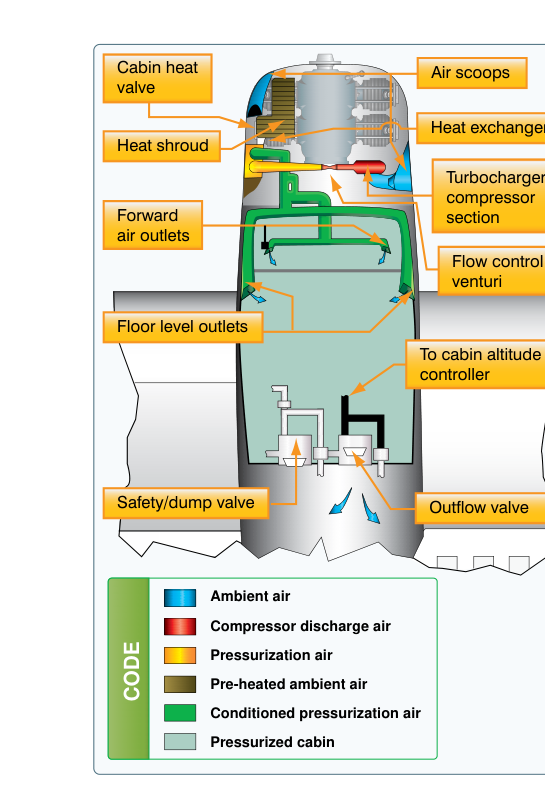
Many high-performance airplanes use turbocharged or fuel-injected engines — or both. Turbocharged engines require careful attention to manifold pressure limits, especially during rapid throttle changes that can cause a bootstrapping effect or overboosting. Fuel-injected engines require a specific hot-start procedure quite different from the carbureted engines found in most primary trainers. Understanding these systems is precisely why the ground training component is mandatory, not optional.
High-Performance vs. Complex: A Critical Distinction
One of the most frequently tested and most commonly confused points in this subject area is the difference between high-performance and complex airplanes. These are two entirely separate regulatory definitions under two separate paragraphs of 14 CFR 61.31, and each has its own independent endorsement requirement.
Under 14 CFR 61.31(e), a complex airplane is defined as one that has all three of the following features: retractable landing gear, flaps, and a controllable-pitch propeller. Engine power output is completely irrelevant to the complex definition. An airplane can be:
- High-performance but not complex — for example, a fixed-gear, fixed-pitch airplane with a 260-hp engine. It exceeds 200 hp but lacks the three complex features.
- Complex but not high-performance — for example, a retractable-gear airplane with a constant-speed prop and a 180-hp engine. It has all three complex features but does not exceed 200 hp.
- Both high-performance and complex — many modern and classic piston aircraft fall into this category, such as a retractable-gear, constant-speed-prop airplane powered by a 300-hp engine. This airplane requires both endorsements.
- Neither — a fixed-gear, fixed-pitch trainer with a 150-hp engine requires neither endorsement.
Commercial pilot candidates must pay particular attention here. The commercial practical test requires the use of a complex airplane (or a turbine-powered airplane), and a large percentage of complex airplanes available for practical tests also exceed 200 hp, meaning most commercial applicants need both endorsements well before their checkride.
Key Rules and Numbers at a Glance
- Threshold: More than 200 hp — exactly 200 hp is NOT high-performance.
- Regulatory authority: 14 CFR 61.31(f) governs the high-performance endorsement; 14 CFR 61.31(e) governs the complex endorsement.
- Training required: Both ground AND flight training from an authorized instructor in a high-performance airplane or an approved FFS/FTD representing one.
- Endorsement duration: One-time, no expiration, no renewal required.
- Scope of endorsement: Covers all high-performance airplanes for which the pilot holds the appropriate category and class rating.
- Who gives the endorsement: An authorized instructor — a certificated flight instructor (CFI) or other person authorized under 14 CFR Part 61.
Common Test Traps
- Exactly 200 hp is not high-performance. The regulation is unambiguous: the trigger is more than 200 hp. A question listing a 200-hp airplane as high-performance is a trap — do not fall for it.
- The endorsement never expires. Unlike a flight review (every 24 calendar months) or instrument currency (every six calendar months), the high-performance endorsement is genuinely permanent once issued. No annual renewal, no proficiency check required by regulation.
- High-performance ≠ complex. Two separate definitions, two separate endorsements, two separate regulatory paragraphs. Confusing them is one of the most reliable ways to lose points on this subject.
- Flight training is mandatory. Ground training alone — even hours of it — does not satisfy 14 CFR 61.31(f). Both elements must be completed and logged.
- Horsepower is manufacturer-rated, not actual output. A turbocharged engine rated at 310 hp is high-performance even when operating well below peak power.
- Simulators can qualify. Training completed in an FFS or FTD that represents a high-performance airplane satisfies the flight training requirement, provided the device is appropriately approved for that purpose.
Memory Aid
"More than 200, get the nod." The phrase forces you to recall two things simultaneously: the threshold (200 hp) and the action required (a logbook endorsement — the instructor's "nod" of approval). Note that the phrasing is deliberately more than, not at least — an airplane with precisely 200 hp falls just outside the rule.