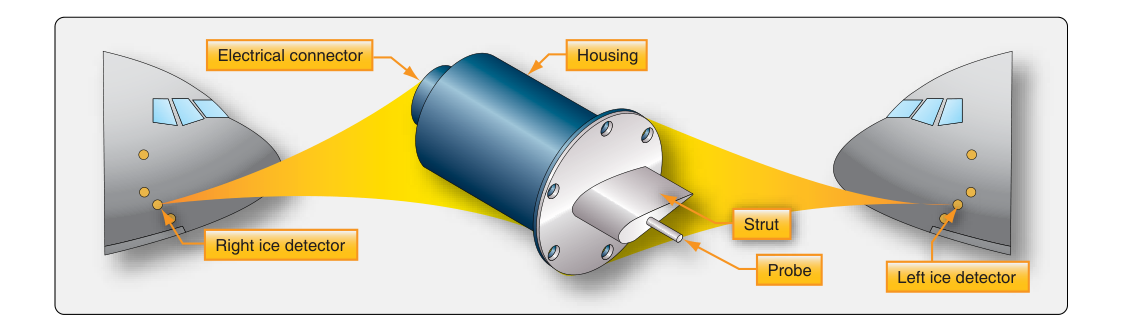
Ice is one of the most insidious hazards in instrument flight. Unlike turbulence, which announces itself immediately, structural icing can accumulate silently and alter an aircraft's performance so gradually that a pilot may not recognize the danger until control becomes difficult. The FAA's regulatory framework around known icing conditions exists precisely because the consequences of encountering ice in an inadequately equipped aircraft can be fatal. For instrument-rated pilots and students preparing for the Instrument Rating knowledge test, understanding what "known icing" actually means, what equipment is legally required to enter it, and how those rules apply in real operations is not just a test topic — it is a genuine survival skill.
This article walks through the regulatory definitions, equipment requirements, operational decision-making, and commonly tested nuances surrounding known icing conditions for IFR flight.
What Are "Known Icing Conditions"?
The term known icing conditions does not have a single, tidy statutory definition in 14 CFR, but its meaning has been shaped by FAA guidance, legal interpretations, and operational practice. Generally, known icing conditions exist when a pilot knows, or reasonably should know, that ice is forming on the aircraft — or that atmospheric conditions are such that ice formation is highly probable. This includes:
- Pilot reports (PIREPs) indicating icing at or near your altitude along your route.
- AIRMETs or SIGMETs for icing, particularly AIRMET Sierra (IFR conditions) and AIRMET Zulu (icing).
- Forecast icing in the Graphical Forecast for Aviation (GFA) or a dispatcher's release showing icing along the route.
- Visible moisture (clouds, rain, drizzle, or fog) combined with air temperatures at or below 0°C (32°F) — the classic thermodynamic setup for structural icing.
- Ice actually accumulating on the airframe, windshield, or pitot-static system in flight.
A critical point: a pilot cannot claim ignorance if all available preflight data — METARs, TAFs, AIRMETs, and forecast charts — clearly indicated icing. The FAA's standard is objective; it asks what a reasonable, competent pilot would have concluded from the available information, not merely what the pilot subjectively believed.
The Regulatory Framework: 14 CFR Parts 91 and 135
The primary regulation governing flight into known icing conditions for general aviation is 14 CFR §91.527, which applies to large and turbine-powered multiengine aircraft. However, for most GA pilots flying smaller single-engine or piston-twin aircraft, the operative rule is found in the aircraft's Pilot's Operating Handbook (POH) / Airplane Flight Manual (AFM) and its Limitations section.
Under 14 CFR Part 91, no person may operate an aircraft into known or forecast icing conditions unless the aircraft is certified and equipped for flight in icing conditions. This certification is not something the pilot grants themselves — it must come from the aircraft's type certificate data sheet (TCDS) and the AFM. An aircraft approved for flight in icing conditions will have that approval explicitly stated in its Limitations section. If the POH says "Flight into known icing conditions is prohibited," then flight into those conditions is illegal regardless of what equipment may have been added to the aircraft informally.
For commercial operators under 14 CFR Part 135, the rules are stricter still. Part 135 operators must comply with §135.227, which requires specific anti-icing and de-icing equipment appropriate to the operation, and the operator's operations specifications (OpSpecs) must authorize flight into icing conditions. Airline operations under Part 121 have their own extensive icing certification and operational requirements.
Anti-Icing vs. De-Icing: Understanding the Difference
Many pilots use these terms interchangeably, but they describe fundamentally different systems with different operational implications.
Anti-icing systems prevent ice from forming in the first place. Examples include heated pitot tubes, heated windshields, TKS (weeping wing) fluid systems used in an anti-icing mode, and bleed-air heated leading edges on turbine aircraft. These systems must be turned on before entering icing conditions to be effective. An anti-icing system activated after significant ice has already accumulated is functioning well outside its design intent.
De-icing systems remove ice after it has already formed. The most common example is the pneumatic boot system — inflatable rubber boots on the wing and tail leading edges that crack and shed ice when inflated. Traditionally, pilots were taught to allow a small amount of ice to accumulate before cycling boots, because activating them too early could cause ice to form in the "mold" shape of the inflated boot, a phenomenon called ice bridging. More recent FAA and manufacturer guidance has reconsidered this, and some manufacturers now recommend cycling boots as soon as ice begins to form. Always follow the specific aircraft's POH guidance.
Critically, a heated pitot tube alone does not make an aircraft approved for known icing. That single component prevents pitot blockage but does nothing for structural ice on wings, tail, or control surfaces. Full icing certification requires a complete system protecting critical aerodynamic surfaces, the engine air intake, and instruments — all documented in the AFM.
Key Numbers and Rules
- 0°C to -20°C (32°F to -4°F): The range where structural icing is most likely. Supercooled large droplets (SLDs) can exist down to about -40°C, but the most significant accretion rates generally occur in the 0°C to -20°C band.
- -40°C: Below this temperature, water droplets tend to be fully frozen and generally pose less structural icing risk, though this is not a hard operational rule — always use reported conditions and PIREPs.
- AIRMET Zulu: Issued for moderate icing and freezing levels; significant for IFR planning. SIGMETs for icing cover severe icing not associated with thunderstorms.
- 14 CFR §91.205(d): Lists equipment required for IFR flight in general but does not explicitly list icing equipment; icing equipment requirements come from the AFM and applicable operating rules.
- Carburetor ice can form at temperatures as high as 21°C (70°F) with high humidity — it is a separate phenomenon from structural icing and is addressed with carb heat, not the anti-ice/de-ice system.
- Ground deicing: Under 14 CFR §121.629 and Part 135 equivalents, commercial operators must follow a clean aircraft concept — no takeoff with contaminated critical surfaces. GA pilots should apply the same conservative standard.
Practical Cockpit Considerations
Knowing the regulations is necessary but not sufficient. In actual IFR operations, icing decision-making is dynamic. A pilot should develop a personal icing "game plan" during preflight that includes: an altitude escape route (climbing to warmer air or descending below the freezing level), a divert airport within range, and a clear personal go/no-go threshold based on reported icing intensity.
Icing intensity is reported in PIREPs using FAA standardized terminology: trace, light, moderate, and severe. Trace icing is slight and rarely a hazard unless exposure is prolonged. Light icing may be a problem for extended exposure. Moderate icing is significant even for short periods and requires immediate corrective action. Severe icing exceeds the capability of any anti-ice or de-ice equipment and demands immediate exit from the conditions. No aircraft, regardless of certification, is approved to intentionally remain in severe icing.
The Aviation Weather Handbook (FAA-H-8083-28) emphasizes that icing intensity from PIREPs reflects a specific aircraft type at a specific time. Your aircraft may accumulate ice at a very different rate than the reporting aircraft. Use PIREPs as data points, not guarantees.
Why It Matters
Structural ice disrupts the smooth airflow over wings and control surfaces, increasing drag dramatically, reducing lift, and increasing stall speed — sometimes by 30% or more in severe cases. A stall in icing conditions can occur at a speed well above the published stall speed in the AFM, leaving a pilot with a dangerously small margin. Tail plane icing poses a particularly treacherous risk: ice on the horizontal stabilizer can cause a sudden uncommanded pitch-down moment, especially during flap extension, that can be confused with a classic wing stall in the first moments yet requires the opposite recovery technique — applying aft (back) pressure and retracting flaps (or not extending them further) rather than forward pressure, since forward pressure would worsen a tailplane stall.
The Instrument Flying Handbook (FAA-H-8083-15) and the Aviation Weather Handbook both stress that the best strategy for icing is avoidance. Aircraft certified for flight in known icing are certified to survive icing encounters, not to operate indefinitely in severe or continuous icing. Even a FIKI (Flight Into Known Icing) certified aircraft has limits.
Common Test Traps
- Equating a heated pitot tube with full icing certification. A heated pitot is required IFR equipment under §91.205, but it does not constitute approval for known icing. Check the AFM Limitations.
- Confusing anti-icing and de-icing terminology. Anti-icing prevents formation; de-icing removes ice already present. Questions may describe a system and ask you to categorize it — know the distinction.
- Assuming the aircraft is legal if the pilot didn't see a forecast. "Known" icing is judged by what a reasonable pilot would have known from available data, not by what the pilot actually checked.
- Ignoring tail plane icing. Exam questions and real-world accidents both involve confusion between wing stall and tail plane stall recovery. Tail plane stall recovery requires retracting flaps (or not extending further) and applying aft (back) pressure while reducing power — opposite to wing stall recovery.
- Treating AIRMET Zulu as a guarantee of icing. AIRMETs forecast probable icing; they don't guarantee you will encounter it. Conversely, absence of an AIRMET does not guarantee icing-free conditions — rapidly developing embedded conditions can appear before forecasts are updated.