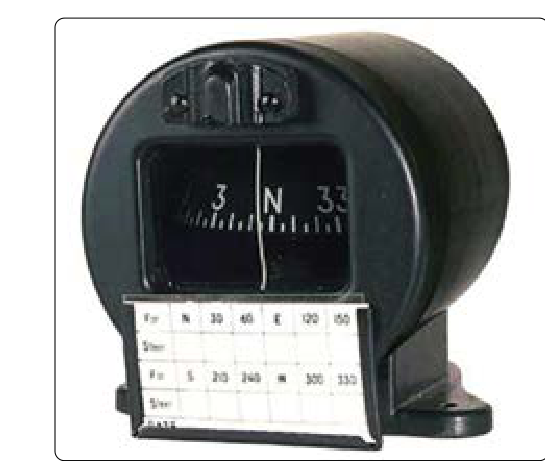
The magnetic compass is one of the oldest and most reliable instruments in aviation, requiring no electrical power and providing continuous heading information. Yet every compass installed in an aircraft is subject to a unique set of errors caused by the aircraft itself. These errors — collectively called deviation — stem from ferrous metals, electrical wiring, and electronic equipment that generate their own magnetic fields inside the cockpit and airframe. Understanding deviation, how it is measured, how it is compensated, and how the resulting deviation card is used is essential knowledge for any Aviation Maintenance Technician (AMT) working on airframe systems.
Unlike variation, which is the fixed angular difference between true north and magnetic north at a given geographic location, deviation changes from aircraft to aircraft and even from one compass installation to another in the same airframe. Variation is charted on sectional charts and cannot be corrected; deviation is the AMT's domain, correctable through a disciplined procedure called compass compensation (also known as compass swinging).
Sources of Compass Deviation
Deviation originates whenever a magnetic field other than Earth's field acts on the compass sensing element. Inside a typical light aircraft, several sources contribute:
- Ferrous structural components — steel control cables, rudder pedal assemblies, seat rails, and engine mounts all retain varying degrees of permanent magnetism or become temporarily magnetized when exposed to strong fields during manufacturing.
- Electrical wiring and equipment — current-carrying conductors produce magnetic fields proportional to current flow. Radio equipment, strobes, landing lights, and avionics buses all contribute when energized. This is why compass compensation is always performed with all avionics and electrical loads in the same configuration as normal cruise flight.
- Engine and magnetos — the rotating mass of the engine and the ignition magnetos create fluctuating fields. The compass must be swung with the engine running at a normal ground-idle RPM.
- Hard-iron and soft-iron errors — hard-iron deviation is caused by permanently magnetized components and produces a constant angular error for a given heading. Soft-iron deviation results from components that become temporarily magnetized by Earth's field and changes in magnitude as the aircraft changes heading, producing a sinusoidal variation around the compass card.
Because electrical loads alter the magnetic environment, the AMT must ensure that all equipment is in its normal flight configuration before beginning compensation. If the aircraft has a constant-frequency alternator, it should be running; navigation lights, radios, and transponders should be in their normal on or standby states as specified in the aircraft's maintenance manual or the compass manufacturer's instructions.
The Compass Compensation Procedure (Compass Swing)
Compass compensation is the physical process of adjusting small compensating magnets built into the compass housing so that the compass reads as accurately as possible on each cardinal heading. The procedure must be performed on a compass rose — a precisely surveyed location on the airport surface (usually on a taxiway or ramp area away from large metal structures, power lines, and other aircraft) where the magnetic headings of painted radials are known to a high degree of accuracy.
Step-by-Step Procedure
- Prepare the aircraft. Park the aircraft on the compass rose, engine running, all electrical equipment energized in normal cruise configuration. Remove all foreign objects — tool bags, headsets, extra equipment — from the cockpit, as even a steel wrench nearby can introduce temporary deviation.
- Align on magnetic north (360°). Using external alignment equipment or the compass rose radial, position the aircraft precisely on the north–south axis. Adjust the compass's north–south compensating magnet (typically accessed through a small screw on the compass face labeled N-S) until the compass reads exactly 360°.
- Align on magnetic south (180°). Taxi or tow the aircraft to the south-facing radial. Note the compass reading and the resulting error from 180°. Correct half of this error using the N-S compensating screw. For example, if the compass reads 184° on south, the error is 4°. Half of 4° is 2°, so adjust the N-S screw to bring the compass to 182° (south + 2°). Do not attempt to zero it out completely on the south heading — correcting half preserves the best overall accuracy across both headings.
- Align on magnetic east (090°). Position the aircraft on the east radial and zero the compass using the east–west compensating magnet (the E-W screw) to read exactly 090°.
- Align on magnetic west (270°). Note the reading. Apply the same half-correction logic: correct half the remaining error using the E-W screw.
- Check all eight headings. After adjusting the cardinal headings, taxi to each of the intercardinal headings (NE, SE, SW, NW) and record the actual compass reading versus the known magnetic heading. These differences are the residual deviations that cannot be eliminated by the compensating magnets.
- Record the results. All residual deviation values are written on the compass deviation card.
The Deviation Card: Format and Placement
Regulations require that a deviation card be installed in the aircraft in a location visible to the pilot in flight. Under 14 CFR Part 23 and the applicable airworthiness standards, the compass must be calibrated and the deviation card must be posted near the compass. The card lists the magnetic heading the pilot should steer on a given compass heading — or equivalently, what the compass will read when flying a given magnetic heading.
A typical deviation card presents two rows. The top row lists magnetic headings (the actual direction the aircraft is pointing relative to magnetic north), while the bottom row shows the corresponding compass headings (what the compass actually reads on those headings). Alternately, the card may show: For (compass reading), Steer (magnetic heading). The format varies, but the intent is identical — give the pilot a quick-reference correction to compensate for residual deviation.
For example, a deviation card might show:
- Steer 030° when the compass reads 032°
- Steer 060° when the compass reads 058°
- Steer 090° when the compass reads 091°
Deviation cards are typically mounted in a small holder on or near the instrument panel, directly adjacent to the magnetic compass. If deviation on any heading exceeds 10°, the compass is considered unacceptable for flight and must be re-swung or the compass must be replaced, as this exceeds the tolerance generally considered airworthy under manufacturer and FAA guidance.
Why Compass Deviation and Compensation Matter
From a safety standpoint, an uncompensated or poorly compensated compass can mislead a pilot into flying a significantly wrong heading, especially during instrument meteorological conditions or over featureless terrain. A 10° deviation error on a 60-nautical-mile leg introduces a positional error of over 10 nautical miles — easily enough to cause controlled flight into terrain or a missed approach to the correct airport.
For the AMT, performing a compass swing is legally required after certain maintenance actions. Any time the aircraft's magnetic environment is disturbed — engine replacement, installation of new avionics, major structural repair near the compass, re-routing of electrical wiring near the instrument — a new compass swing is mandatory to ensure the deviation card remains accurate. Advisory Circular and manufacturer guidance both stress that the deviation card must reflect the actual post-maintenance configuration of the aircraft.
Proper documentation also matters. The AMT must record the compass swing in the aircraft maintenance records, noting the date, the compass rose location used, the equipment configuration, and the resulting deviation values. This entry provides traceability and confirms airworthiness.
Key Numbers and Rules
- Maximum acceptable deviation: 10° on any heading is the widely applied limit; deviations beyond this typically require re-compensation or compass replacement.
- Cardinal headings adjusted: N, S, E, W — using the N-S and E-W compensating screws in the compass.
- Half-correction rule: On the second cardinal heading of each axis (S and W), correct only half the residual error, distributing error symmetrically.
- Electrical configuration: All avionics and electrical loads must be in their normal operational (flight) state during the swing.
- Engine running: The engine must be running at normal ground-idle RPM to account for magneto and alternator magnetic fields.
- Compass rose: The swing must be performed on a surveyed, airport-approved compass rose free of nearby metallic structures or interference.
- Documentation: Compass swing must be logged in maintenance records; deviation card must be posted near the compass in the cockpit.
Common Test Traps
- Confusing deviation with variation. Variation is a geographic phenomenon shown on charts and cannot be corrected by maintenance. Deviation is aircraft-specific and IS corrected by the AMT during a compass swing. Test questions may present both terms and expect you to distinguish them precisely.
- Thinking the compass is zeroed on the south and west headings. Many candidates assume the goal is to make the compass read exactly correct on every heading. The half-correction rule deliberately leaves a small error on the second heading of each axis to minimize total error across all headings — the compass will NOT read perfectly on south after adjusting for north and south.
- Forgetting the electrical load requirement. A compass swung with avionics off and then used with all radios and lights on will have a different (and uncorrected) deviation because energized equipment changes the local magnetic environment.
- Assuming a new compass needs no swing. Even a brand-new replacement compass introduces its own unique magnetic characteristics and must be swung after installation before the aircraft is returned to service.
- Misreading the deviation card direction. The card tells you what to steer (magnetic) when you see a given compass reading, or vice versa. Applying the correction backwards — adding deviation when you should subtract, or using compass readings as if they were magnetic headings — is a classic error that test questions are written specifically to catch.