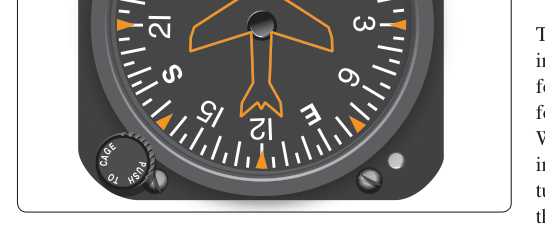
Among the six basic flight instruments found in a traditional cockpit, the heading indicator (HI) — sometimes called the directional gyro (DG) — is the primary instrument a pilot uses to maintain and verify heading during instrument flight. Unlike the magnetic compass, the heading indicator is steady, easy to read, and free from the oscillations and turning errors that plague compass needles in turbulence or during maneuvers. However, it has one critical limitation: it does not know magnetic north. The heading indicator is entirely self-referencing, relying on a spinning gyroscope to maintain a fixed orientation in space. Over time, that gyroscope drifts away from its set position — a phenomenon called precession — meaning the indicated heading gradually diverges from the aircraft's actual magnetic heading. Understanding why this happens, how fast it happens, and when and how to correct it is not only essential knowledge for the FAA Instrument Rating knowledge test; it is a genuine IFR safety skill.
How the Heading Indicator Works
The heading indicator is a gyroscopic instrument. Inside the instrument case, a gyroscope rotor spins at high speed — typically driven by either the aircraft's vacuum (suction) system or, in modern aircraft, an electric motor. The fundamental property that makes gyroscopes useful as navigational references is rigidity in space: a spinning gyroscope resists any force that tries to change the orientation of its spin axis. This means that once you align the heading indicator with magnetic north, the gyroscope will try to maintain that orientation even as the aircraft turns around it.
A compass card is attached to the gyroscope assembly and is visible through a window in the instrument face. As the aircraft turns, the card remains (ideally) fixed in space while the aircraft and instrument case rotate around it, giving the pilot an accurate and stable heading readout. This is fundamentally different from the magnetic compass, which uses a magnetized card that seeks magnetic north but is subject to magnetic dip, acceleration errors, and northerly turning errors.
What Is Precession and Why Does It Occur?
In a perfect world, a gyroscope set to a given orientation would maintain it forever. In the real world, two unavoidable forces cause the heading indicator to drift from its aligned position — a process known collectively as precession.
Mechanical (Bearing) Friction
No mechanical bearing is completely frictionless. As the gyroscope rotor spins, tiny friction forces at the gimbal bearings create small torques that act on the spin axis. According to the principle of gyroscopic precession, a force applied to a spinning gyroscope is effectively manifested (deflected) 90 degrees ahead in the direction of rotation from the point where that force was applied. The practical result is that bearing friction continuously nudges the gyroscope slightly away from its set position. Higher-quality instruments with precision bearings drift less, but drift cannot be eliminated entirely in mechanical gyroscopes.
Apparent Precession Due to Earth's Rotation
Even a theoretically perfect, frictionless gyroscope would appear to drift when observed from the surface of a rotating planet. The Earth rotates 360 degrees every 24 hours, completing roughly 15 degrees of rotation per hour (360 ÷ 24 = 15°/hr). A gyroscope maintains its orientation in inertial space, not relative to the rotating Earth beneath it. From the cockpit, this looks like the heading indicator is drifting, even though it is actually the Earth turning under the gyroscope. This effect is called apparent precession or transport wander and is most pronounced at higher latitudes where the vertical component of Earth's rotation has a greater effect on a horizontally-oriented gyro.
Cumulative Drift Rate
FAA handbooks note that a heading indicator should be checked and realigned approximately every 15 minutes because mechanical precession accumulates over time; older FAA materials cited rates as high as roughly 3 degrees per 15 minutes for some units, while current guidance describes drift that can accumulate to as much as one bearing width — roughly 15 degrees — per hour in some instruments. Precise precession rates vary by instrument condition and are not fixed to a single standardized FAA figure, which is exactly why periodic realignment against the magnetic compass, rather than relying on a specific drift number, is the operationally important habit.
How and When to Align the Heading Indicator
Because the heading indicator drifts, you must periodically realign it to the magnetic compass. The procedure is straightforward but must be done at the right moment and in the right conditions to be accurate.
Conditions Required for Accurate Alignment
The magnetic compass is only reliable when the aircraft is in straight-and-level, unaccelerated flight. This is not optional. The compass is subject to significant errors during turns (northerly and southerly turning errors due to magnetic dip) and during accelerations and decelerations (acceleration and deceleration errors on east/west headings). If you attempt to read the compass and set the heading indicator while banking or accelerating, you will set an erroneous reference and make your heading indicator less accurate than before. Whenever possible, choose a moment of stable, wings-level cruise flight to make the alignment check.
Recommended Alignment Interval
The FAA recommends checking and realigning the heading indicator with the magnetic compass every 15 minutes during flight. In a practical IFR scan, this means adding a periodic cross-check of HI versus magnetic compass to your instrument scan routine — not as a distraction, but as a scheduled discipline. Some instrument pilots use a timer or coincide the check with other routine tasks (position reports, fuel checks, etc.).
The Alignment Procedure
To align the heading indicator: stabilize the aircraft in straight-and-level, unaccelerated cruise. Allow the magnetic compass card to settle completely — wait several seconds after any turbulence or bank. Note the compass heading carefully. Then use the heading indicator's knob (typically on the bottom of the instrument face) to rotate the gyro card until it matches the compass reading. Make the adjustment smoothly and do not rush. Once aligned, resume your normal scan.
Why This Matters for IFR Flight
During VFR flight in good visibility, a few degrees of heading error is usually inconsequential — you can see where you're going and correct visually. In instrument meteorological conditions (IMC), you cannot see the ground, terrain, other traffic, or navigational landmarks. Your only heading reference is your instruments. A heading indicator that has drifted even 5 degrees from magnetic north can cause you to fly a significantly divergent ground track from your intended course, miss a final approach course intercept, or — in the extreme — navigate toward terrain or restricted airspace you were trying to avoid.
Additionally, IFR clearances are issued in specific headings. If ATC issues a heading of 270 degrees and your heading indicator has precessed 6 degrees, you will actually fly 264 or 276 degrees — which may not align you with the intended traffic flow, may not clear terrain, and may not position you for the approach as planned. Maintaining an accurate heading indicator is therefore not merely an academic exercise; it is a foundational element of safe instrument flight.
Heading Indicators in Modern Aircraft: HSI and AHRS
Many modern IFR aircraft — and virtually all aircraft with glass cockpit avionics — replace the standalone heading indicator with a Horizontal Situation Indicator (HSI) or display heading information from an Attitude and Heading Reference System (AHRS). An AHRS uses solid-state sensors (accelerometers, rate gyros, and often GPS) to compute heading continuously and automatically. These systems do not precess in the traditional sense and typically auto-correct to magnetic north without pilot intervention. However, student pilots must understand the traditional mechanical gyroscope and its precession because it is still found in many training aircraft and is the foundation for the underlying principles tested on the FAA knowledge exam.
Key Numbers and Rules
- Drift rate: FAA materials describe heading indicator precession as variable by instrument and condition; older references cite up to roughly 3 degrees per 15 minutes, while current guidance notes drift can accumulate to as much as one bearing width (about 15 degrees) per hour in some units — there is no single fixed FAA figure, which is why periodic realignment matters more than any specific number.
- Realignment interval: Every 15 minutes in straight-and-level, unaccelerated flight.
- Earth's rotation rate: Approximately 15 degrees per hour, a source of apparent precession.
- Vacuum system requirement: Most suction-driven gyros require 4.5 to 5.5 inches of mercury of suction to spin properly; insufficient suction means slower rotation and worse precession.
- Reliable compass conditions: Straight-and-level, unaccelerated flight only — never during turns, climbs, descents, or acceleration/deceleration.
- Compass errors to remember: ANDS (Accelerate North, Decelerate South) on east/west headings; in the Northern Hemisphere, the compass leads the turn when passing through headings near north and lags the turn when passing through headings near south.
Common Test Traps
- Assuming the heading indicator is always accurate: The FAA frequently tests whether pilots know that the heading indicator must be periodically realigned — it does not self-correct. Never assume it matches magnetic north just because you set it before departure.
- Aligning in the wrong conditions: A question may ask when or how to align the heading indicator. The correct answer always specifies straight-and-level, unaccelerated flight. Aligning during a turn or acceleration produces an incorrect reference.
- Confusing precession with compass error: Precession is a gyroscopic drift — an error in the heading indicator. Compass turning errors are magnetic-instrument errors. These are distinct phenomena tested separately on the knowledge exam.
- Forgetting the 15-minute rule: Test questions may ask how often the heading indicator should be checked and reset. The standard FAA answer is approximately every 15 minutes.
- Assuming AHRS eliminates all heading concerns: While AHRS greatly reduces precession problems, pilots must still understand failure modes, initialization requirements, and the principle behind traditional gyroscopes for the written test and for understanding system limitations.