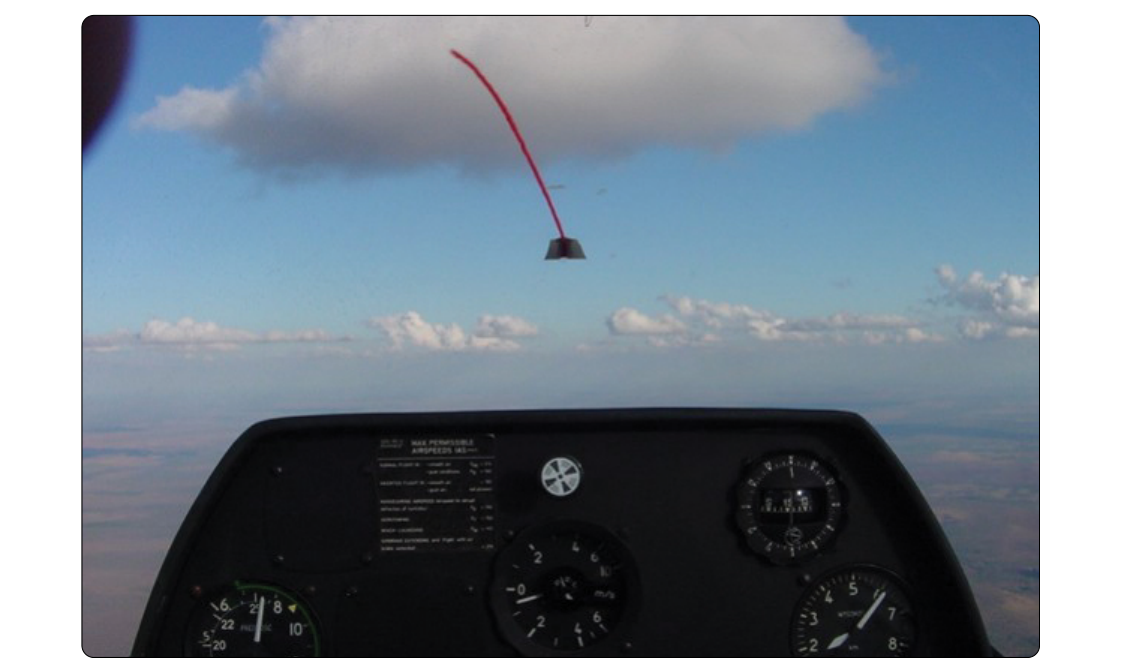
What Is Spatial Disorientation?
Spatial disorientation occurs when a pilot's sensory perception of the aircraft's attitude, altitude, or airspeed does not match the aircraft's actual flight condition. The FAA defines it as the inability to correctly interpret aircraft attitude, altitude, or airspeed in relation to the Earth or other reference points. It is one of the most lethal aeromedical hazards in aviation — responsible for a disproportionate share of fatal general aviation accidents, particularly in instrument meteorological conditions (IMC).
To understand why spatial disorientation happens, you must first understand how the human body senses motion and orientation — and why that system is poorly designed for flight.
The Human Sensory System and Its Limitations
The body uses three primary sensory systems to perceive orientation and movement: the vestibular system (inner ear), the visual system (eyes), and the proprioceptive system (pressure sensors in muscles, joints, and skin — sometimes called the "seat of the pants" sense). On the ground and in normal everyday life, these three systems cross-check each other reliably. In flight — especially in reduced visibility — they can produce contradictory and dangerously misleading signals.
The Vestibular System
The inner ear contains two distinct sensory structures. The semicircular canals are three fluid-filled loops oriented in three perpendicular planes that detect angular acceleration (rotational movement such as roll, pitch, and yaw). The otolith organs — the utricle and saccule — contain tiny calcium carbonate crystals called otoliths (or otoconia) that rest on hair cells. These organs detect linear acceleration and the force of gravity.
The critical limitation of the semicircular canals is that they respond to changes in rotation, not to sustained rotation. When a pilot enters a turn, the fluid in the canals deflects and the pilot feels the bank. However, if the turn continues at a constant rate for approximately 20 seconds or more, the fluid catches up with the canal walls and movement is no longer detected — the pilot now feels level even though the aircraft is still turning. This is the foundation of most vestibular illusions.
Major Vestibular Illusions
The Leans
The leans is the most common form of spatial disorientation. It occurs when an undetected gradual roll brings the aircraft to a banked attitude. Because the roll rate was below the vestibular detection threshold, the pilot never felt the bank. When the pilot notices the bank on instruments and corrects with a roll to wings level, the semicircular canals do detect that correction — and now signal that the aircraft is rolling in the opposite direction. The pilot's body insists the aircraft is still banked, even though the instruments show wings level. The result is that the pilot feels compelled to lean in the direction of the original bank to "feel" upright. The correct response is to trust the flight instruments and resist the physical sensation, even though the lean may persist for minutes.
Graveyard Spiral
This illusion begins with an unnoticed or gradual entry into a prolonged banked turn. After about 20 seconds, the pilot no longer senses the turn and perceives the aircraft as flying straight. When the pilot notices the nose dropping (a natural consequence of the uncoordinated bank), the instinctive reaction is to pull back on the elevator — which tightens the spiral and increases bank angle and load factor rather than raising the nose. Airspeed and G-forces build rapidly. The correct recovery requires first leveling the wings to stop the turn, then gently raising the nose. Failing to level the wings first makes the situation worse. This scenario is a leading cause of loss of control in IMC.
Coriolis Illusion
The Coriolis illusion is particularly dangerous and disorienting. It occurs when a pilot moves the head rapidly out of the plane of a prolonged turn. For example, if the pilot has been in a constant-rate turn long enough for the semicircular canal fluid to settle (so the turn is no longer felt), and the pilot then tilts the head to look at a chart or adjust a radio, fluid in a different set of canals is suddenly disturbed. The brain interprets simultaneous stimulation of multiple canals as a tumbling or rolling sensation in an entirely unexpected axis — one that does not match any actual aircraft movement. This sudden, severe sensation of tumbling can be so overwhelming that it causes the pilot to lose control. The prevention is simple: avoid head movements during prolonged turns in IMC and keep the head as still as possible.
Graveyard Spin
Similar to the graveyard spiral, this illusion occurs during an inadvertent spin. After the spin has continued long enough for the pilot to no longer perceive rotation, recovery inputs feel like entry into a spin in the opposite direction. The pilot may re-enter the spin in the original direction in an attempt to stop the perceived new spin. Recognition and correct spin recovery procedure are the defenses.
Somatogravic Illusion
The otolith organs cannot distinguish between gravity and linear acceleration. When an aircraft accelerates rapidly forward (such as during a go-around or a catapult launch), the shift in the gravitoinertial force vector is interpreted by the otolith organs as the aircraft pitching nose-up. The pilot may push forward on the controls to correct the perceived nose-high pitch, potentially driving the aircraft into the ground. Conversely, a rapid deceleration can create the illusion of a nose-low pitch, causing the pilot to pull back unnecessarily. This illusion is most prevalent in high-performance aircraft with rapid acceleration capability.
Inversion Illusion
An abrupt change from a climb to straight-and-level flight can cause the pilot to feel as though the aircraft is tumbling backward (inverted). The pilot's reaction may be to push the nose forward, which can develop into an unusual attitude or loss of control. Smooth, coordinated attitude changes are the best prevention.
Elevator Illusion
An abrupt upward gust or updraft causes an upward linear acceleration, stimulating the otoliths in a way that makes the pilot feel the aircraft is climbing. The pilot may push forward on the controls. A sudden downdraft produces the opposite illusion — an apparent descent — causing the pilot to pull back. In turbulent conditions, these small impulse corrections can add up to serious altitude deviations.
Visual Illusions Related to Disorientation
While not vestibular in origin, visual illusions compound spatial disorientation. The leans are worsened if the pilot looks at a horizon that does not match the instruments. False horizon illusions occur when a sloping cloud deck, a row of lights on a hillside, or a tilted coastline is mistaken for the actual horizon. Pilots have rolled to align with a false horizon, placing the aircraft in a dangerous bank. At night, a phenomenon called autokinesis causes a stationary light to appear to move after staring at it for several seconds, which can lead a pilot to maneuver toward a star or ground light mistaken for another aircraft.
Prevention and Practical Cockpit Strategies
The FAA's guidance is clear: when in IMC or any condition of reduced visual reference, trust the flight instruments over all physical sensations. Specific strategies include:
- Instrument proficiency: Maintain a scan that cross-checks multiple instruments so no single illusion goes unchallenged.
- Avoid head movements: During prolonged turns in IMC, minimize abrupt head tilts to prevent the Coriolis illusion.
- Transition awareness: When transitioning from visual to instrument flight, consciously switch to trusting panel instruments rather than bodily sensation.
- Get current: The FAA requires instrument-rated pilots to maintain instrument currency for a reason — proficiency reduces the time spent off the instruments and reduces vulnerability.
- Know your illusions: Simply knowing that a sensation is likely an illusion helps pilots override it. Preflight study of aeromedical factors is not just test preparation — it is life-saving self-briefing.
Memory Aid
To remember the major vestibular illusions, use the phrase "Lean, Graveyard, Coriolis, Soma" — standing for Leans, Graveyard Spiral/Spin, Coriolis Illusion, Somatogravic Illusion. Each one begins with prolonged or abrupt acceleration that the inner ear misinterprets. Ask yourself for each: What type of acceleration triggered it? What false sensation does it create? What is the instinctive (wrong) response? What is the correct response?
Common Test Traps
- Detection threshold timing: The semicircular canals stop sensing a constant-rate turn after approximately 20 seconds — test questions may describe a scenario where a pilot "feels level" after a prolonged bank. Recognize this as the leans or graveyard spiral setup.
- Graveyard spiral recovery: The instinctive but incorrect response is to pull back on the elevator first. The correct response is to level the wings first, then raise the nose. Pulling back first tightens the spiral.
- Coriolis cause: The Coriolis illusion is triggered by a rapid head movement during a prolonged constant-rate turn — not by the turn itself. Do not confuse it with the leans, which involves no head movement.
- Somatogravic vs. elevator: The somatogravic illusion is caused by rapid linear (forward or backward) acceleration; the elevator illusion is caused by vertical (up/down) gusts. Both involve otolith organs, but the triggering forces and resulting false perceptions differ.
- Trust the instruments: Any FAA test question asking what a pilot should do when experiencing spatial disorientation in IMC has one correct answer — believe and follow the flight instruments, not bodily sensations.