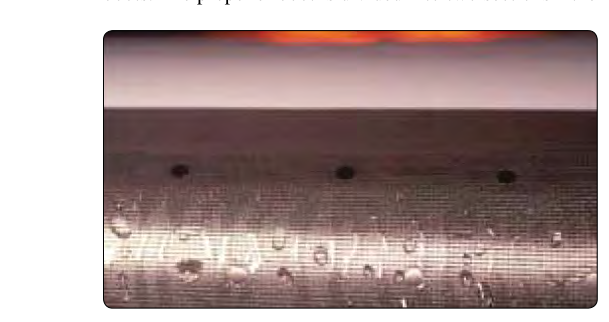
A pilot's ability to see clearly through the windshield is fundamental to safe flight. Ice accumulation, frost, and fogging on the windshield can reduce forward visibility to near zero within minutes in the wrong conditions — a dangerous situation whether the aircraft is on the ground in cold weather or cruising at altitude in clouds. Windshield anti-ice and defogging systems are engineered specifically to prevent or eliminate these obscurations, and understanding their design, operation, and limitations is essential knowledge for any aviation maintenance technician (AMT) working on airframe systems.
The FAA's Aviation Maintenance Handbook (FAA-H-8083-31), along with the Pilot's Handbook of Aeronautical Knowledge (FAA-H-8083-25), establishes the framework for understanding these systems. Different aircraft — from light general aviation singles to large transport-category jets — use different technologies depending on the power available, the aircraft's intended operating environment, and certification requirements under 14 CFR Part 25 (transport category) or Part 23 (normal/utility/commuter category).
Types of Windshield Anti-Ice and Defogging Systems
There are three primary categories of windshield anti-ice and defogging systems used in certificated aircraft: electrical heating systems, bleed-air (pneumatic) systems, and chemical fluid systems. Each has its own design logic, maintenance profile, and operational characteristics.
Electrically Heated Windshields
Electrically heated windshields are by far the most common type found on both light aircraft and large transport-category airplanes, though the specific implementation differs significantly between these classes. The fundamental principle is the same: a thin, electrically conductive film or wire element embedded within the windshield glass or plastic laminate converts electrical energy into heat, warming the windshield surface to prevent ice from forming or to remove existing ice and fog.
On light general aviation aircraft, the system may be relatively simple — a conductive coating bonded between layers of the windshield that receives power from the aircraft's 14- or 28-volt electrical bus. Because the power available is limited, these systems are typically designed as defogging systems rather than full anti-icing systems, meaning they are most effective against fogging and light frost rather than heavy rime or glaze ice accumulation in actual instrument meteorological conditions (IMC).
On transport-category aircraft, electrically heated windshields are far more robust. These windshields are multi-ply laminates — typically consisting of an outer glass ply, a heating element layer (often a fine wire grid or a transparent conductive oxide coating such as indium tin oxide), inner plies of glass and/or plastic (vinyl), and a structural inner glass layer. The heating is controlled by an automatic temperature-control system that uses thermistors or temperature sensors bonded to the windshield to modulate power and maintain a target temperature. This closed-loop control prevents overheating, which can damage the laminate or cause crazing (a network of fine cracks in the plastic layer) that degrades optical clarity.
A critical maintenance point: the conductive heating element in an electrically heated windshield must never be tested using a standard ohmmeter in a way that applies voltage, because the low-resistance element can be easily damaged. Resistance checks must follow the manufacturer's approved procedures exactly. Any delamination, bubbling, discoloration, or optical distortion in the windshield must be evaluated against the aircraft manufacturer's acceptable-condition standards before the aircraft is returned to service.
Bleed-Air (Pneumatic) Windshield Anti-Ice Systems
Some turbine-powered aircraft route hot bleed air from the engine compressor stages into channels or manifolds positioned along the lower edge of the windshield frame. The hot air flows upward across the outer windshield surface (or through an internal duct system) to heat the glass and prevent ice adhesion. This approach takes advantage of the abundant hot, pressurized air available from turbine engines.
Bleed-air systems for windshields require careful temperature management. Air that is too hot can thermally shock the windshield glass, causing cracking. Ducting, flow control valves, and temperature-limiting regulators are part of the system. Maintenance technicians must inspect the ducting for cracks or leaks (hot bleed-air leaks are a fire and structural damage hazard), verify valve operation, and confirm that temperature sensors and regulators are functioning within limits. Blockages in the duct can cause uneven heating or total loss of anti-ice protection.
Chemical Fluid Systems
Some aircraft — particularly older designs and certain light aircraft — use a chemical fluid anti-icing system in which isopropyl alcohol or a glycol-based fluid is pumped from a reservoir and sprayed or wicked across the outer windshield surface. The fluid lowers the freezing point of water and helps shed ice accumulation. The pilot activates the system by opening a valve that allows the fluid to flow to a slinger ring or spray nozzle directed at the windshield.
Chemical systems are simple and mechanically reliable, but they have real limitations. Fluid supply is finite — the reservoir holds only enough fluid for a limited duration of operation, so these systems are best suited for short-duration icing encounters or for clearing the windshield prior to takeoff. Maintenance tasks for chemical systems include checking reservoir fluid level and type (only approved fluids may be used), inspecting nozzles and distribution tubes for clogging, verifying pump operation, and confirming that no fluid contamination has occurred. Chemical fluid must be kept away from certain aircraft surfaces and seals that it can degrade.
Defogging Systems
Distinct from anti-icing (which deals with frozen moisture on the outside surface), defogging addresses condensation on the inside surface of the windshield caused by warm, humid cabin air contacting the cold glass. On pressurized aircraft, warm conditioned air from the environmental control system (ECS) is directed through outlets at the base of the windshield to blow across the inner surface, keeping it above the dew point of the cabin air. On unpressurized aircraft, cabin heat vents may serve a similar function.
Electrically heated windshields on transport aircraft typically serve both functions simultaneously — the heating element warms the entire laminate, preventing outside icing and keeping the inner surface warm enough to prevent fogging. On aircraft where the defogging system is separate from the anti-icing system, the AMT must inspect both independently. Defogging air outlets must be clear of obstructions, and ECS-supplied warm air must reach the windshield area at the proper flow rate and temperature.
Why These Systems Matter: Safety and Certification
Under 14 CFR Part 25.773, transport-category aircraft must have a means to maintain a clear portion of the windshield for each pilot during all precipitation conditions. This is a certification requirement, not merely a recommendation. For aircraft certified for flight into known icing (FIKI), the windshield anti-ice system must be demonstrated to maintain adequate visibility during continuous maximum and intermittent maximum icing conditions as defined in 14 CFR Part 25, Appendix C.
For the AMT, this means that a windshield heating system that is inoperative, degraded, or out of temperature calibration is not a deferred maintenance item to be overlooked. An aircraft dispatched into icing conditions with a failed windshield anti-ice system may not be legal or airworthy. The minimum equipment list (MEL), where applicable, governs whether the aircraft may be dispatched and under what conditions.
Key Numbers and Rules
- Heating element resistance: Always check the manufacturer's maintenance manual for the specific acceptable resistance range — there is no universal value. Resistance outside limits indicates a broken element.
- Crazing: Any optical distortion or crazing that falls outside the manufacturer's serviceable limits requires windshield replacement; flying with degraded optical quality is an airworthiness issue.
- Thermistor/sensor calibration: Temperature control systems on transport windshields must maintain the windshield within a manufacturer-specified temperature range, typically designed to keep the outer surface above 0°C (32°F) in icing conditions without exceeding maximum temperature limits (which vary by design but can be in the range of 50–60°C on the inner surface).
- Fluid quantity: Chemical anti-ice fluid reservoirs must be serviced with the specific approved fluid type; mixing fluid types or using unapproved substitutes is not permitted.
- 14 CFR 25.773: Governs the requirement for clear windshield visibility in precipitation for transport-category aircraft.
- Defogging airflow: Must be verified per the aircraft maintenance manual; inadequate flow is often caused by blocked outlets or ECS malfunctions rather than a windshield defect.
Common Test Traps
- Anti-ice vs. defogging confusion: Anti-ice deals with frozen precipitation on the outer surface; defogging handles condensation on the inner surface. These may use separate systems, and a question may test whether you know which system addresses which problem.
- Ohmmeter use on heating elements: Applying improper test voltage or using the wrong test method can permanently damage a heating element. Always follow the manufacturer's testing procedure — never assume a standard resistance check is safe without verifying the approved method.
- Crazing is not cosmetic: Test questions may imply that crazing is only a visual nuisance. In fact, crazing indicates structural or thermal damage to the laminate and must be evaluated against serviceability limits — it is an airworthiness concern.
- Chemical systems are not unlimited: A chemical fluid anti-ice system protects only for as long as the fluid supply lasts. It is not a substitute for a continuous electrical or bleed-air system in sustained icing conditions.
- Bleed-air duct leaks: A leak in a windshield bleed-air anti-ice duct is not just a loss of anti-ice capability — hot bleed air leaking into the airframe structure is a potential fire hazard and requires immediate corrective action.