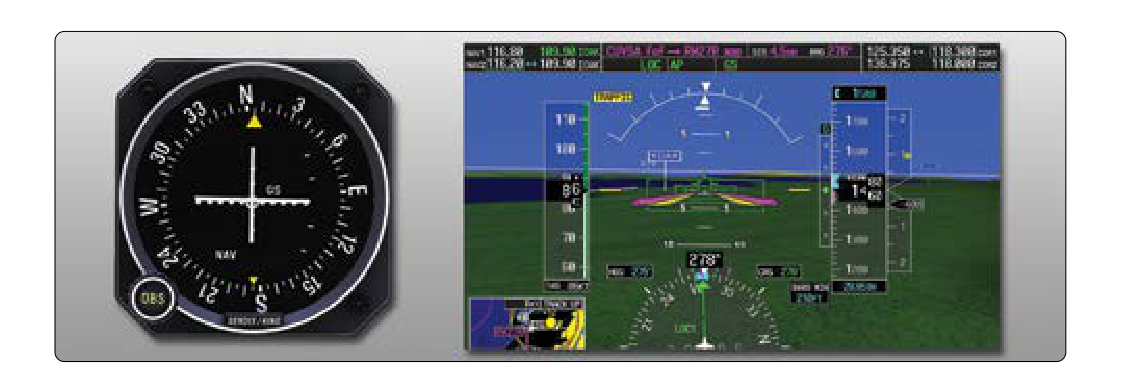
When weather conditions deteriorate beyond the limits of a standard Category I ILS approach—a 200-foot decision height and 1,800 feet of runway visual range (RVR)—pilots need a different set of tools, training, and authorizations to land safely. Category II (CAT II) and Category III (CAT III) ILS approaches represent the most demanding precision approach operations in civil aviation, allowing properly equipped and trained crews to descend to decision heights measured in tens of feet, or even to a zero-foot decision height in the most advanced CAT IIIc authorization. These operations depend on an interconnected web of aircraft systems, airport infrastructure, crew qualification, and regulatory authorization that must all function within tight tolerances simultaneously.
This article provides a complete treatment of CAT II and CAT III ILS minima, the equipment those operations demand of both the aircraft and the airport, and the crew qualification requirements that govern who may fly them. The primary FAA source is the Instrument Procedures Handbook (FAA-H-8083-16B), Chapter 4, supplemented by applicable 14 CFR provisions and the Aeronautical Information Manual.
Understanding the ILS Category System
The International Civil Aviation Organization (ICAO) and the FAA divide ILS approach categories by the minimum decision height (DH) and the minimum runway visual range required for the operation. Decision height, expressed in feet above the runway touchdown zone elevation, is the altitude at which the pilot must have acquired the required visual references to continue the approach or must immediately execute a missed approach. RVR is measured electronically along the runway and reported in feet; it replaces prevailing visibility as the controlling parameter for CAT II and CAT III operations.
Category I (CAT I) establishes the baseline: a DH not lower than 200 feet and an RVR of at least 1,800 feet (or, where RVR is not reported, a visibility of not less than one-half statute mile). CAT II and CAT III lower both of those values, placing much greater reliance on automation and ground-based navigation infrastructure.
CAT II Minima and Operational Requirements
Category II ILS approaches authorize a DH of less than 200 feet but not lower than 100 feet, paired with an RVR of at least 1,200 feet. The approach plate will display the specific DH and RVR minimums for each runway and aircraft category. At the DH, the pilot must see at least the approach lighting system, the runway threshold, the threshold markings, the threshold lights, the runway end identifier lights (REILs), the touchdown zone, the touchdown zone markings, or the touchdown zone lights. If any of those visual references are not clearly visible and identifiable, a missed approach is mandatory.
From an aircraft systems standpoint, CAT II operations require a certified, functioning autopilot or flight director system capable of flying a coupled ILS approach, a radio altimeter (RA) to provide precise height above terrain rather than barometric altitude, and a fail-operational or fail-passive flight control system depending on the specific authorization. The aircraft's ILS receiver, flight instruments, and autopilot must all meet certification standards defined by the applicable Technical Standard Orders and FAA-accepted aircraft flight manual (AFM) supplements. Critically, the aircraft's specific CAT II authorization is noted in its AFM; a crew cannot simply elect CAT II operations because the approach plate shows CAT II minima.
CAT III Minima: A, B, and C
Category III is subdivided into three sub-categories, each representing a further reduction in visibility minima and, in the ultimate case, the elimination of a usable DH entirely.
- CAT IIIa: A DH lower than 100 feet (typically 50 feet) and an RVR of at least 700 feet. Visual reference must be acquired at or before DH to continue to landing.
- CAT IIIb: A DH lower than 50 feet, or no DH at all, with an RVR of at least 150 feet but less than 700 feet. At these conditions the pilot may see only the immediate touchdown zone environment at the moment of touchdown, placing virtually all guidance responsibility on the autoland system.
- CAT IIIc: No DH and no RVR limitation—a true zero-zero authorization. CAT IIIc approaches were defined by ICAO but as of current FAA guidance have not been authorized for civil operations in the United States. They are discussed in FAA publications primarily for international reference.
For CAT IIIa and IIIb, the aircraft must be equipped with a fail-operational autoland system. A fail-operational system continues to provide automatic landing guidance following a single failure of any component. By contrast, a fail-passive system simply does not make things worse after a failure—it maintains the current flight path without diverging—but may require the crew to execute a go-around. CAT IIIb typically demands fail-operational systems because the RVR is so low that a manual go-around after a late failure would be extremely difficult to execute safely. The aircraft AFM will state whether the installed system is fail-passive or fail-operational and which CAT III sub-category it supports.
Airport Infrastructure Requirements
An airport must be specifically authorized and equipped to support CAT II or CAT III operations. The ground-based ILS components—localizer, glideslope, and marker beacons or DME—must meet more stringent accuracy and integrity specifications than those required for CAT I service. The FAA flight inspection program verifies these signal-in-space parameters regularly.
The lighting system is also upgraded. CAT II and CAT III runways are equipped with a High-Intensity Approach Lighting System with Sequenced Flashers (ALSF-2) extending 2,400 to 3,000 feet from the runway threshold, plus touchdown zone lighting (TDZL), centerline lighting (CL), and runway edge lights meeting higher intensity standards. The runway surface itself must have adequate friction characteristics, and a runway condition reporting system must be active.
A critical area around the ILS antennas is protected from vehicles and aircraft during CAT II/III operations to prevent signal distortions. At airports with CAT II/III procedures, ATC will hold or clear traffic away from those critical areas whenever a CAT II or CAT III approach is in progress. Pilots departing or taxiing near an ILS antenna during low-visibility operations should expect holding instructions and should never enter the critical area without explicit clearance.
Crew Requirements and Authorization
Under 14 CFR Part 91, operators conducting CAT II and CAT III operations must do so under the provisions of an approved program. Private operators typically use an OpSpec or letter of authorization (LOA) issued by the FAA. Part 121 and 135 operators require specific Operations Specifications (OpSpecs) that detail which aircraft, routes, and crew combinations are authorized.
At minimum, the pilot in command (PIC) must hold an Airline Transport Pilot (ATP) certificate and be type-rated in the aircraft for CAT II operations. For CAT III operations, both the PIC and the second-in-command (SIC) must hold ATP certificates and be type-rated, and both must be specifically trained and current in CAT III procedures. Training requirements typically include ground instruction in system architecture, failure recognition, and abort criteria, followed by flight or simulator training to proficiency. Currency requirements mandate recurrent training at intervals specified in the operator's approved program—commonly every six months in a full-flight simulator approved for CAT II/III training.
The concept of a alert height (AH) is introduced in CAT IIIb operations. Alert height is an RA-based height above the runway at which the crew makes the decision about whether a system failure that has occurred below the DH requires a go-around. If the failure occurs above the alert height, a go-around is initiated; if it occurs below the alert height, the autoland system has already committed the aircraft to landing and the crew continues. Alert heights are specific to the aircraft type and are published in the AFM.
Why CAT II and CAT III Matter Operationally
For airline and corporate flight operations, the ability to execute CAT II and CAT III approaches is a significant competitive and safety advantage. Airports with CAT II/III capability see far fewer weather-related diversions, saving cost and passenger disruption. For crews, understanding these operations is not purely academic: a CAT I-equipped crew arriving at a destination that has gone below CAT I minimums has no legal or practical option other than diverting or holding for improvement. A CAT IIIb-authorized crew in the same aircraft may complete the flight safely.
From a safety culture standpoint, CAT II and CAT III procedures exemplify the layered defense model: if one system degrades, the crew recognizes it and either the remaining automation or the crew decision process catches the failure before it becomes an accident. Strict currency requirements, rigorously maintained equipment lists, and protected critical areas all combine to create an extremely low accident rate for these approaches worldwide.
Key Numbers and Rules
- CAT I: DH ≥ 200 ft, RVR ≥ 1,800 ft (or ½ SM visibility)
- CAT II: 100 ft ≤ DH < 200 ft, RVR ≥ 1,200 ft
- CAT IIIa: DH < 100 ft (often 50 ft), RVR ≥ 700 ft
- CAT IIIb: DH < 50 ft or no DH, 150 ft ≤ RVR < 700 ft
- CAT IIIc: No DH, no RVR minimum (not yet authorized in the U.S.)
- CAT II requires a radio altimeter; CAT IIIb requires a fail-operational autoland system
- ATP certificate and type rating required for PIC on all CAT II/III operations; SIC must also hold ATP for CAT III
- ILS critical areas must be protected during CAT II/III operations
- Recurrent CAT II/III simulator training is required, typically at 6-month intervals under Part 121 programs
Common Test Traps
- Confusing DH with MDA: CAT II and CAT III use decision height, not a minimum descent altitude. DH is RA-based; when the RA hits that number, you decide—you do not level off and search for the runway.
- Assuming the approach plate alone grants CAT II/III authorization: The presence of CAT II or CAT III minima on an approach chart does not authorize you to use them. The aircraft must be certified for the operation, the airport must be certified, and the crew must hold an applicable LOA or OpSpec.
- Mixing up fail-passive and fail-operational: Fail-passive keeps the aircraft stable after a failure but may not land it; fail-operational continues the autoland after a single failure. CAT IIIb typically requires fail-operational.
- Forgetting about alert height: Alert height is a concept unique to CAT IIIb operations. It is not the same as DH and is used to determine whether to continue or go around after a failure at very low altitude.
- Ignoring critical area protection: On the written exam, questions about ATC holding aircraft or vehicles clear of the ILS antenna during low-visibility approaches test whether you understand the critical area concept and why signal integrity depends on it.