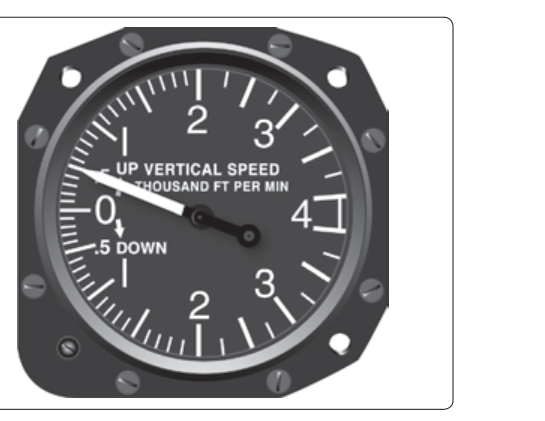
When an instrument departure procedure (DP) publishes a required climb gradient — expressed in feet per nautical mile (ft/NM) — the pilot must translate that number into a feet-per-minute (ft/min) climb rate that can actually be monitored on the vertical speed indicator. This conversion is one of the most practically important skills for instrument and airline transport pilots, because failing to meet the gradient can place an aircraft dangerously close to terrain or obstacles immediately after takeoff — a phase of flight where there is little margin for error.
The FAA Instrument Procedures Handbook (FAA-H-8083-16B, Chapter 1) addresses this directly, explaining how Obstacle Departure Procedures (ODPs) and Standard Instrument Departures (SIDs) specify climb gradients and how crews must verify the aircraft can comply. Understanding the math behind the conversion — and its assumptions — is essential knowledge for the ATP written exam and, more importantly, for real-world operations.
Background: What Is a Climb Gradient?
A climb gradient specifies how many feet of altitude must be gained for every nautical mile traveled across the ground. The FAA's standard climb gradient for instrument departures is 200 ft/NM, which provides the minimum required obstacle clearance in most departure environments. When terrain, towers, or other obstructions demand more separation, the procedure designer publishes a higher gradient — commonly expressed in the format "X ft/NM to Y ft MSL," meaning the gradient applies until the aircraft reaches that altitude.
Gradients appear on both Obstacle Departure Procedures and Diverse Vector Areas, as well as on SID charts in the notes section or on the plan view. The critical point is that the published gradient is a ground-track-based requirement: it depends on how far the aircraft travels over the ground, not how long the aircraft has been flying. This is why airspeed — specifically groundspeed — is central to the conversion.
The Conversion Formula
To find the required climb rate in feet per minute, multiply the published gradient (ft/NM) by the aircraft's groundspeed in knots, then divide by 60. The logic is straightforward: groundspeed in knots gives you nautical miles per hour; dividing by 60 gives nautical miles per minute; multiplying by the gradient (ft/NM) gives feet per minute.
Formula:
- Required Climb Rate (ft/min) = Gradient (ft/NM) × Groundspeed (knots) ÷ 60
For example, if a SID requires 300 ft/NM and your planned groundspeed after liftoff is 150 knots:
- 300 × 150 ÷ 60 = 750 ft/min
At a higher groundspeed of 180 knots with the same 300 ft/NM gradient:
- 300 × 180 ÷ 60 = 900 ft/min
Notice that the faster you move across the ground, the more altitude you must gain per minute to maintain the same gradient. A heavier aircraft with a lower climb rate at a higher groundspeed may fail a gradient that a lighter, slower aircraft passes easily. This is why weight, density altitude, and airspeed all feed directly into gradient compliance.
Groundspeed vs. True Airspeed
In the absence of wind data or for quick planning purposes, pilots often substitute true airspeed (TAS) for groundspeed. The FAA Instrument Procedures Handbook acknowledges this approximation: using TAS introduces a small error, but it is conservative in a headwind (you are actually traveling slower over the ground, so the required ft/min is slightly less) and non-conservative in a tailwind (you travel faster, requiring more ft/min than computed). For departure planning — especially in tailwind conditions — always use actual groundspeed if wind data is available. When in doubt, add a wind correction or use a slightly higher groundspeed estimate to stay on the safe side.
At typical jet departure airspeeds (160–200 knots TAS), even a 20-knot tailwind changes the required climb rate by 67–133 ft/min for a 200 ft/NM gradient. That difference can matter for an aircraft already near its climb performance limit on a hot day at a high-elevation airport.
Why It Matters: Obstacle Clearance and Safety
The entire purpose of a published climb gradient is obstacle clearance. The FAA establishes the standard 200 ft/NM gradient to provide at least 48 feet of obstacle clearance per nautical mile in the initial departure segment, rising to required clearance planes as the procedure progresses. When designers find an obstacle that breaches this standard clearance plane, they raise the required gradient so that a complying aircraft will clear the obstacle with the necessary margin.
If an aircraft cannot meet the published gradient, it has several options: delay the departure until conditions improve (e.g., cooler temperatures reduce density altitude), reduce weight, use a different runway, or request a non-standard departure. Simply departing without verifying gradient compliance is not an acceptable option — terrain and obstacle accidents on departure have been among the most catastrophic in aviation history.
For Part 121 and Part 135 operators, compliance with published climb gradients is a regulatory requirement embedded in performance planning. Dispatchers and pilots must confirm, using AFM data, that the aircraft can achieve the required gradient at the planned weight, altitude, and temperature before every departure.
Key Numbers and Rules
- Standard climb gradient: 200 ft/NM (applies when no specific gradient is noted on the departure procedure).
- Conversion formula: ft/min = (Gradient ft/NM × Groundspeed kt) ÷ 60.
- Quick mental rule: At 120 knots groundspeed, 1 ft/NM gradient equals exactly 2 ft/min (because 120 ÷ 60 = 2). Scale from there for other speeds.
- 200 ft/NM at 120 kt: 400 ft/min required. At 150 kt: 500 ft/min. At 180 kt: 600 ft/min.
- Gradient applies until: the altitude noted on the procedure, or when the procedure states the gradient terminates.
- Non-standard gradient notation: Often shown as a bold note on the departure chart, such as "Climb at 340 ft/NM or greater to 3,000 ft MSL."
- Tailwind caveat: Always use groundspeed — not just TAS — when a significant tailwind exists at takeoff.
Memory Aid
"GS times Grade, divide by Sixty" — Groundspeed (knots) multiplied by the Gradient (ft/NM), then divided by 60, equals the required climb Rate (ft/min). The three key words start with G, G, and S (sixty), helping you recall the three elements of the formula without confusing the order.
Applying the Conversion in the Cockpit
Pre-departure is the right time to do this calculation — not after liftoff. During preflight planning, identify any non-standard climb gradients on the assigned SID or ODP. Using your expected liftoff groundspeed (initial takeoff TAS adjusted for wind), compute the required ft/min and compare it to your aircraft's available climb performance at the expected weight, temperature, and field elevation. Document the required rate and brief it with your crew or co-pilot so both pilots know the target vertical speed immediately after gear retraction.
On the vertical speed indicator (VSI) or flight management system, set a reference or reminder at the required ft/min. Some FMS systems and electronic flight bags (EFBs) will compute this automatically if you enter the gradient and planned airspeed — but always verify the result manually using the formula above so you understand what the system is telling you.
If actual climb performance is marginal, consider requesting a lower initial altitude from ATC (while remaining aware that lower altitudes may still require the gradient) or coordinating with dispatch for a weight reduction. Never assume the aircraft will "probably make it" — terrain does not forgive optimism.
Common Test Traps
- Forgetting to divide by 60: The most frequent arithmetic error. The formula requires dividing by 60 because groundspeed is in knots (NM per hour), not NM per minute.
- Using IAS instead of TAS or groundspeed: Indicated airspeed is not the same as groundspeed. At high-density-altitude airports, IAS and TAS diverge significantly, causing an underestimate of required climb rate.
- Assuming 200 ft/NM when a higher gradient is published: The standard gradient is only a default. Always read the departure procedure notes for any non-standard gradient requirement.
- Ignoring the altitude at which the gradient terminates: The gradient requirement ends at a specific altitude. Failing to note that altitude can cause confusion about when normal climb rates resume.
- Neglecting tailwind: Using TAS in a tailwind understates groundspeed and therefore understates the required climb rate — this is a safety-critical error on warm, windy days at high-elevation airports.