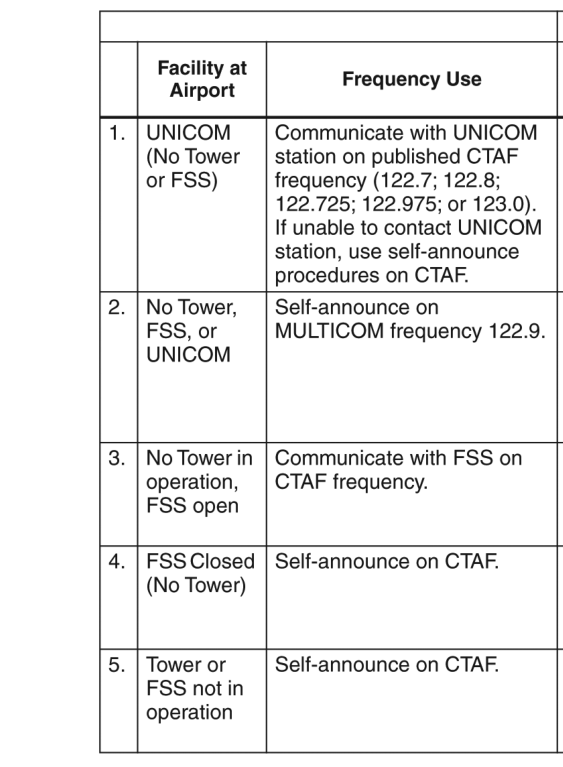
Every airport in the United States falls into one of two broad categories: controlled (those served by an operating Air Traffic Control tower) or uncontrolled (those without an operating tower). Knowing which type you are operating at — and what the specific rules and procedures are for each — is one of the most fundamental skills a student pilot develops. The differences go far beyond simply whether you talk to someone on the radio; they affect how you enter the traffic pattern, how you obtain clearances, how you coordinate with other aircraft, and what regulations govern your every move on and near the airport.
This article walks through the defining characteristics of each environment, the rules that govern them, and the practical cockpit habits that keep traffic flowing safely whether a controller is watching or not.
What Makes an Airport Controlled?
A controlled airport is one that has an Air Traffic Control (ATC) tower that is currently in operation. The operative word is "operating" — some towers are part-time, and when the tower is closed, the same airport reverts to uncontrolled procedures. The FAA publishes tower hours in the Chart Supplement (formerly Airport/Facility Directory), and those hours are charted on sectionals with a star symbol next to the tower frequency.
At a controlled airport, ATC has authority over all ground and air traffic within the airport's surface area. Pilots must obtain explicit ATC clearances before taxiing, before entering a runway, before takeoff, and before landing. This is not a courtesy — it is a regulatory requirement under 14 CFR Part 91. ATC assigns runways, sequences arrivals and departures, issues traffic advisories, and may instruct you to make specific traffic pattern legs ("fly a short final," "extend your downwind," etc.).
The airspace directly above and around a controlled airport is typically classified as Class B, C, or D airspace, depending on the size and traffic volume of the airport. Class D is the most common for smaller regional airports with towers. A Class D surface area typically extends from the surface up to 2,500 feet AGL and has a roughly 4-nautical-mile radius (though the actual shape is depicted on sectional charts). To enter Class D airspace, a pilot must establish two-way radio communication with the tower — not just hear the tower, but be acknowledged by name or call sign.
What Makes an Airport Uncontrolled?
An uncontrolled airport simply lacks an operating ATC tower, meaning no one is issuing clearances. The vast majority of public-use airports in the U.S. are uncontrolled. They range from grass strips with a single runway to busy general aviation airports that see hundreds of operations per day. The absence of a tower does not imply the absence of rules — it means the rules shift responsibility for safe separation almost entirely onto the pilots themselves.
Most uncontrolled airports have a CTAF — Common Traffic Advisory Frequency. This is a designated radio frequency where all pilots operating in the vicinity broadcast their intentions and listen for traffic. Some uncontrolled airports also have a UNICOM station, which is a non-ATC ground radio service operated by the FBO or airport; UNICOM operators can provide advisories (wind, active runway, known traffic) but cannot issue clearances. At some airports the CTAF and UNICOM share the same frequency. At airports with no UNICOM, the CTAF is typically 122.9 MHz, though always confirm the published frequency.
Airspace at uncontrolled airports is usually Class E or Class G (or a combination of both). There is no communication requirement to simply enter uncontrolled airspace, although broadcasting on the CTAF is strongly recommended for safety and is consistent with good operating practice as described in the Aeronautical Information Manual (AIM).
Traffic Pattern Procedures
At a controlled airport, ATC dictates your pattern entry and sequencing. You may be cleared for a straight-in approach, told to enter on a 45-degree to the downwind, or given a specific pattern instruction. Follow the controller's instructions precisely, and never deviate without clearance.
At an uncontrolled airport, the standard traffic pattern is your primary organizational tool. The FAA recommends entering the pattern on a 45-degree angle to the midpoint of the downwind leg, at pattern altitude (typically 1,000 feet AGL for piston aircraft, though some airports publish different altitudes). Pilots should fly a standard left-hand pattern unless right-hand traffic is specifically designated for that runway — this is published in the Chart Supplement and marked with a segmented circle or "RP" notation on the runway. All turns in a standard pattern are to the left.
The key to safety at an uncontrolled airport is the self-announce habit. The AIM recommends broadcasting your position and intentions at each significant point: departing the ramp, taxiing to the runway, taking the runway, on each leg of the pattern (crosswind, downwind, base, final), and upon clearing the runway after landing. These calls should include the airport name, your aircraft type and call sign, your position, and your intentions — for example, "Millbrook traffic, Cessna 172 November 5-4-7-Whiskey-Papa, entering 45 for runway 28, Millbrook."
Right-of-Way and Wake Turbulence
At both types of airports, 14 CFR 91.113 governs right-of-way. An aircraft on final approach or landing has the right of way over aircraft in flight or on the surface. Under 91.113(g), when two or more aircraft are converging to land, the aircraft at the lower altitude generally has the right of way, but that aircraft must not use this rule to cut in front of another aircraft that is on final approach to land or to overtake it. At controlled airports, ATC may override these rules through their sequencing instructions, and pilots are expected to comply.
Wake turbulence awareness is equally critical at both environments. When following a larger aircraft — especially a heavy or large jet — maintain adequate spacing and be prepared to fly at or above the preceding aircraft's flight path, landing beyond its touchdown point, since wake vortices sink and drift with the wind, and their movement depends on wind direction rather than always drifting downwind.
Key Numbers and Rules
- Class D airspace: communication required before entry; typically surface to 2,500 feet AGL, ~4 NM radius (always check chart).
- Class C airspace: two-way communication AND a transponder with Mode C required before entry.
- Class B airspace: ATC clearance specifically required before entry; Mode C transponder required.
- Standard pattern altitude: 1,000 feet AGL for piston aircraft (check Chart Supplement for non-standard altitudes).
- Standard traffic pattern turns: left, unless right-hand traffic is designated.
- CTAF at airports with no UNICOM: typically 122.9 MHz (always verify in Chart Supplement).
- Runway incursion prevention: at controlled airports, never cross a hold-short line or enter a runway without explicit ATC clearance — even if no traffic is visible.
- Two-way communication for Class D: the controller must acknowledge your call sign — a response of "standby" does NOT satisfy the communication requirement for Class C or B, but it DOES for Class D.
Memory Aid: CTAF Self-Announce Elements — "WAIL"
When making CTAF position reports at an uncontrolled airport, remember WAIL to cover every required element of a useful broadcast:
- W — Which airport (state the airport name at the beginning AND end of the call)
- A — Aircraft type and call sign (so other pilots know what to look for)
- I — Intentions (what you plan to do next — takeoff, land, pattern leg)
- L — Location (which runway, which leg of the pattern, which direction)
Saying the airport name twice — at the start and end — is standard AIM-recommended practice because pilots scanning multiple frequencies will catch your call even if they tune in mid-transmission.
Common Test Traps
- "Standby" satisfies Class D entry communication: True. The AIM states that if ATC responds with your call sign — even just "standby" — two-way communication is established for Class D purposes. This is NOT the case for Class C or B, where you must receive specific instructions.
- UNICOM is NOT ATC: A UNICOM operator recommending runway 28 is giving an advisory, not a clearance. At an uncontrolled airport there are no clearances — the pilot in command always has final authority on which runway to use.
- A tower-equipped airport is not always controlled: If the tower is closed, the airport operates as uncontrolled. Pilots should use CTAF procedures and the AIM's recommended pattern entry during those hours. Check published tower hours.
- Right-hand traffic must be designated: Never assume right-hand traffic. If it is not published in the Chart Supplement or clearly marked on the field, fly the standard left-hand pattern.
- Class D communication ≠ permission to land: Establishing communication with a Class D tower gets you into the airspace — you still need a specific landing clearance before touching down on the runway.