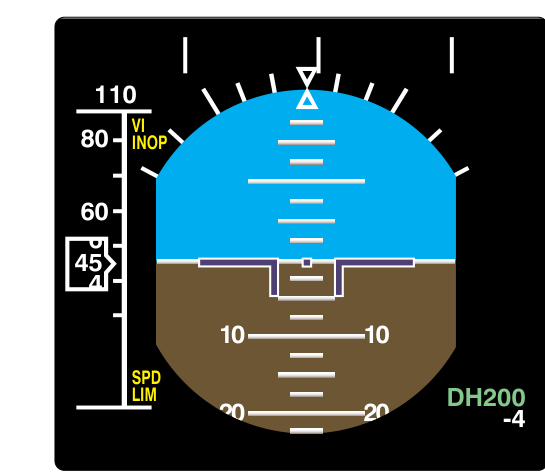
If you have spent any time studying approach charts, you have certainly encountered the terms Decision Altitude (DA), Decision Height (DH), and Minimum Descent Altitude (MDA). These three values control when and how a pilot transitions from the instrument environment to a visual landing — or executes a missed approach. Many students confuse them because they sound similar and appear in the same section of an approach chart, yet they are fundamentally different concepts that apply to entirely different categories of approaches. Getting them wrong on the knowledge test is one thing; getting them wrong in actual IMC is a safety-of-flight issue.
This article breaks down each term from the ground up, explains how they interact with approach design and aircraft equipment, and gives you the testable specifics the FAA loves to examine.
The Big Picture: Precision vs. Non-Precision Approaches
The distinction between DA/DH and MDA flows directly from the distinction between precision approaches and non-precision approaches. A precision approach provides both lateral (course) guidance and vertical (glidepath) guidance — think ILS, PAR, or an RNAV (GPS) approach with LPV minimums. A non-precision approach provides only lateral guidance; you navigate to the runway environment, but the approach itself does not give you an approved electronic glideslope to follow all the way to the threshold. This vertical-guidance distinction is a major factor in which type of minimum applies.
In modern FAA and ICAO terminology, approaches with an electronic glidepath are increasingly categorized as Approach with Vertical Guidance (APV) — a category that sits between classic precision and classic non-precision, covering procedures like RNAV LNAV/VNAV and LPV. DA applies to approaches with approved vertical guidance, whether they are traditional precision or APV. MDA applies when there is no approved vertical guidance — this includes LP (Localizer Performance) approaches, which despite using WAAS-based lateral guidance similar to LPV, do not provide vertical guidance and therefore publish an MDA, not a DA.
Decision Altitude (DA): The MSL Crossing Point
Decision Altitude is expressed in feet Mean Sea Level (MSL) and is used on precision and APV approaches. The FAA defines DA as the altitude at which the pilot must make an immediate go/no-go decision: either the required visual references are in sight and the aircraft can continue to a normal landing, or a missed approach must be initiated without delay.
The key word in that definition is decision, not minimum descent. DA is not a floor you level off at. You are descending through it on the glidepath. By the time you reach DA, you have already committed to either landing or going missed — you do not hover at DA hoping visibility improves. The Instrument Flying Handbook (FAA-H-8083-15) makes it clear that the missed approach should be initiated at DA if the required visual references have not been established.
Because DA is an MSL value, the pilot reads it directly off the altimeter. An ILS approach plate might show a DA of 1,340 feet MSL. When your altimeter shows 1,340, you decide. This makes DA intuitive during a stabilized descent on a glideslope — the altimeter sweeps through the published value and you act.
Decision Height (DH): The AGL Crossing Point
Decision Height is expressed in feet Above Ground Level (AGL) and applies specifically to Category II and Category III ILS approaches — the high-precision, low-visibility operations that require special aircraft equipment, special crew training, and airport infrastructure. You will not fly a Cat II or Cat III approach in a standard instrument training environment, but you absolutely need to know this distinction for the knowledge test and for future career progression.
DH is measured by a radio altimeter, which continuously measures actual height above the terrain or runway surface directly below the aircraft. A Cat II ILS commonly authorizes a DH as low as 100 feet AGL, though the specific DH depends on the individual approach authorization and can vary. Because DH is AGL and measured by radio altimeter, it eliminates the altimeter setting error that could be meaningful at such critically low heights. At 100 feet above the runway, an altimeter error of even 20 feet is operationally significant.
In everyday conversation and on many older documents, pilots sometimes use DH and DA interchangeably — do not let that mislead you on the test. The FAA's current definitions are precise: DA is MSL and applies to Cat I precision and APV approaches; DH is AGL and applies to Cat II and Cat III approaches.
Minimum Descent Altitude (MDA): The Floor for Non-Precision Approaches
Minimum Descent Altitude applies to non-precision approaches — approaches without approved vertical guidance such as a VOR approach, NDB approach, LOC (localizer only), LP (localizer performance), or RNAV LNAV approach without vertical guidance. MDA is expressed in feet MSL and represents the lowest altitude to which the pilot may descend during the final approach segment without the required visual references.
Here is the crucial operational difference from DA: on an MDA approach, you descend to the MDA, then level off and fly horizontally at that altitude — sometimes for a significant distance — hoping to acquire the required visual references before reaching the Missed Approach Point (MAP). The MAP on a non-precision approach is defined by a fix (a navaid, a crossing radial, a waypoint, or a timing reference), not by the MDA itself.
This level segment at MDA is exactly why non-precision approaches require more pilot skill in poor visibility: you are flying in level flight close to terrain at a relatively slow speed, looking out for the runway environment, and you must not descend below the MDA unless you have the required visual references and the aircraft is in a position to make a normal landing. If the MAP arrives and you still cannot see the runway environment, a missed approach is mandatory — even if you can see a little. Partial visual contact is not enough; 14 CFR 91.175 specifies the required visual references in detail (runway environment elements such as the approach lights, touchdown zone, threshold markings, etc.).
One practical trap: if you acquire the required visual references just before the MAP, you may continue — but you must be able to make a normal descent from that position to the runway. If you are too close, too high, or not aligned, the regulations still require a missed approach.
Why the Distinction Matters for Safety
The difference between DA and MDA is not just academic. On a DA approach, you are following a glidepath all the way to a decision point — the approach is designed so that at DA you are in a position to make a normal landing if visual references exist. On an MDA approach, you may fly level for hundreds of feet or even a mile before reaching the MAP. That level segment at low altitude demands rigid altitude discipline: descend below MDA without visual references and you have violated 14 CFR 91.175 and may be flying toward terrain or obstacles with no visual awareness of them.
The design of approach obstacle clearance also differs. Precision approaches guarantee a specific obstacle-clearance surface along the glidepath all the way to the threshold. Non-precision approaches guarantee obstacle clearance only down to the MDA — not below it — and only within the final approach segment. This is precisely why busting the MDA without visual references is so dangerous.
Key Numbers and Rules
- DA: MSL altitude; used for Cat I ILS, PAR, LPV, LNAV/VNAV, and other APV approaches; pilot must decide at DA — no leveling off.
- DH: AGL altitude; used for Cat II (commonly as low as 100 ft AGL, depending on the approach authorization) and Cat III ILS; measured by radio altimeter.
- MDA: MSL altitude; used for non-precision approaches (VOR, NDB, LOC, LP, LNAV without vertical guidance); pilot levels off at MDA and flies to the MAP.
- 14 CFR 91.175 governs operation below DA/DH or MDA: required visual references must be distinctly visible and identifiable, and the aircraft must be in a position to make a normal descent to landing.
- Visibility minimums are published alongside DA/MDA on the approach chart and are equally binding once below the DA/DH or MDA — the aircraft may not continue descent below that point without the required visual references and the flight visibility reported or observed being not less than that prescribed for the approach. 14 CFR 91.175 applies this standard to Part 91 operators; Part 121/135 operators are subject to additional operational restrictions on commencing or continuing an approach when the reported visibility is below minimums.
- On RNAV approach charts, the minimums box may show multiple lines: GLS, LPV (DA), LNAV/VNAV (DA), LP (MDA), LNAV (MDA), and Circling (MDA) — each applies to different equipment and approach authorizations.
- The Missed Approach Point on a non-precision approach is a fix, not the MDA. On a precision approach, the MAP is at the DA.
Common Test Traps
- DA vs. DH confusion: The FAA test frequently asks which is MSL and which is AGL. Remember: DA = MSL (Cat I and APV), DH = AGL (Cat II/III only, measured by radio altimeter).
- Leveling off at DA: A classic distractor suggests you may level off at DA to look for the runway. You may not — DA is a decision point during descent, not a floor. Only MDA involves leveling off.
- MDA and the MAP are independent: Reaching the MAP does not mean you were at MDA — you may have had the runway in sight well before the MAP and been descending to land. Conversely, reaching MDA does not mean you are at the MAP.
- Required visual references vs. just seeing something: 14 CFR 91.175 requires that specific elements of the runway environment be distinctly visible. Seeing a glow of lights through fog does not meet the standard.
- LPV minimums look like non-precision but use DA: LPV approaches can have very low minimums (200 feet and ¾ mile, similar to an ILS Cat I) but because they provide vertical guidance via WAAS, they publish a DA — not an MDA. Students sometimes assume any GPS approach uses MDA, which is incorrect. Conversely, LP approaches use WAAS-based lateral guidance but have no vertical guidance, so they publish an MDA, not a DA — do not assume every WAAS-based line of minimums is a DA.