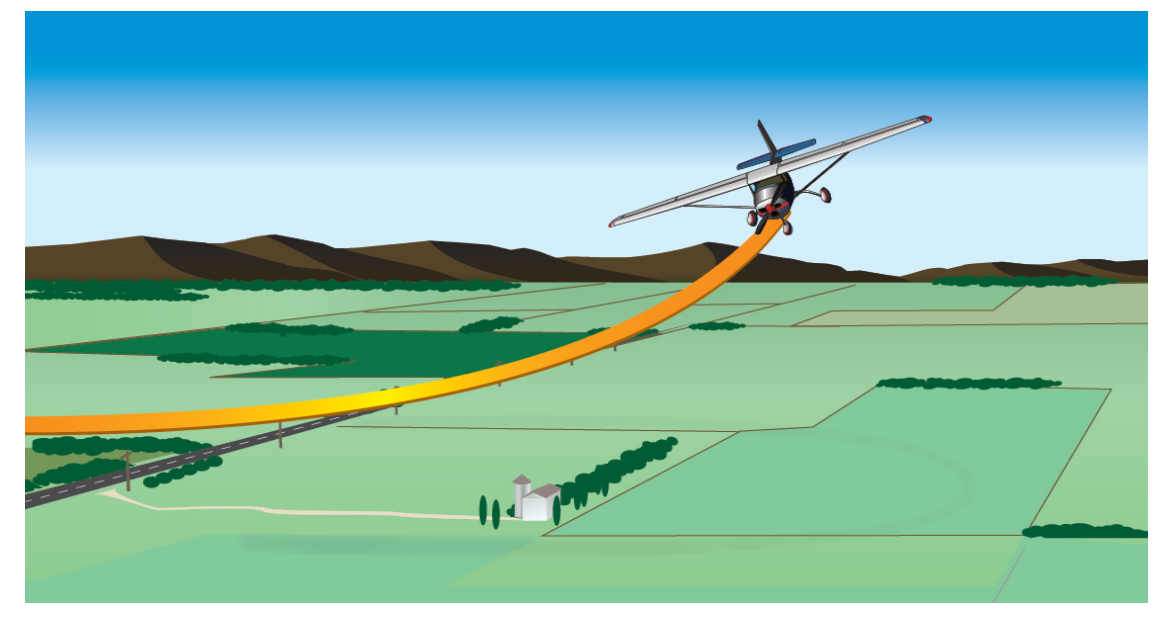
When something goes seriously wrong at altitude — a pressurization failure, an in-flight fire, or a passenger medical emergency — the fastest way to reach survivable air is a deliberate, controlled emergency descent. This is not a panic dive; it is a structured maneuver with a defined configuration, a target airspeed, and a specific sequence of actions designed to get the airplane down quickly without overstressing the airframe or losing control. Every private pilot candidate must understand not only how to fly the maneuver but also why each step exists.
The FAA addresses emergency descent procedures in the Airplane Flying Handbook (FAA-H-8083-3) and the Pilot's Handbook of Aeronautical Knowledge (FAA-H-8083-25), and it appears as a required Task in the Private Pilot Airman Certification Standards. Mastering this topic means understanding aircraft performance limits, aerodynamic forces in a descent, and the physiological urgency that drives the maneuver in the first place.
Why an Emergency Descent Is Necessary
Most light training aircraft fly below 12,500 feet MSL, where supplemental oxygen is not required. But many complex, high-performance, or turbocharged singles can operate at 14,000 feet or higher. At those altitudes, a loss of pressurization (in a pressurized airplane) or unexpected hypoxia can render a pilot incapacitated within minutes — sometimes within seconds, depending on altitude. Getting below 10,000 feet MSL, where the partial pressure of oxygen supports normal cognitive function without supplemental oxygen, is the immediate physiological goal.
In-flight fires present a different urgency. Whether the source is electrical or engine-related, altitude sustains combustion and keeps the crew close to the heat and smoke. Descending rapidly reduces the time of exposure and may assist in extinguishing an engine fire by increasing airflow to starve or cool the source. A passenger medical emergency requiring on-ground intervention is a third scenario: the airplane needs to reach an airport as fast as possible, and if altitude is the obstacle, shedding it quickly makes every other option easier.
The Mechanics: How an Emergency Descent Works
The fundamental goal of any emergency descent is to maximize the rate of descent — feet per minute lost — while staying within the aircraft's structural and aerodynamic limits. Two variables drive rate of descent: airspeed and power setting. To descend fast, you want high drag, low lift, and as little thrust as possible working against gravity.
Configuration
In most light aircraft the emergency descent sequence begins with simultaneously reducing power to idle (or the minimum required for engine cooling) and extending the landing gear if the aircraft is a retractable-gear type. The landing gear dramatically increases parasite drag, which is exactly what you want: more drag means more energy converted into speed reduction and vertical movement rather than horizontal distance covered. In a fixed-gear aircraft, the gear is already providing drag, so the pilot focuses on power reduction and pitch attitude.
Flaps are handled carefully. Some POHs recommend partial flaps; others specify no flaps or restrict flap deployment until below a certain airspeed. Always defer to the specific Pilot's Operating Handbook (POH) for the aircraft being flown. The generic reason for caution with flaps is that full-flap extension at high airspeeds can exceed the maximum flap-extended speed (VFE), which risks structural damage. Gear extension, in contrast, is typically cleared up to the maximum landing gear extended speed (VLE), which is usually well above maneuvering speed and is designed for higher-speed operation.
Target Airspeed
Once configured, the pilot establishes a pitch attitude and bank angle that yields the target airspeed. The Airplane Flying Handbook recommends maneuvering speed (VA) as an appropriate airspeed reference for emergency descents in many aircraft. VA is significant because at or below this speed, the aircraft will stall before exceeding its design limit load factor, providing a structural safety margin if turbulence is encountered during the descent. The specific recommended airspeed will be stated in the aircraft's POH — follow that number, not a generic rule.
Some aircraft recommend a speed slightly above VA to maximize rate of descent, while keeping well below VNO (maximum structural cruising speed) and VNE (never-exceed speed). In any case, the pilot monitors airspeed aggressively throughout the maneuver to avoid an inadvertent overspeed.
Bank Angle
A moderate bank angle — typically 30 to 45 degrees — is often used during an emergency descent. The bank serves two purposes. First, it increases the load factor slightly, which raises the stall speed and allows the aircraft to be flown at a higher airspeed without unloading the wings completely, improving aerodynamic stability. Second, the bank orients the aircraft for a turn toward the nearest suitable airport or landing area, making the descent productive in terms of navigation, not just altitude loss. The pilot should not fixate on steep banks; excessive bank increases stall speed substantially and shifts pilot workload away from cockpit management at a critical time.
Physiological Urgency: Time of Useful Consciousness
One concept that gives emergency descent its urgency is Time of Useful Consciousness (TUC) — the period after the onset of hypoxia during which a pilot can take meaningful corrective action. At 25,000 feet, TUC may be as short as three to five minutes; at 28,000 feet, it may be measured in seconds. Even at lower altitudes encountered by some turbocharged singles — say, 18,000 feet — TUC is brief enough that delay in initiating a descent could be fatal. This is why emergency descent training emphasizes immediate recognition and action, not deliberation.
Coordination With ATC and Other Actions
While managing the aircraft takes priority, the pilot should also squawk 7700 (emergency) on the transponder, transmit a MAYDAY call on the current frequency (or 121.5 MHz if contact has been lost), and advise ATC of the situation and intended altitude. If hypoxia is suspected, don oxygen before anything else if oxygen is available — a hypoxic pilot cannot safely fly the aircraft, no matter how well-trained. The FAA's practical guidance is clear: aviate first, navigate second, communicate third. In an emergency descent, aviating means establishing the correct configuration and airspeed immediately.
Key Numbers and Rules
- VA (Maneuvering Speed): A common target airspeed for emergency descents; varies with aircraft weight — always check the POH for the actual figure.
- VLE (Max Gear Extended Speed): Gear must be extended below this speed; extending above it risks structural damage to gear doors and actuators.
- VFE (Max Flap Extended Speed): Flaps must not be extended above this speed; structural limits apply.
- Bank angle recommendation: 30–45 degrees is typical per FAA guidance; not so steep as to dangerously raise stall speed.
- Target altitude: 10,000 feet MSL is the general physiological target for hypoxia-related emergencies; below this altitude the partial pressure of oxygen supports normal function without supplemental oxygen.
- Transponder code 7700: Squawk immediately to alert ATC and TCAS-equipped aircraft.
- 121.5 MHz: The universal emergency frequency monitored by ATC and most commercial aircraft.
- POH authority: The aircraft's specific Pilot's Operating Handbook always takes precedence over generic guidance on airspeeds and configuration.
Common Test Traps
- Mixing up VA, VLE, and VFE: Test questions often present scenarios where the student must identify which speed limit applies. Remember: VLE applies to gear, VFE applies to flaps, and VA is the maneuvering/structural limit speed that protects against overload in turbulence.
- Assuming flaps are always used: Full flap deployment at high speed exceeds VFE and can cause structural failure. The question may describe full flap extension during a high-speed emergency descent as a correct action — it is not, unless airspeed is already below VFE and the POH endorses it.
- Forgetting that VA decreases with weight: A lighter aircraft has a lower VA. FAA test questions sometimes test whether you know that maneuvering speed is not a fixed number — it changes with aircraft loading.
- Treating emergency descent as a dive to VNE: Never-exceed speed is never a target; it is a limit. An emergency descent is rapid but controlled, with airspeed managed to stay within the POH's recommended range.
- Neglecting engine cooling: A sudden reduction to idle from high power settings can shock-cool a reciprocating engine. The POH may specify a minimum power setting rather than full idle to protect cylinders, and test questions may probe this nuance.
Emergency descent proficiency is not just an exam topic — it is a practical life-safety skill. Reviewing your aircraft's POH emergency procedures section before every phase of training reinforces the habit of knowing your aircraft's specific numbers. When the situation demands action in seconds, reflexive knowledge of the correct configuration and airspeed can make the difference between a successful emergency and a tragedy.