One of the most important regulatory concepts for any drone pilot operating under 14 CFR Part 107 is the requirement to obtain authorization before flying in controlled airspace. Unlike manned aircraft pilots who can operate in many areas simply by following established procedures, remote pilots must actively seek permission to enter Class B, C, D, and certain Class E airspace. Understanding exactly which airspace requires authorization, how to obtain it, and what conditions that authorization may carry is essential both for passing the FAA Aeronautical Knowledge Test and for flying safely and legally every time you take off.
This article walks through the airspace authorization framework from the ground up — covering why the rule exists, how the two main authorization pathways work, what automatic authorization via LAANC offers, and the practical limits and conditions you are likely to encounter in the field.
Why Controlled Airspace Authorization Exists
The National Airspace System (NAS) is a shared resource used by commercial airliners, general aviation aircraft, military jets, helicopters, and — increasingly — small unmanned aircraft systems (sUAS). The fundamental goal of airspace authorization under Part 107 is to ensure that air traffic control (ATC) and other airspace users are aware of unmanned aircraft operations that could create a conflict or safety hazard.
Small drones are difficult for manned aircraft pilots to see and avoid, and they are not equipped with the transponders or radios typically used to maintain situational awareness. By requiring remote pilots to coordinate with ATC before entering controlled airspace, the FAA creates an opportunity for controllers to account for drone operations when sequencing traffic, issuing altitude restrictions, or clearing airspace in an emergency. The authorization system is not merely bureaucratic red tape — it is an active safety mechanism that protects both your drone and the aircraft operating nearby.
Which Airspace Requires Authorization
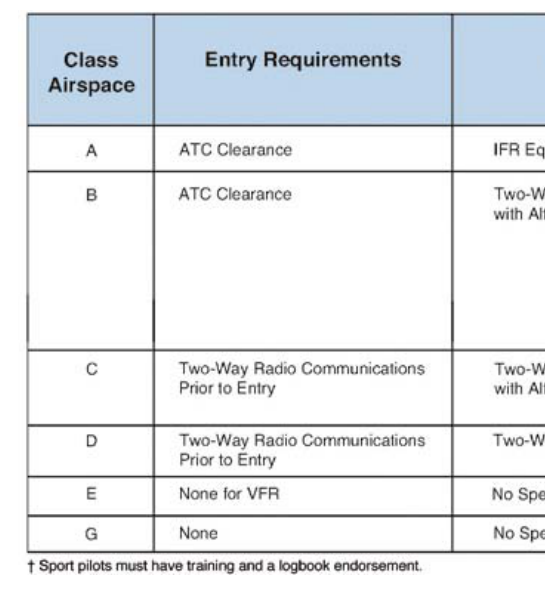
Under 14 CFR Part 107.41, a remote pilot in command may not operate an sUAS in Class B, Class C, Class D, or Class E airspace designated for an airport without prior authorization from ATC or the FAA. It is critical to understand what this means in practice:
- Class B airspace surrounds the nation's busiest airports. It extends from the surface to a designated upper limit and is shaped like an upside-down wedding cake. Any drone operation within Class B — even at very low altitude — requires authorization.
- Class C airspace surrounds airports with an operational control tower and significant instrument operations. Like Class B, it begins at the surface and requires authorization for drone operations throughout its lateral and vertical limits.
- Class D airspace exists around airports with an operating control tower that do not meet the criteria for Class C or B. It typically extends from the surface to approximately 2,500 feet AGL above the airport elevation. Authorization is required within its lateral boundaries.
- Class E airspace to the surface is found at some airports, particularly those with instrument approaches but no operating control tower. When Class E extends to the surface (depicted by a dashed magenta line on sectional charts), authorization is required. Class E that begins at 700 feet AGL or higher does NOT require authorization for Part 107 operations, because most drone operations remain well below that floor.
Class G airspace — uncontrolled airspace — does NOT require airspace authorization under Part 107. Remote pilots can operate in Class G airspace as long as they comply with all other Part 107 rules, such as the 400-foot altitude ceiling above ground level (or within 400 feet of a structure), visual line of sight requirements, and daylight or civil twilight operating rules.
The Two Authorization Pathways
LAANC: Low Altitude Authorization and Notification Capability
The FAA's primary tool for providing near-real-time airspace authorization is the Low Altitude Authorization and Notification Capability, commonly known as LAANC. LAANC is an automated system that allows remote pilots to apply for and receive authorization almost instantly through FAA-approved UAS service suppliers (USS), such as AirMap, Aloft (formerly Kittyhawk), and others available through the FAA's DroneZone-linked network.
LAANC works by dividing controlled airspace around airports into a grid of defined areas. Each cell in the grid has an FAA-assigned altitude ceiling, published in UAS Facility Maps (UAS FMs). These maps reflect the maximum altitude at which the FAA has determined drone operations can generally be safely accommodated without disrupting traffic flow. The altitude ceilings vary widely — some cells near an airport's final approach path may be set at 0 feet AGL, meaning no drone operations are automatically approvable there, while cells farther from the runway may permit operations up to 200 or 400 feet AGL.
When a remote pilot requests authorization through a LAANC-enabled app at or below the published ceiling for that grid cell, the system grants automatic authorization in seconds. If the pilot wants to fly above the published ceiling — but still within controlled airspace — they must use the FAA DroneZone portal and submit a manual authorization request, which can take days to weeks to process.
LAANC authorizations are location-specific, altitude-specific, and time-specific. They typically cover a defined window of time and must be requested in advance of the operation. Remote pilots should never assume a past authorization covers a new flight — each operation in controlled airspace requires its own separate, valid authorization.
FAA DroneZone Manual Authorization
For locations where LAANC is not available, or for operations that exceed the UAS FM ceiling, remote pilots must apply for a Part 107 airspace authorization through the FAA's DroneZone portal at faadronezone.faa.gov. This is a more involved process that requires the remote pilot to describe the proposed operation in detail, including the intended altitude, location, timeframe, and any safety mitigations.
Manual authorizations allow the FAA to evaluate requests that fall outside the automatic approval parameters. The FAA may approve the request as submitted, approve it with conditions (such as a reduced altitude ceiling or time restrictions), or deny it if the operation poses an unacceptable risk to the NAS. Turnaround times can range from a few days to several weeks, so advance planning is essential for any operation requiring a manual waiver or authorization.
Waivers vs. Authorizations: Know the Difference
The terms authorization and waiver are related but distinct under Part 107. An airspace authorization grants permission to operate in controlled airspace that would otherwise be prohibited without permission — it does not change the underlying rule, it simply gives you access to a specific area under defined conditions. A waiver, by contrast, is permission to deviate from a specific Part 107 operational rule — such as flying at night (prior to the 2021 night operations rule change), beyond visual line of sight, or over people. Some complex operations may require both an airspace authorization and one or more waivers simultaneously.
Key Numbers and Rules
- 400 feet AGL — the standard maximum altitude for Part 107 operations in Class G airspace (or within 400 feet of a structure).
- 0 to 400 feet AGL — the range of altitudes the FAA uses in UAS Facility Map grid cells; a cell showing "0" means no automatic authorization is available at that location.
- Class B, C, D, and surface Class E — require authorization before any drone operation.
- Class G and non-surface Class E — do NOT require airspace authorization under Part 107.
- LAANC provides near-real-time (often seconds) authorization for operations at or below UAS FM ceilings.
- FAA DroneZone manual process — required when exceeding UAS FM ceilings or when LAANC is unavailable; may take days to weeks.
- Authorization is operation-specific — a prior authorization does not cover a subsequent flight; each operation needs its own valid authorization.
Practical In-the-Cockpit Considerations
Before every flight, remote pilots should check a LAANC-enabled planning app or the B4UFLY mobile app to determine whether controlled airspace overlies the intended flight area. Sectional charts remain the authoritative source for understanding airspace boundaries — the dashed magenta line indicating surface Class E, the solid magenta circle for Class D, and the blue and magenta shading for Class B and C are all essential reading skills for any Part 107 pilot.
Never assume you are in Class G simply because you cannot see an airport. Controlled airspace can extend many miles from an airport, and some airspace floors begin at 700 feet AGL in ways that a low-altitude drone operation would never encounter — but the surface Class E and Class D extensions around smaller airports can catch unprepared pilots off guard. Always check before you fly.
Common Test Traps
- Assuming Class E always requires authorization. Only Class E that extends to the surface requires Part 107 authorization. Class E beginning at 700 feet AGL or higher does not — most drone flights remain far below that floor.
- Confusing waivers with authorizations. Airspace authorization allows you into controlled airspace; a waiver allows you to deviate from a specific Part 107 operational rule. They are separate approvals, and some operations need both.
- Thinking LAANC approval is unlimited. LAANC authorization is bounded by altitude, location, and time. Exceeding any of these parameters without additional approval is a violation of Part 107.
- Assuming a UAS FM ceiling of 0 means you can't fly there at all. A 0-foot ceiling means automatic authorization via LAANC is unavailable — but you may still apply for a manual authorization through FAA DroneZone and potentially receive approval with specific conditions.
- Forgetting that Class G is uncontrolled. Remote pilots sometimes over-apply the authorization requirement. In true Class G airspace, no airspace authorization is needed — just compliance with all other applicable Part 107 rules.