When air traffic control clears you to hold, the mental picture most pilots carry is a simple racetrack: fly the inbound leg for one minute, turn, fly outbound for whatever time it takes to make the next inbound leg one minute, repeat. That picture is accurate at lower altitudes — but the FAA and the AIM specify a different standard the moment you climb above 14,000 feet MSL. At those altitudes, the standard inbound leg timing increases to one and one-half minutes. For instrument pilots, understanding not just the rule but the aerodynamics, the airspace logic, and the execution technique behind that change is essential both for the knowledge test and for flying professionally in the flight levels.
This article walks through the full picture: why higher altitudes demand longer legs, how to calculate outbound timing to hit the target inbound leg length, how wind correction factors into the equation, and the practical cockpit flow for flying a high-altitude holding pattern with precision.
Why Leg Length Is Measured in Time — and Why That Changes With Altitude
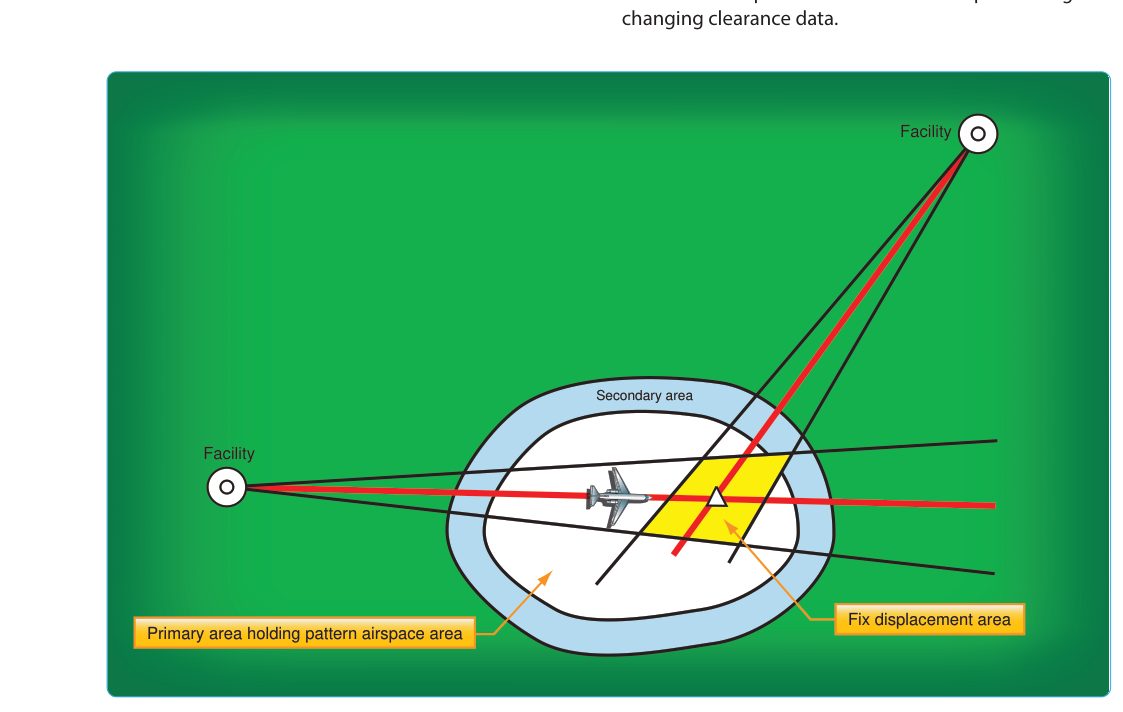
Holding patterns are built around a protected airspace area — an oval buffer that keeps you clear of terrain, obstacles, and other traffic while you wait for a clearance, sequence into an approach, or burn off fuel. The FAA designs that protected airspace based on a specific combination of aircraft speed and leg duration. At lower altitudes, most piston aircraft hold at speeds well under 200 knots, and a one-minute inbound leg produces a pattern that fits comfortably within the protected airspace.
As altitude increases, true airspeed climbs even when indicated airspeed stays constant. A turboprop or jet holding at Flight Level 240 at a published maximum holding speed may have a true airspeed 30 to 50 knots higher than a similarly-indicated aircraft at 5,000 feet. At those higher true airspeeds, a one-minute inbound leg would cover considerably more ground, potentially exceeding the lateral boundaries of the protected area. Extending the inbound timing to one and one-half minutes restores the appropriate balance between groundspeed and pattern size, keeping the aircraft within charted protected airspace.
This is also why the AIM specifies maximum holding airspeeds for different altitude bands — the entire holding pattern system is built around predictable groundspeed ranges. Leg length timing and airspeed limits work together as a system.
The Regulatory and Procedural Foundation
The Aeronautical Information Manual (AIM) establishes the timing standards for holding patterns. Below 14,000 feet MSL, the standard inbound leg is one minute. At or above 14,000 feet MSL, the standard inbound leg is one and one-half minutes. These are default values when a specific leg length is not published on the chart or assigned by ATC. When a chart specifies a leg length in nautical miles — which is increasingly common with GPS-equipped aircraft — that published distance takes precedence at any altitude, and the timing-based rule does not apply.
ATC may also assign a specific leg length or timing different from the standard. Any ATC-assigned holding instruction overrides the standard defaults. The pilot is expected to know the standard and to recognize when it applies versus when a published or assigned value supersedes it.
Calculating Outbound Leg Timing
The inbound leg is your target — either one minute or one and one-half minutes depending on altitude. You cannot directly control the inbound leg duration in the first circuit because you do not yet know the wind effect on your ground speed. Instead, you adjust the outbound leg on each circuit to hit the target inbound time on the next circuit. Here is the standard process:
- First circuit: Fly the outbound leg for the standard time (one minute below 14,000 feet, one and one-half minutes at or above 14,000 feet), plus apply wind correction as described below. Note your actual inbound leg time.
- Subsequent circuits: Compare your actual inbound time to the target. If your inbound leg took longer than the target, reduce your outbound time by that difference. If it was shorter, add the difference to your outbound time.
- Continue refining until your inbound legs consistently hit the target duration.
For example: You are holding at FL220 (above 14,000 feet MSL), so your target inbound leg is one and one-half minutes (90 seconds). On your first circuit, your inbound leg takes 2 minutes and 10 seconds — 40 seconds too long. On the next outbound leg, you subtract 40 seconds from your planned outbound time. You keep adjusting until the pattern stabilizes.
Wind Correction in the Outbound Leg
Wind is the primary reason you cannot simply fly equal outbound and inbound times and call it done. A headwind on the inbound leg slows your groundspeed, making the inbound leg take longer. To compensate, you must shorten the outbound leg (because a tailwind on the outbound side will push you along faster, and you want to arrive back at the fix after the right amount of time). The opposite applies with a tailwind on the inbound leg.
The standard technique for wind correction on the outbound leg uses the triple the inbound wind correction angle rule for the outbound heading, combined with outbound timing adjustment. Specifically:
- Determine the wind correction angle you need on the inbound leg to track the inbound course (say, 10 degrees into the wind).
- On the outbound leg, apply three times that correction (30 degrees) in the opposite direction — this pre-positions you to intercept the inbound course cleanly after the outbound turn.
- Adjust outbound timing separately based on your actual inbound leg duration, as described above.
At high altitudes in jet or turboprop aircraft, winds can be extreme — 80 to 100 knots or more. Applying the triple-correction technique may result in outbound headings that diverge significantly from the outbound course, which is expected and correct. What matters is that the inbound leg, after the turn, tracks the inbound course and covers approximately one and one-half minutes.
Maximum Holding Airspeeds by Altitude Band
The AIM publishes maximum holding airspeeds (in knots indicated airspeed, KIAS) for different altitude ranges. These are the values student and instrument pilots must know for the knowledge test:
- MHA through 6,000 feet MSL: 200 KIAS
- 6,001 feet through 14,000 feet MSL: 230 KIAS
- 14,001 feet MSL and above: 265 KIAS
These speeds define the upper bound of protected airspace design. Flying faster than the published maximum for your altitude band means you may fly outside the protected area, even if your timing is correct. For certain RNAV or published approach holds, specific speeds may be charted — always comply with the most restrictive applicable limit.
GPS and Distance-Based Leg Lengths
Modern glass-panel and FMS-equipped aircraft increasingly fly GPS holds with legs measured in nautical miles rather than time. When a holding pattern is defined by a charted leg length in nautical miles, the FMS will automatically fly that distance regardless of groundspeed or altitude. In this case, the one-minute / one-and-one-half-minute timing rules are irrelevant — the leg length is fixed geometrically. Pilots must understand, however, that if ATC instructs you to hold using standard timing (not a published distance), you revert to the altitude-based timing standard even in a GPS-equipped aircraft. Always confirm which standard applies for the specific clearance you received.
Why This Matters in the Real World
Busting the lateral boundaries of a holding pattern at altitude is not merely an academic concern. Published holding patterns at high altitudes may sit adjacent to other arrival or departure routes. If your pattern grows because you used one-minute inbound legs instead of one-and-one-half-minute legs when flying above 14,000 feet, you may encroach on airspace reserved for other traffic. In radar-monitored environments, a controller may catch the deviation; in non-radar environments or during system degradation, the consequence could be a loss of separation.
Beyond safety, the knowledge test exploits this rule frequently. Expect questions that ask which standard applies at a given altitude, what maximum airspeed applies, or how to adjust outbound timing for a specified inbound leg error. Knowing the why behind the rule — true airspeed, airspace protection, pattern geometry — helps you reason through novel question formats rather than simply memorizing isolated facts.
Common Test Traps
- The 14,000-foot boundary is MSL, not AGL. A question may describe an aircraft holding in mountainous terrain at a high field elevation. The rule is based on MSL altitude, not height above terrain.
- Confusing the inbound target with the outbound leg. The standard timing (one minute or one and one-half minutes) applies to the inbound leg — not both legs equally. The outbound leg is adjusted to achieve the correct inbound time.
- Forgetting that charted or assigned leg lengths override timing standards. If the chart shows a 10 NM leg length, or ATC assigns a specific time, the standard altitude-based rule does not apply.
- Applying the wrong maximum airspeed for the altitude band. The three-tier speed structure (200/230/265 KIAS) is a common test item. Know which band applies at each altitude range and remember these are indicated airspeeds, not true.
- Using one minute instead of one and one-half minutes above 14,000 feet MSL. This is the core trap: the test often places aircraft precisely in the high-altitude band to see if you apply the correct timing standard.