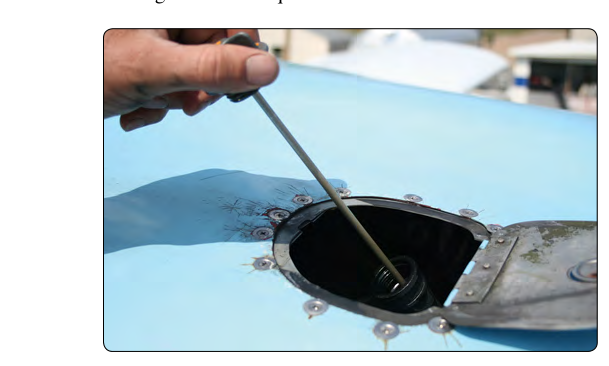
Every time a piston engine fires, thousands of metal parts move against one another at high speed and enormous pressure. Without a continuous, pressurized film of oil separating those surfaces, an engine would destroy itself within minutes. The oil system is therefore one of the most safety-critical systems on the aircraft, and understanding what it does, how it works, and which oil to use is fundamental knowledge for every student pilot — both for the FAA knowledge test and for confident preflight decision-making.
This article covers the four primary functions of engine oil, how a wet-sump and dry-sump system move oil through the engine, how to read oil viscosity grades, and what practical checks you need to perform before every flight.
Four Primary Functions of Engine Oil
The FAA's Pilot's Handbook of Aeronautical Knowledge identifies four main functions that oil performs in a reciprocating engine. Remembering all four — not just lubrication — is important for the knowledge test.
- Lubrication: Oil forms a thin hydrodynamic film between moving metal surfaces such as crankshaft journals, piston rings, and cylinder walls. This film prevents direct metal-to-metal contact, dramatically reducing friction and wear.
- Cooling: Although the cooling system (air-cooled fins or liquid coolant) handles most engine heat, oil absorbs a significant amount of heat from pistons, bearings, and other interior parts that cooling fins cannot reach. The oil then carries that heat to the oil sump or an oil cooler where it is dissipated.
- Cleaning: As oil circulates, it picks up combustion byproducts, carbon particles, metal debris, and moisture. These contaminants are carried to the oil filter or screen, which traps particles and keeps them from scoring bearing surfaces.
- Protecting against corrosion: Oil coats metal surfaces with a thin chemical barrier that prevents oxidation and corrosion, particularly important when an engine sits idle for extended periods.
Some sources add a fifth function — acting as a hydraulic medium for constant-speed propeller governor systems, which use engine oil pressure to change blade pitch. On aircraft equipped with a constant-speed propeller, this function is operationally significant.
How the Oil System Works
Wet-Sump Systems
Most light training aircraft use a wet-sump system, so called because oil is stored directly in a sump (pan) at the bottom of the engine crankcase. A gear-driven or gerotor oil pump draws oil from the sump, pressurizes it, and sends it through an oil filter before routing it through internal passages called galleries to the crankshaft bearings, camshaft bearings, and other critical surfaces. After lubricating those parts, the oil drains back by gravity into the sump, ready to be circulated again.
An oil pressure relief valve is installed in the system to prevent excessive pressure from damaging seals or oil lines. If pressure rises above the design limit, the relief valve opens and routes oil directly back to the inlet side of the pump. This is why a stuck-open relief valve would cause abnormally low oil pressure — a fact frequently tested on the FAA exam.
An oil temperature gauge and an oil pressure gauge are the two primary cockpit indicators of oil system health. Oil pressure should rise promptly after engine start — typically within 30 seconds in warm weather, and within 60 seconds in cold weather. Failure to see oil pressure rise within that window is grounds to shut down immediately and investigate.
Dry-Sump Systems
Higher-performance and aerobatic aircraft often use a dry-sump system, where oil is stored in a separate external tank rather than in the engine crankcase. A scavenge pump continuously pulls oil from the crankcase back to the external tank, keeping the crankcase nearly dry. This design allows sustained inverted flight, reduces the chance of oil starvation during aggressive maneuvering, and keeps the engine oil cooler. While less common in basic trainers, understanding the concept is useful background knowledge.
Oil Filtration
Whether wet- or dry-sump, all systems filter the oil. A full-flow filter routes all oil through the filter element before it reaches the engine bearings — the gold standard for cleanliness. Some older engines use a bypass filter or a simple wire-mesh screen that catches only the largest particles. During oil changes, many pilots and mechanics cut open the filter element and inspect it for metal particles, which can provide early warning of internal engine wear.
Oil Grades and Viscosity
Viscosity describes how resistant a fluid is to flowing — a thicker oil has higher viscosity. For aircraft reciprocating engines, the Society of Automotive Engineers (SAE) numbering system is used, and the FAA references these grades in its handbooks. Common aviation oil grades include SAE 30, SAE 40, SAE 50, and SAE 60 (sometimes expressed in aviation-specific terms such as Grade 65, Grade 80, Grade 100, and Grade 120, where the aviation grade number is roughly double the SAE number).
- SAE 30 / Grade 65: Thinner oil suited for colder operating temperatures or engine break-in periods. Flows more easily when cold, reaching bearings faster at startup.
- SAE 40 / Grade 80: A medium-weight oil often used in moderate climates or during break-in.
- SAE 50 / Grade 100: The most common grade for fully broken-in light aircraft engines operating in typical ambient temperatures.
- SAE 60 / Grade 120: A heavier oil intended for very high operating temperatures or large-displacement engines.
Multigrade oils — for example, SAE 15W-50 — are formulated to behave like a thin oil when cold (for easy startup and fast circulation) and like a thick oil when hot (for protective film strength at operating temperature). The "W" stands for winter. Multigrade oils are popular because they provide good protection across a wider range of temperatures with a single product.
Mineral vs. Ashless Dispersant (AD) Oil
Aircraft engine oils fall into two broad chemical categories. Straight mineral oil is a non-detergent oil traditionally used during the engine break-in period (typically the first 50 hours of operation or until oil consumption stabilizes). It allows piston rings to seat properly against cylinder walls by permitting controlled, gradual wear without additive interference.
Ashless dispersant (AD) oil contains chemical additives that keep combustion byproducts suspended in the oil so they can be captured by the filter rather than depositing on engine surfaces. The term "ashless" refers to the fact that these additives burn cleanly without leaving ash deposits on valves or spark plugs — a critical advantage over automotive detergent oils, which are not approved for aircraft engines. After break-in, most engine manufacturers specify AD oil for continued operation. Always consult the engine manufacturer's service documentation and the aircraft's Pilot's Operating Handbook (POH) for the approved oil type and grade.
Why the Oil System Matters
Oil starvation — even briefly — causes catastrophic and irreversible bearing and cylinder damage. A significant percentage of in-flight engine failures can be traced to oil-related causes: insufficient quantity due to a missed preflight check, an undetected oil leak, an improperly secured oil filler cap, or operating with oil that was too old or the wrong grade. The preflight inspection specifically requires you to check oil level, look for leaks around the engine, and verify the filler cap is secure. Low oil pressure in flight is an emergency: reduce power, land as soon as practical, and do not delay.
Key Numbers and Rules
- Oil pressure at startup: Should register within 30 seconds (warm weather) to 60 seconds (cold weather); no pressure rise means shut down immediately.
- Normal oil pressure range: Varies by engine; always verify the green arc on your specific aircraft's gauge (typically 25–65 PSI for many light aircraft).
- Normal oil temperature range: Green arc, typically 100–245°F for many reciprocating engines; oil should reach the green arc before high-power operations.
- Minimum oil quantity: Always follow the POH; many trainers require a minimum of 4–6 quarts before flight, though the sump may hold 8 or more.
- Break-in oil: Straight mineral oil for approximately the first 50 hours or until oil consumption stabilizes — then transition to AD oil per manufacturer guidance.
- Approved oil type: Ashless dispersant (AD) oil after break-in; automotive detergent oils are NOT approved for aircraft engines.
Common Test Traps
- All four functions, not just lubrication: The FAA test frequently asks for the functions of the oil system. Be ready to list lubrication, cooling, cleaning, and corrosion protection — plus the hydraulic function for constant-speed propellers if applicable.
- Stuck relief valve causes LOW pressure: Students often guess high pressure. A stuck-open relief valve bypasses oil before it reaches the engine, causing dangerously low oil pressure.
- Mineral oil for break-in only: Using mineral oil in a fully broken-in engine deprives it of dispersant additives. Using AD oil during break-in may prevent proper ring seating. The distinction matters.
- "Ashless" does not mean additive-free: It means the additives do not produce ash. AD oil is full of beneficial additives; that is the point.
- Automotive oil is not a substitute: Automotive detergent oils leave ash deposits and are not certified for aircraft engines. Always use aviation-approved oil of the grade specified by the engine manufacturer.