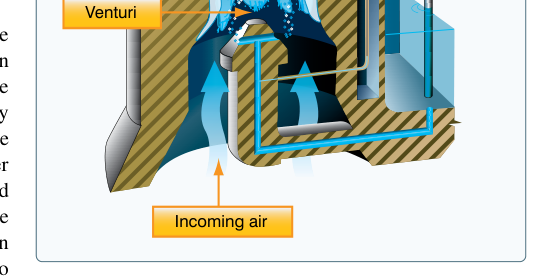
The carburetor is one of the most elegantly simple systems on a piston aircraft engine, yet it carries a hidden danger that has surprised pilots in seemingly benign weather conditions. Understanding how a carburetor works—and why it is so vulnerable to ice formation—is fundamental to safe engine management and is a frequently tested topic on the FAA Private Pilot Knowledge Test.
Most training aircraft use a float-type carburetor, a device that blends air and fuel in the correct ratio before delivering the combustible mixture to the engine's cylinders. The system works through basic principles of physics: airflow, pressure differences, and evaporation. Those same principles, however, make the carburetor a near-perfect ice-making machine under the right atmospheric conditions.
How the Float-Type Carburetor Works
Air entering the engine first passes through an air filter, then through the carburetor body. Inside the carburetor is a narrowed section called the venturi. As air is forced through this constriction, its velocity increases and its pressure drops—this is Bernoulli's principle at work. The low-pressure zone created at the venturi draws fuel upward from the float chamber (also called the float bowl) through a small opening called the main discharge nozzle or jet.
The float chamber maintains a relatively constant fuel level using a hollow float connected to a needle valve. As fuel is consumed and the fuel level drops, the float drops with it, opening the needle valve and allowing more fuel to flow in from the tank. When the level is restored, the float rises and closes the valve. This simple feedback mechanism ensures a steady supply of fuel to the discharge nozzle.
Once fuel exits the discharge nozzle into the airstream, it atomizes—turning into a fine mist. This atomized mixture of air and fuel vapor then travels through the throttle valve (a butterfly valve controlled by the throttle in the cockpit), which regulates how much mixture reaches the cylinders. A wider throttle opening allows more mixture to flow, producing more power.
The mixture control adjusts the ratio of fuel to air. At higher altitudes, air becomes less dense. If the mixture is not leaned, the engine receives too much fuel relative to the available oxygen, causing rough running and reduced efficiency. Leaning the mixture by reducing fuel flow restores the proper ratio.
How Carburetor Ice Forms
Carburetor ice forms through two distinct but related processes that can occur simultaneously inside the carburetor throat.
Refrigeration Ice (Fuel Evaporation Cooling)
When liquid fuel evaporates into a vapor at the discharge nozzle, it absorbs a significant amount of heat energy from the surrounding air. This is the same cooling effect you feel when alcohol evaporates on your skin. This evaporative cooling, combined with the venturi effect, can drop the temperature inside the carburetor by 60°F to 70°F or more under some conditions. Even on a mild day with an outside air temperature of 60°F, the interior of the carburetor throat can easily fall below freezing as a result of this cooling.
Throttling Ice (Pressure Drop Cooling)
The venturi effect that creates the low-pressure zone also causes a temperature drop at that point in the airflow. Additionally, as air passes through the throttle valve at reduced throttle settings, a further pressure drop occurs, causing additional cooling. This throttle-induced cooling is why carburetor ice is most likely to form at low power settings—such as during descents with a closed or nearly closed throttle—rather than at full power.
The Ice Itself
When the temperature inside the carburetor drops below freezing and there is enough moisture in the air, water vapor in the induction airstream freezes on the metal surfaces of the carburetor, especially around the throttle valve and the venturi. This ice progressively restricts or completely blocks the airflow and fuel flow, leaning the mixture and reducing engine output. If not corrected, the engine can lose power completely and stop.
The particularly dangerous characteristic of carburetor ice is that it can form in conditions that seem perfectly benign. The FAA's carburetor icing probability chart (referenced in FAA-H-8083-25 and AC 20-113) shows that serious icing risk generally spans outside air temperatures from about 20°F (-7°C) to above 90°F (32°C), with the highest risk occurring when relative humidity exceeds roughly 50-60%—the exact boundary varies with temperature and is not a single fixed humidity threshold. In fact, some of the most dangerous conditions are overcast, warm days with high humidity—conditions that many pilots associate with comfort rather than danger. Ice can also form in clear air if the humidity is sufficient, which is sometimes called clear ice formation in the induction system.
Recognizing Carburetor Ice
In aircraft equipped with a fixed-pitch propeller, the first indication of carburetor ice is usually an unexplained drop in engine RPM. The pilot has not moved the throttle, yet the tachometer shows the engine is slowing down as the ice restricts the mixture. In aircraft with a constant-speed propeller, where the governor maintains RPM automatically, the pilot will instead notice a drop in manifold pressure (MP), since the engine is producing less power even though the prop governor is compensating.
Other signs may include rough engine operation and, in some cases, the engine running more smoothly after carburetor heat is applied—a counterintuitive indication that the ice is melting and briefly passing through the system as water before being expelled.
Carburetor Heat: The Solution
The cockpit control labeled CARB HEAT operates a valve that routes heated air from a shroud around the exhaust manifold directly into the carburetor, bypassing the normal filtered air intake. This heated air warms the carburetor and melts any accumulated ice.
There are important operational points to understand about carburetor heat use:
- In most training aircraft, carb heat is operated full on or full off, and pilots are generally taught not to use an intermediate setting because partially warm air can keep temperatures just above the point where moisture freezes while still being too cold to melt existing ice. Some aircraft, particularly those equipped with a carburetor air temperature (CAT) gauge, do permit modulated carb heat settings so the pilot can maintain carburetor temperature within a safe range; always follow the aircraft's POH.
- Applying carb heat causes a momentary RPM drop because the heated air is less dense, which produces a richer effective mixture and a temporary reduction in power. This is normal and expected. If ice was present, RPM will then rise as the ice melts—often accompanied by brief engine roughness as melted water passes through.
- Carb heat should be used preventively, not just reactively. The POH (Pilot's Operating Handbook) for the specific aircraft will specify when to apply carb heat—commonly during descents, approaches, and any prolonged low-power operation.
- Carb heat should not be used at full power during takeoff under normal circumstances, because the unfiltered, warm air reduces engine efficiency and, if no ice is present, reduces power output. Consult the aircraft's POH for specific guidance.
- The heated air source is unfiltered, which means it bypasses the air filter. Using carb heat in dusty or sandy environments can introduce abrasive particles into the engine, causing accelerated wear.
Key Numbers and Rules
- Carburetor ice risk is highest when OAT is roughly between 20°F and 90°F+ (-7°C to 32°C+), with relative humidity above about 50-60% or higher depending on temperature.
- Evaporative and venturi cooling combined can drop carburetor temperatures by 60°F to 70°F or more.
- Carburetor ice is most common at low power settings (low throttle openings), especially during descent.
- Fixed-pitch prop indication: unexplained RPM drop; constant-speed prop indication: unexplained manifold pressure drop.
- In most training aircraft, carburetor heat is applied fully (full on) rather than partially, though some aircraft with a CAT gauge permit modulated use.
- After applying carb heat, expect a temporary drop in RPM followed by a rise if ice was present.
- The carburetor air temperature (CAT) gauge, if installed, can help identify the risk zone (the green arc indicates safe temperature; the yellow arc is the danger zone).
Common Test Traps
- Warm, humid days are not safe from carb ice. Many students assume carburetor ice only occurs in cold weather. The FAA frequently tests this misconception. Temperatures well above freezing with sufficient humidity are prime conditions for carburetor ice formation due to evaporative and venturi cooling.
- Partial carb heat is generally discouraged in most training aircraft. A common distractor answer suggests applying partial heat to warm the carburetor gradually. In most trainers without a CAT gauge, partial heat can create the ideal temperature range for ice formation and should be avoided; only use modulated settings if the aircraft is equipped and the POH permits it.
- The initial RPM drop when applying carb heat is normal. Students sometimes think the RPM drop means carb heat made things worse. This temporary drop is expected because of the warmer, less dense intake air.
- Constant-speed prop aircraft show manifold pressure drop, not RPM drop. RPM is maintained by the propeller governor even as power is lost, so students must know which instrument to monitor based on the type of propeller system.
- Carb heat uses unfiltered air. Test questions sometimes ask why carb heat should not be used unnecessarily in dusty conditions—the answer is that the filtered intake air path is bypassed, exposing the engine to contaminants.