When you fly in today's National Airspace System (NAS), air traffic controllers do not simply trust their radar blips to show where you are vertically — they rely on automated altitude information transmitted directly from your aircraft. This is the job of the encoding altimeter and the Mode C transponder, two instruments that work as a team to broadcast your pressure altitude to ATC radar systems. Understanding how this system works, why it must be accurate, and what the regulations require is essential knowledge for any instrument rating candidate.
While the pitot-static altimeter you read in the cockpit shows you barometrically corrected altitude, the encoding altimeter or blind encoder operates behind the scenes, translating pressure altitude into a digital code that the transponder broadcasts every time the radar sweeps your aircraft. The two systems share the same physical airspace, but serve very different purposes, and mixing up their functions is one of the most common conceptual errors on the instrument knowledge test.
How the System Works
The heart of altitude reporting is a device called an encoder. In some aircraft this function is built into a combination unit often called an encoding altimeter — the face looks like a standard altimeter with a Kollsman window, but internally it contains a mechanism (typically an aneroid or digital sensor) that continuously converts ambient static pressure into a digital altitude value. In other installations, a separate blind encoder is plumbed into the static system independently of the cockpit altimeter. Either way, the encoder's job is to produce a digital code representing pressure altitude.
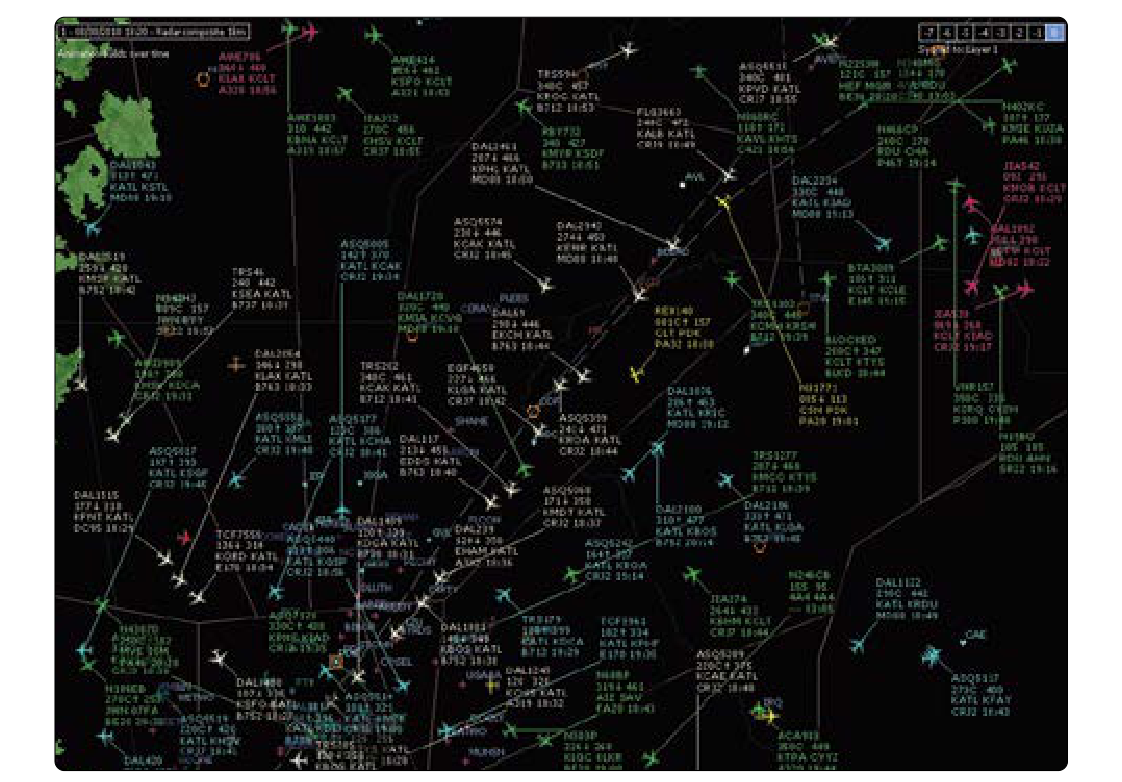
That code uses a Gillham code format — a modified Gray code that encodes pressure altitude in 100-foot increments. The encoder passes this code to the transponder over a wiring harness. When the transponder receives a Mode C interrogation from a ground radar facility, it appends the altitude code to its reply pulse. The radar computer on the ground decodes that reply and displays a small altitude readout next to your target on the controller's scope. The entire process happens in milliseconds and repeats every radar sweep — typically every four to twelve seconds depending on the facility.
Pressure Altitude vs. Indicated Altitude
This distinction is critical. The encoder always reports pressure altitude — the altitude above the standard datum plane (29.92 in Hg), regardless of whatever altimeter setting you have dialed into the Kollsman window. The radar computer at the ATC facility is programmed with the current local altimeter setting for your area, and it automatically applies a mathematical correction to convert the raw pressure altitude into a more meaningful indicated altitude for the controller. This means that even if you have the wrong altimeter setting in your window, ATC still receives an accurate picture of your pressure altitude — and they will notice if something is off. If the corrected value on their scope does not match your filed altitude, you will hear about it.
The practical takeaway: if ATC ever says your Mode C readout appears to be in error, you are required to turn off altitude reporting (by selecting Mode A or placing the transponder in the ALT-off position) to prevent the erroneous data from interfering with other traffic's TCAS systems and controller workload. You may continue flying, just without altitude reporting.
Why the System Matters
Altitude reporting is not just a bureaucratic requirement — it is a foundational safety layer in the NAS. Several systems depend directly on Mode C data:
- Traffic Alert and Collision Avoidance System (TCAS/ACAS): Airline and charter aircraft use TCAS to generate Resolution Advisories (RAs) that tell pilots to climb or descend to avoid conflicts. TCAS cannot function properly without accurate Mode C altitude reports from surrounding aircraft, including general aviation pilots.
- ATC conflict alerting: Modern radar systems use altitude data to automatically alert controllers when two aircraft are converging at similar altitudes, providing a critical safety backstop for separation.
- MSAW (Minimum Safe Altitude Warning): Ground systems compare your reported altitude against terrain and obstacle databases. Without altitude reporting, you lose this safety net in busy terminal environments.
- Situational awareness for controllers: In busy terminal areas, controllers may be working dozens of targets simultaneously. The altitude tag on your target is often the quickest way they confirm you are on the correct altitude for your clearance.
Key Numbers and Rules
The FAA's regulatory requirements for encoding altimeters and Mode C transponders are found primarily in 14 CFR Part 91, Section 91.215 and Section 91.411. Instrument candidates must know these specifics cold:
- Mode C required airspace: An operating Mode C transponder is required in Class A, Class B, and Class C airspace; within 30 nautical miles of a Class B primary airport (the Mode C veil), from the surface to 10,000 feet MSL; within the lateral boundaries of the Class B or Class C surface areas designated for an airport, above the ceiling of that airspace, up to 10,000 feet MSL; and above 10,000 feet MSL throughout the contiguous United States (except at or below 2,500 feet AGL).
- Altitude reporting tolerance: Per 14 CFR 91.217, the altitude reported by Mode C must be within ±125 feet of the actual pressure altitude. If the system is out of this tolerance, it must be turned off or repaired before flight into altitude-reporting required airspace.
- Transponder inspection interval: Under 14 CFR 91.413, the transponder — including its altitude reporting function — must be tested and inspected in accordance with Appendix F of Part 43 every 24 calendar months. This is frequently paired in test questions with the pitot-static system check (also 24 calendar months under 91.411 for IFR flight).
- Pitot-static system IFR check: While not part of the transponder itself, the static system the encoder relies on must be checked under 91.411 every 24 calendar months before the aircraft can be flown IFR. This check verifies the entire static system, including the altimeter and the encoder's static input.
- ATC altitude verification: When asked by ATC to confirm altitude, a Mode C-equipped aircraft should read back the actual cockpit altitude so the controller can verify the ±125 foot tolerance is being maintained.
- Squawk codes for altitude reporting: Mode C altitude encoding is only active when the transponder is set to ALT mode. Selecting Mode A (or STBY) disables altitude reporting while leaving the transponder code visible to radar.
The Encoding Altimeter vs. a Standard Altimeter
Students sometimes assume the cockpit altimeter face and the encoder are one inseparable unit. They are not necessarily linked. A blind encoder installation places the encoding device out of sight — often in the avionics bay — with its own static port connection. This means an aircraft can have a perfectly functional cockpit altimeter and a failed blind encoder, or vice versa. When troubleshooting an ATC callout about an incorrect Mode C readout, the first step is checking whether the encoding device and the cockpit altimeter share the same static source. A blockage or leak in one branch of the static system that affects the encoder but not the primary altimeter (or vice versa) can cause exactly this discrepancy.
When static port blockage affects the encoder, the altitude code freezes or drifts, yet your cockpit altimeter may continue reading normally if its static source is unaffected. This is one reason the IFR pitot-static check under 91.411 specifically verifies the integrity of the entire system, including any encoder connections.
Common Test Traps
- Confusing pressure altitude with indicated altitude in the Mode C report: The transponder always transmits pressure altitude. ATC corrects for local altimeter setting on their end. Do not say the transponder broadcasts indicated altitude.
- Mixing up inspection intervals: Both the transponder and the IFR pitot-static system require checks every 24 calendar months, but they are separate requirements under different sections (91.413 and 91.411). The test often presents them together to see if you know both citations and purposes.
- The ±125-foot tolerance trap: Students often round this to ±100 feet or ±150 feet. The regulatory value is specifically 125 feet per 91.217. Memorize it exactly.
- The Mode C veil radius: Mode C is required within 30 nautical miles of the primary Class B airport — not 20 nm, not 25 nm. The answer is 30 NM, and the veil extends from the surface upward.
- Forgetting to turn off altitude reporting when faulty: If ATC advises your Mode C is inaccurate, you are expected to stop transmitting altitude (select Mode A or follow ATC instruction). Continuing to broadcast incorrect altitude data could trigger false TCAS advisories in nearby aircraft.
Mastering the encoding altimeter and Mode C system is about more than passing a test question. Every time you select ALT on your transponder and climb into controlled airspace, you are contributing real-time data to the safety web that protects you and every other pilot sharing that airspace. Understanding the tolerances, the regulatory requirements, and the limitations of the system makes you a safer, more professional instrument pilot.