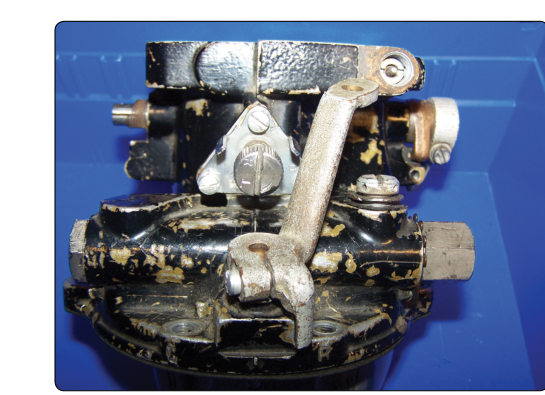
When a reciprocating aircraft engine is running at idle — throttle nearly closed, RPM at its lowest steady operating speed — the carburetor or fuel injection system must still deliver a carefully controlled fuel-air mixture to each cylinder. Get that mixture too rich or too lean, and the engine will run roughly, foul spark plugs, stumble on acceleration, or even quit entirely. Idle mixture and idle speed adjustments are among the most fundamental and frequently required tuning tasks an Aviation Maintenance Technician (AMT) performs on aircraft fuel metering systems. Understanding the underlying physics, the correct procedure, and the telltale signs of a misadjusted system is essential both for the FAA Powerplant knowledge test and for safe, airworthy maintenance practice.
This article focuses primarily on float-type carburetors, which remain the most common fuel metering device on light general aviation engines, but the principles and diagnostic logic apply equally to pressure carburetors and continuous-flow fuel injection systems, with procedural differences noted where relevant.
How the Idle System Works
At idle, the throttle plate (butterfly valve) is nearly closed. The high-velocity airflow that normally acts on the main metering jet is essentially absent. A separate, dedicated idle circuit takes over fuel delivery. In a float-type carburetor, the idle system consists of a small idle jet or restriction, an idle mixture needle (also called the idle mixture adjustment screw), and one or more idle discharge ports located just upstream of the throttle plate — in the area of highest vacuum when the plate is nearly shut.
The idle mixture needle controls how much fuel can flow through the idle circuit by varying the effective cross-sectional area of the fuel passage. Turning the needle inward (clockwise, seating it) reduces fuel flow, leaning the idle mixture. Turning it outward (counterclockwise) increases fuel flow, enriching the mixture. The idle speed adjustment is a separate mechanical stop — often a screw bearing on the throttle linkage — that limits how far the throttle plate can close, setting the minimum RPM the engine maintains at idle. These two adjustments interact: changing idle speed changes airflow through the carburetor throat, which changes the mixture the idle circuit produces, so the two must always be set together in the correct sequence.
On fuel-injected engines, the idle mixture is influenced by the adjustment of the fuel control unit's idle setting, and idle speed is set at the throttle stop similarly to carbureted systems. The diagnostic techniques differ somewhat, but the go/no-go criterion — RPM rise on mixture cutoff — is the same fundamental test.
Why Correct Adjustment Matters
An improperly adjusted idle mixture causes problems throughout the power range, not just at idle. A mixture that is too rich at idle produces incomplete combustion, deposits carbon on spark plugs, and causes the engine to run rough and smoke at low power. When the pilot advances the throttle for takeoff, a rich idle can cause a momentary stumble as the transition from the idle circuit to the main metering system occurs. More dangerously, a chronically rich idle fouls the lower spark plugs, which are already more prone to fouling due to oil accumulation. A mixture that is too lean at idle may cause the engine to run unevenly or die when the throttle is closed quickly — because there is insufficient fuel to sustain combustion at the reduced airflow. A lean idle can also result in backfiring through the induction system.
Correct idle speed is equally important. Set too high, idle speed wastes fuel, increases brake wear during taxi, and may mask a lean mixture condition. Set too low, the engine may die during prolonged taxi, when carburetor heat is applied (which leans the mixture), or during the power reduction following a touch-and-go landing.
Performing the Adjustment — Step by Step
Before beginning any idle adjustment, the engine must be at normal operating temperature. Adjustments made on a cold engine will be inaccurate because viscosity, thermal expansion of the needle, and mixture requirements all change with temperature. Run the engine until oil temperature and cylinder head temperature are in the normal operating range.
- Set initial idle speed. With the engine warmed up, adjust the idle speed screw so the engine is running at approximately the manufacturer's specified idle RPM — often cited in the general vicinity of 600 to 650 RPM for many light aircraft engines, though this varies significantly by engine model and the exact figure is always found in the engine manufacturer's instructions or the Aircraft Maintenance Manual (AMM), never assumed. The tachometer must be in good calibration.
- Check idle mixture using the mixture control. With the engine running at the set idle speed, slowly move the mixture control from the FULL RICH position toward IDLE CUT-OFF while watching the tachometer carefully. A correctly adjusted idle mixture will produce a slight, momentary RPM rise — often cited as being on the order of 25 to 50 RPM on many engines — before RPM drops as the engine begins to starve and die. This rise indicates that the idle mixture was slightly rich of peak at idle, which is the target condition. The exact acceptable rise varies by engine and manufacturer, so the AMT must always consult and use the applicable manufacturer's manual figure rather than assume a universal number.
- Interpret the result. If RPM rises more than the specified amount before dropping (a large rise), the idle mixture is too rich — lean it by turning the idle mixture needle inward (clockwise). If RPM does not rise at all and the engine simply quits or stumbles immediately when the mixture is leaned, the idle mixture is too lean — enrich it by turning the needle outward (counterclockwise). Adjustments should be made in small increments: typically no more than one-eighth to one-quarter turn at a time.
- Repeat the check. After each adjustment, allow the engine to stabilize for 30 seconds to a minute, then repeat the mixture cutoff check. Continue adjusting until the correct RPM rise is achieved.
- Recheck and correct idle speed. Once the mixture is correctly set, verify that idle speed is still at the manufacturer's specification. The mixture adjustment may have changed the RPM slightly. Readjust the idle speed screw if necessary, then recheck the mixture response. Repeat until both settings are simultaneously correct.
- Check acceleration. With idle mixture and speed both correctly set, advance the throttle briskly from idle to a moderate power setting (not full power on the ground). The engine should accelerate smoothly without hesitation, stumbling, or backfiring. A stumble on acceleration after the mixture is correctly set may indicate a problem with the accelerator pump circuit, not the idle system itself.
Key Numbers and Rules
- Engine must be at operating temperature before any idle adjustment — cold-engine settings will be incorrect once the engine warms up.
- Target RPM rise on mixture cutoff: often cited as roughly 25–50 RPM, but this figure varies by engine — always use the specific value in the AMM or engine overhaul manual rather than treating it as universal.
- Adjust in small increments: one-eighth to one-quarter turn per adjustment cycle.
- Adjust mixture first, speed second — then verify both together.
- Idle speed range: often cited in the general range of 600–650 RPM for many certificated light aircraft engines, but this varies by engine model — always verify against manufacturer's data.
- Do not seat the mixture needle with force: the needle tip is tapered and soft; overtightening damages the seat and ruins the adjustment range. Turn only until snug resistance is felt, never crank down hard.
- Safety: all ground run-up adjustments must be performed with the aircraft pointed into the wind, chocks in place, and the area behind the propeller clear.
Idle Adjustment on Fuel-Injected Engines
On Lycoming and Continental engines equipped with continuous-flow fuel injection (such as the Bendix/RSA injector system), idle mixture is adjusted at the fuel control unit via an adjustment on the servo regulator or at the idle valve itself, depending on the system design. The RPM-rise test using the mixture control is still the primary check. The idle speed adjustment remains a throttle-stop screw on the throttle body. Because these systems are more sensitive and their adjustment procedures vary more significantly by model, the AMT must always reference the specific engine and airframe maintenance manuals. Incorrect adjustment of the fuel injection system can also affect fuel flow at cruise power settings, so post-adjustment checks at multiple power settings are important.
Common Test Traps
- Confusing the direction of needle adjustment: Turning the idle mixture needle inward (clockwise, tightening) leans the mixture; turning it outward (counterclockwise, loosening) enriches it. Test questions sometimes describe a symptom and ask which direction to adjust — keep the lean/rich relationship clearly in mind.
- Assuming no RPM rise means correct mixture: No RPM rise on cutoff means the mixture is already at or below peak — it is too lean. The correct signature is a small, positive RPM rise before the engine dies.
- Adjusting on a cold engine: This is explicitly incorrect procedure. The FAA knowledge test may present a scenario where the technician adjusts idle on a cold engine — this is always a wrong answer.
- Forgetting to recheck idle speed after mixture adjustment: The two settings interact. Setting mixture without subsequently verifying speed is incomplete and a common procedural error highlighted on the test.
- Overtightening the mixture needle: The needle must never be forced against its seat. Candidates must know that the needle tip can be damaged and the carburetor body seat can be ruined by overtightening, requiring carburetor replacement or overhaul.
Mastering idle mixture and idle speed adjustment is one of the most hands-on, practical skills in the AMT powerplant toolkit. When done correctly and systematically — always with the manufacturer's data in hand — it results in an engine that starts reliably, idles smoothly, and accelerates cleanly, giving pilots and passengers the safe, dependable operation that is the foundation of all certificated aircraft maintenance.