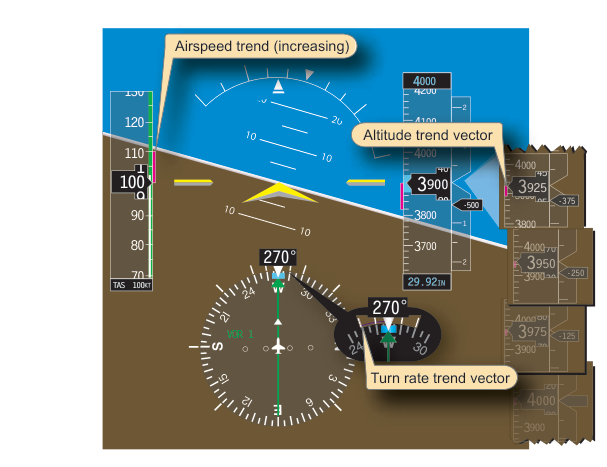
One of the cornerstones of attitude instrument flying is understanding which cockpit instruments are doing the heavy lifting at any given moment. The Federal Aviation Administration divides the instrument panel into two functional categories when teaching instrument scan technique: primary instruments and supporting instruments. This distinction is not arbitrary — it reflects a logical, prioritized way of reading the cockpit that keeps a pilot from becoming fixated on one gauge or overwhelmed by the panel as a whole. Nowhere is this framework more directly applied than in power control, where the goal is to establish and hold a specific power setting that produces the desired aircraft performance.
Understanding primary and supporting instruments for power control will not only sharpen your scan in the clouds — it will directly improve your performance on the FAA Instrument Rating knowledge test, where questions about which instrument is "primary" for a given axis or phase of flight appear regularly. Let's build that understanding from the ground up.
The Primary-Supporting Framework Explained
The Instrument Flying Handbook (FAA-H-8083-15) establishes the primary-and-supporting concept as part of the control-and-performance method of attitude instrument flying. In this method, the pilot uses control instruments — primarily the attitude indicator and the power controls — to establish a desired aircraft attitude and power state. The pilot then cross-checks performance instruments to verify that the aircraft is actually achieving the intended result.
Within performance instruments, the handbook distinguishes between two roles:
- Primary instrument: The single instrument that gives the most direct, relevant, and sensitive indication of whether the aircraft is maintaining the desired value for a specific flight parameter at that moment. It is the instrument you should center your scan on when you want to know "am I nailing this parameter right now?"
- Supporting instruments: The other instruments that provide backup or trend information about the same parameter, or that confirm the picture the primary instrument is painting. They are used in the cross-check but are not the single best source for that one parameter in that phase of flight.
It is critical to understand that the labels "primary" and "supporting" are not fixed properties of any gauge. The same instrument can be primary in one phase of flight and supporting in another. What determines the label is the specific parameter you are trying to control and the phase of flight you are in.
Power Control: What Are We Actually Controlling?
Power control in instrument flying is the pilot's management of thrust — using the throttle to set and hold a specific engine output that, combined with a given pitch attitude, produces the desired aircraft performance (airspeed, climb rate, or descent rate). The goal is to establish a power setting and then leave it alone unless a deliberate change is needed, rather than constantly chasing the throttle.
When we talk about primary and supporting instruments for power control specifically, we are asking: "Which instrument tells me most directly whether my power setting is producing the energy state I want?" The answer depends on what you are trying to hold steady.
The Primary Instrument for Power Control
In straight-and-level cruise flight — the baseline condition — the pilot has set a target airspeed. The power is adjusted to achieve and hold that airspeed while pitch is used to hold altitude. In this scenario, the airspeed indicator is the primary instrument for power control. Here's why: airspeed is the most direct, real-time consequence of power changes in level flight. If power is correct, airspeed is on target. If power sneaks up or decays, airspeed moves first and most obviously. No other single instrument reflects the power state as immediately and meaningfully during level flight.
The airspeed indicator earns the "primary" label because it is the most direct measure of the parameter you are controlling with power in that phase of flight. Think of it this way — you set a power value on the manifold pressure gauge or tachometer, and the airspeed indicator is the instrument that confirms whether that power is producing the speed you want.
Supporting Instruments for Power Control
While the airspeed indicator is primary for power in level flight, several other instruments play a supporting role:
- Manifold pressure gauge (or tachometer on fixed-pitch propeller aircraft): This is the most direct indicator of what you have actually set on the power controls. It does not tell you what the aircraft is doing, but it tells you the power value you have commanded. Use it to make initial power settings and to cross-check that the throttle has not crept. It supports the airspeed indicator by confirming the source of any speed deviation.
- Vertical speed indicator (VSI): In level flight, an uncommanded climb or descent is often a sign that power has changed relative to the trimmed condition. If airspeed is creeping up and the VSI shows a climb beginning, the power picture is clear. The VSI supports the conclusion drawn from the airspeed indicator.
- Altimeter: In level flight, a sustained altitude deviation that cannot be explained by pitch alone may point to a power change. The altimeter is a lagging indicator for power, but it supports the overall cross-check.
- Attitude indicator: While primarily a control instrument, the attitude indicator can support power assessment indirectly. If pitch attitude is correct but airspeed is decaying, the pilot knows the issue is power, not pitch.
How Primary Shifts With Phase of Flight
One of the most tested nuances of this topic is that the primary instrument for power changes depending on what you are trying to hold constant with the throttle.
- Level flight at constant airspeed: Airspeed indicator is primary for power. Pitch attitude (attitude indicator + altimeter cross-check) controls altitude.
- Constant-airspeed climb or descent: The airspeed indicator remains primary for power during a constant-airspeed climb or descent, because airspeed is still the parameter being controlled with power. Pitch controls the flight path angle.
- Constant-rate climb or descent: Here the pilot is holding a specific vertical speed (e.g., 500 fpm descent on a published approach). In this case, the vertical speed indicator becomes primary for pitch, because the VSI directly reflects whether the pitch attitude is producing the desired rate. The airspeed indicator remains primary for power in this context, since power is what is used to hold the target airspeed while pitch controls the rate.
- During slow flight or approach to landing: At approach speeds where the aircraft is on the back side of the power curve, power directly controls the descent rate and even altitude. The relationship tightens between power and vertical performance, making the VSI or altimeter more directly relevant as primary pitch indicators depending on the specific maneuver, while airspeed continues to serve as the primary power reference.
Understanding these transitions is the heart of attitude instrument flying proficiency. The scan is not static — it evolves with every phase of flight, and labeling the instruments correctly in each phase keeps you from chasing the wrong needle.
Why This Framework Matters
Flying in instrument meteorological conditions (IMC) means your only reliable world is the instrument panel. Fixation on a single gauge — or failure to identify which gauge to trust most in the moment — leads directly to spatial disorientation, altitude deviations, and loss of aircraft control. The primary-and-supporting discipline forces structure onto your scan. You know where to look first, you know which instrument is authoritative, and you know which instruments are there to back up or challenge what you think you're seeing.
This discipline also guards against instrument failure mismanagement. If the airspeed indicator fails in level flight (the primary power instrument), the supporting instruments — VSI, altimeter trends, manifold pressure — can work together to give a reasonable substitute picture. Knowing the support network ahead of time means you have a plan before you need it.
Key Numbers and Rules
- The airspeed indicator is primary for power in all constant-airspeed flight phases (level, climbing, or descending at a fixed speed) and remains primary for power even in constant-rate climbs and descents.
- The vertical speed indicator is primary for pitch in constant-rate flight phases (e.g., a timed or published-rate descent), since pitch is used to establish the desired rate.
- The manifold pressure gauge or tachometer is a control instrument reference — it shows what you set, not what the aircraft is doing; treat it as a starting-point check, not a performance confirmation.
- The primary instrument concept applies independently to each axis: pitch, bank, and power each have their own primary instrument that shifts by phase of flight.
- All primary and supporting instrument assignments are defined under the control-and-performance method described in FAA-H-8083-15, Chapter 6.
Common Test Traps
- Confusing primary with "most important." "Primary" means most direct indicator for a specific parameter right now — not the most critical instrument in the cockpit overall. The attitude indicator may be the most critical single instrument, but it is not always the primary for power.
- Forgetting that primary shifts with phase of flight. Students often memorize "airspeed indicator = primary for power" without recognizing that the VSI becomes primary for pitch (not power) during constant-rate climbs and descents.
- Treating the manifold pressure gauge as a performance instrument. It shows commanded power, not achieved performance. It is a cross-check reference, not the primary power performance indicator.
- Assuming supporting instruments are unimportant. The FAA test may ask you to identify supporting instruments; knowing them is just as important as knowing the primary. Supporting instruments catch errors the primary alone might not reveal quickly.
- Applying level-flight logic to the back side of the power curve. In slow flight or on final approach, the conventional pitch-for-airspeed and power-for-altitude relationship can reverse. Know when the standard rules apply and when they do not.