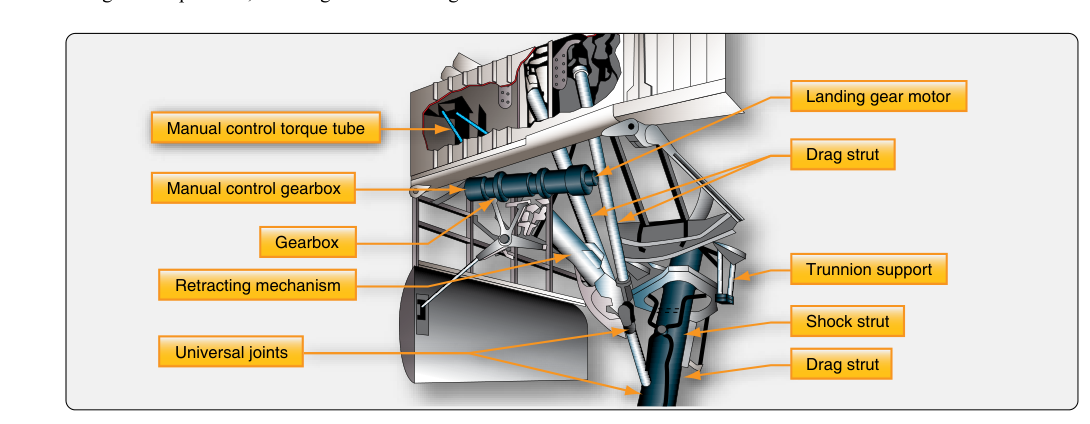
When an aircraft with retractable landing gear begins the retraction cycle, a carefully orchestrated sequence of mechanical and hydraulic events must occur in the correct order. Wheel well doors must open before the gear begins to travel, the gear must fully retract before the doors close, and everything must happen reliably every single time. This is not left to chance or pilot timing — it is engineered into the system through sequencing valves, priority valves, and mechanical interlocks that ensure each component moves only when its predecessor has completed its task.
For the Aviation Maintenance Technician (AMT) candidate working toward an Airframe rating, understanding landing gear retraction sequences is a core competency. The FAA knowledge test and practical test both emphasize how sequencing valves work, how to troubleshoot a sequence failure, and what the consequences of incorrect sequencing can be. This article walks through the complete topic from first principles.
The Purpose of a Retraction Sequence
A simple retractable gear system might seem straightforward: the pilot selects GEAR UP, hydraulic pressure drives actuators, and the gear retracts into the wheel well. In practice, however, the wheel well doors and the gear leg must coordinate precisely. If the gear began retracting before the doors were fully open, the gear door would be struck by the tire or strut — causing structural damage, a jammed system, or worse. Conversely, if the doors closed before the gear was fully seated in the well, the gear would be forced into a partially extended position or the door would be damaged.
The retraction sequence for a typical main gear system therefore follows this order: (1) doors open, (2) gear retracts, (3) doors close. The extension sequence reverses much of this: (1) doors open, (2) gear extends and locks down, (3) some doors close or remain open depending on design. Not every aircraft closes its doors after extension — some leave them open when the gear is down — but every design with wheel well doors requires that they open before gear travel begins.
Hydraulic Sequencing Valves: How They Work
A sequencing valve is a pressure-operated or mechanically-operated control valve that blocks hydraulic flow to a downstream actuator until the upstream actuator has completed its stroke. Think of it as a gatekeeper: it will not allow fluid to reach the gear retraction actuator until the door actuator has finished opening the door.
Pressure-Operated Sequencing Valves
In a pressure-operated sequencing valve, a spring-loaded ball or spool blocks the downstream port. When the upstream actuator (the door actuator, for example) reaches the end of its travel, the pressure in its line rises sharply — because there is no more work being done and flow has stopped. This pressure rise is sensed at the sequencing valve's pilot port. When line pressure exceeds the spring's pre-set cracking pressure, the valve opens and allows fluid to flow to the next actuator in the sequence.
The cracking pressure is carefully calibrated during manufacture and can sometimes be adjusted in the field within limits specified in the aircraft maintenance manual. Setting the cracking pressure too low causes premature sequencing — the downstream actuator starts moving before the upstream one has finished. Setting it too high could cause the system to stall entirely if system pressure cannot overcome the spring.
Mechanically-Operated Sequencing Valves
Some aircraft use cam-operated or trip-arm sequencing valves, where the physical movement of the door or gear linkage mechanically opens the valve. As the door reaches its fully open position, a cam or pushrod contacts the valve stem and unseats it, allowing flow to the gear actuator. This approach is immune to the pressure-spike sensitivity of hydraulic sequencing and is common in older and simpler aircraft systems.
Mechanical sequencing valves must be rigged precisely. If the cam contact point is adjusted incorrectly, the valve may open too early (before the door is fully open) or not open at all. The aircraft maintenance manual provides exact measurements and rigging procedures that must be followed carefully.
Priority Valves and Their Role
Closely related to sequencing valves are priority valves. While sequencing valves control the order of events, a priority valve ensures that critical systems receive hydraulic pressure before less essential systems. In a landing gear circuit, for example, a priority valve might ensure that the main gear receives full pressure before the nose gear actuator is supplied, or that the braking system is protected even if system pressure is low. Priority valves are typically spring-loaded and will only direct flow to secondary actuators once upstream pressure is adequate to simultaneously serve the primary function.
Downlock and Uplock Mechanisms
The sequencing system also interfaces with the gear's mechanical locking devices. Each gear has an uplock (which holds the gear in the retracted position) and a downlock (which holds it in the extended position). During retraction, the downlock must be hydraulically or mechanically released before the gear begins its travel. During extension, the gear must drive itself past center or into a locking lug to engage the downlock before the system pressure is removed.
Many aircraft use hydraulic unlocking — a small unlocking actuator or a built-in feature of the main actuator first releases the downlock, then continues to drive the gear up. The sequencing ensures that this unlock event occurs within the actuator stroke, not as a separately timed event. Many aircraft use mechanical uplock hooks that the gear snaps into at the end of the retraction stroke, latching without continuous hydraulic pressure, though some designs instead use hydraulically or pneumatically held uplocks. This means the gear stays up even if hydraulic pressure is lost — an important safety feature. To extend the gear, hydraulic pressure must first release the uplock hook before the gear can fall away.
Gear Position Indicating Systems
The cockpit gear position indicator is driven by microswitches or proximity sensors positioned at the downlock, uplock, and door-open positions. A green light indicates gear down and locked. A red light (or no light on some designs) indicates gear in transit. Depending on the design, no light (or an amber/red in-transit light) may be used with the gear up; indicating logic varies significantly by aircraft, so this cannot be generalized as a universal rule. The AMT must understand that the indicating system and the sequencing system are separate — a failed microswitch can show a false indication without affecting the actual gear position.
Key Numbers and Rules
- Three-position cycle: The basic sequence is always doors open → gear travel → doors closed (for retraction) and doors open → gear extend → (doors may close) for extension.
- Cracking pressure: Pressure-operated sequencing valves open at a pre-set pressure that must be within the tolerance specified in the aircraft maintenance manual — not a universal figure but aircraft-specific.
- Rigging tolerance: Mechanically-operated valves must be rigged to manufacturer specifications; even a few thousandths of an inch of misadjustment can cause early or late sequencing.
- Gear-up indication: Uplocks are mechanical; hydraulic pressure is not required to hold gear in the retracted position on most aircraft.
- Gear-down locks: Downlocks must be positively engaged (over-center or into a lug) to hold the gear extended; the landing gear safety switch (squat switch) prevents inadvertent gear retraction while the aircraft's weight is on the wheels, independent of downlock status.
- Emergency extension: Manual or pneumatic emergency systems bypass the normal hydraulic sequencing valves; many designs still open the gear doors mechanically or via separate release before free-fall, though door sequencing is not coordinated the way it is in normal operation.
Troubleshooting Sequence Failures
When a gear system fails to sequence properly, the AMT must work systematically. A door that does not open before the gear starts moving points to a failed or misrigged sequencing valve on the door circuit. A gear that retracts but whose doors do not close after indicates the sequencing valve controlling door-close is stuck open, allowing constant flow to the door-close circuit, or has failed in the open position. A gear that stops mid-travel often means the sequencing valve has cracked prematurely and diverted pressure to the door-close circuit before the gear reached its uplock.
Always consult the hydraulic schematic in the aircraft maintenance manual before condemning any component. Trace the flow path: identify which actuator is supposed to be moving at the moment the failure occurs, determine what sequencing valve controls flow to that actuator, and test or inspect that valve. Check for contaminated fluid causing valve stiction, incorrect cracking pressure setting, or a ruptured O-ring bypassing the valve spool.
Common Test Traps
- Confusing sequencing and priority valves: Sequencing valves control the order of actuator travel within a circuit. Priority valves ensure a critical system is served before others when pressure is limited. They are not interchangeable terms.
- Assuming emergency extension follows normal sequence: Emergency extension intentionally bypasses sequencing — doors may be damaged because gear travel is not coordinated with door position in an emergency blow-down or free-fall situation.
- Cracking pressure misconceptions: Students sometimes think a higher cracking pressure is always safer. Too high and the sequencing valve may never open, causing the system to stall entirely.
- Uplock versus downlock confusion: The uplock holds gear retracted (mechanical, no hydraulic pressure needed to maintain). The downlock holds gear extended (must be positively engaged over-center or into a lug before landing).
- Indicator light versus actual gear position: A green light confirms the downlock microswitch is actuated — not directly that the gear is structurally down. A failed switch can give a false green. AMTs must understand the distinction between the indicating system and the mechanical system.