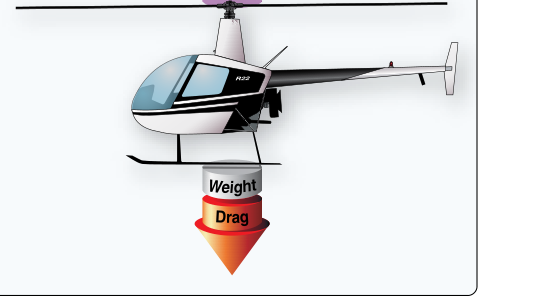
Every time a Light-Sport Aircraft (LSA) lifts off the runway, four invisible but very real forces are wrestling for control of the airplane simultaneously. Lift, weight, thrust, and drag—the four forces of flight—govern every maneuver from the takeoff roll to the landing flare. The FAA's Pilot's Handbook of Aeronautical Knowledge (PHAK, FAA-H-8083-25) dedicates an entire chapter to these forces because no matter how light, slow, or simple the aircraft, the physics never change. For the Sport Pilot candidate, internalizing not just what each force is but how it behaves quantitatively, how the forces interact with one another, and how LSA-specific design constraints amplify their importance is the difference between memorizing a definition and truly flying the airplane.
The Fundamental Balance Equation
In straight-and-level, unaccelerated flight, the four forces exist in two opposing pairs: lift equals weight, and thrust equals drag. This is often called equilibrium, or trimmed flight. The moment any single force changes—engine power reduced, flaps extended, a gust of wind increases angle of attack—the equilibrium breaks and the aircraft accelerates, decelerates, climbs, or descends until a new balance is reached or the pilot intervenes. Every control input you will ever make as a Sport Pilot is, at its core, an intentional disturbance of this balance followed by establishing a new one. That is why the PHAK treats these four forces as foundational to all of aerodynamics.
Lift: The Upward Force
Lift is generated primarily by the wings. As air meets the leading edge of the airfoil, the shape of the wing—curved on top, flatter on the bottom—causes airflow over the upper surface to accelerate. By Bernoulli's principle, that accelerated airflow produces a region of lower static pressure above the wing. Simultaneously, the wing deflects air downward (Newton's third law), and the reaction force pushes the wing upward. Both mechanisms contribute to lift, and together they produce a net aerodynamic force that acts perpendicular to the relative wind, not simply straight up toward the sky. This distinction matters enormously in banked turns, as discussed below.
The lift equation from the PHAK is: Lift = CL × ½ρV² × S, where CL is the coefficient of lift (driven primarily by angle of attack), ρ is air density, V is true airspeed, and S is wing area. Four variables—and an LSA pilot has meaningful influence over all of them. Flying at a high-elevation airport on a hot summer day reduces ρ significantly, meaning the wing must compensate with a higher angle of attack or greater airspeed to produce the same lift. Because LSAs are already operating near the slower end of the general aviation speed spectrum—many cruise well under 100 knots indicated—their angle-of-attack margins are tighter and density-altitude effects show up quickly in climb performance.
Weight: The Relentless Downward Pull
Weight is the total force of gravity acting downward through the aircraft's center of gravity (CG). Every element contributes: the empty airframe, engine oil, usable fuel, the pilot, a passenger, and any baggage. Under the definition of light-sport aircraft in 14 CFR 1.1, a landplane (including gliders) may not exceed a maximum gross weight of 1,320 pounds (600 kg), while a seaplane's limit is 1,430 pounds (650 kg). That ceiling is not a guideline—it is one of the regulatory criteria that defines whether an aircraft qualifies as a light-sport aircraft at all, and exceeding it is illegal as well as aerodynamically dangerous.
The practical consequence of that low weight ceiling is sensitivity. Adding 20 pounds of gear to a 1,300-pound airplane is proportionally far more impactful than adding the same 20 pounds to a 3,000-pound Cessna 172. That extra weight demands more lift, which demands a higher angle of attack or higher airspeed, which increases induced drag, which demands more thrust—a chain reaction that cascades through all four forces. Weight also acts through the CG, and in an aircraft with narrow CG limits, improper loading can shift the balance point enough to degrade stability or controllability even before the gross weight limit is reached.
Thrust: The Forward Force
Thrust is produced by the powerplant—in most LSAs, a single air-cooled piston engine turning a fixed-pitch or ground-adjustable propeller. Thrust acts roughly parallel to the aircraft's longitudinal axis (with a slight offset in some designs to counteract propeller torque effects). The propeller accelerates a mass of air rearward; by Newton's third law, the reaction propels the aircraft forward.
A fixed-pitch propeller is optimized for one combination of airspeed and engine RPM—often either cruise or climb, depending on the manufacturer's intent. At other flight regimes, efficiency suffers. This is a key LSA design consideration: unlike larger aircraft with constant-speed propellers, most Sport Pilots cannot adjust blade angle in flight, so understanding how RPM, airspeed, and thrust interact at various phases of flight is important. At full throttle on a hot, high-altitude day, engine power drops because the engine ingests less dense air, producing less combustion energy—thrust falls, and the aircraft's climb rate can diminish dramatically.
Drag: The Rearward Resistance
Drag acts rearward, parallel and opposite to the relative wind—it is the total aerodynamic resistance to the aircraft's forward motion. The PHAK divides drag into two fundamental types:
- Parasite drag is caused by non-lift-producing components: the fuselage, landing gear, antennas, struts, and any surface that disrupts smooth airflow. Parasite drag increases with the square of airspeed—double your speed and parasite drag quadruples. LSA designers minimize this through streamlined fuselages, retractable or faired gear, and clean airframe lines.
- Induced drag is a byproduct of lift generation. When a wing produces lift, high-pressure air beneath the wing spills around the wingtip toward the lower-pressure region above, creating wingtip vortices. These vortices tilt the local lift vector rearward, producing a drag component. Induced drag increases as angle of attack increases and as airspeed decreases—the exact opposite behavior from parasite drag.
Total drag is the sum of both types, and when plotted against airspeed it forms a characteristic U-shaped curve. The lowest point of that curve—where total drag is minimized—corresponds to the aircraft's best glide speed and maximum lift-to-drag ratio (L/D max). Flying at or near this speed gives the longest glide in an engine-out emergency and represents the most aerodynamically efficient operating point. For many LSAs, this speed is in the range of 60–70 knots indicated, though pilots should always consult the specific Pilot's Operating Handbook (POH) for their aircraft.
How the Forces Interact in Maneuvers
Climbs
In a stabilized climb, thrust must exceed drag to accelerate the aircraft up the flight path, and lift need only equal the component of weight acting perpendicular to that path—not the full weight. This is why steeper climbs actually require less lift than level flight (the weight component along the flight path is handled by thrust), but they demand considerably more thrust. Reduced engine performance at high density altitude therefore cuts climb rate sharply in LSAs, which typically have modest power-to-weight ratios.
Turns
In a banked turn, the lift vector tilts with the aircraft. Part of it now acts horizontally as centripetal force to curve the flight path; the remaining vertical component must still equal weight to prevent a descent. To maintain altitude in the turn, the pilot must increase total lift—usually by increasing back pressure to raise angle of attack. More lift means more induced drag, which means more thrust is needed. Steeper bank angles amplify all of these effects rapidly. In a 60-degree bank, the load factor is 2G, stall speed increases by approximately 41 percent, and the power required rises substantially—significant margins for an LSA operating near its performance limits.
Descents and Glides
When thrust is reduced below the level needed to maintain level flight, the drag and the weight component along the descending flight path combine to decelerate and lower the aircraft. At best glide speed (L/D max), the ratio of lift to drag is maximized, giving the greatest horizontal distance per unit of altitude lost. Flying slower than best glide increases induced drag and steepens the glide; flying faster increases parasite drag with the same result. Knowing this speed from memory—and from the POH—is a genuine safety skill, not just a test answer.
LSA-Specific Implications
The 1,320-pound weight limit, modest engine power, and lower operating speeds that define the LSA category make the four forces feel more immediate than in heavier general aviation aircraft. Margins are narrower. Density altitude hits performance harder relative to available thrust. Small weight additions shift the balance more noticeably. Efficient airframe design is more critical because there is less excess thrust to overcome inefficiency. Every aerodynamic principle in the PHAK applies to LSAs—but the consequences of ignoring them are compressed into a tighter operating envelope.
Key Numbers and Rules
- LSA landplane maximum gross weight: 1,320 lb (600 kg) per the light-sport aircraft definition in 14 CFR 1.1 (seaplanes: 1,430 lb/650 kg).
- LSA maximum airspeed in level flight (Vh): not more than 120 knots calibrated airspeed (KCAS), one of the defining criteria for a light-sport airplane under 14 CFR 1.1.
- Lift acts perpendicular to the relative wind—not straight up.
- Drag acts parallel and opposite to the relative wind—not simply opposite to thrust.
- Parasite drag varies with the square of airspeed; induced drag varies inversely with airspeed.
- At L/D max (best glide speed), total drag is minimized and glide ratio is maximized.
- In a 60-degree banked level turn, load factor is 2G and stall speed increases approximately 41 percent.
- All four forces must be considered together—changing one always affects the others.
Common Test Traps
- Lift is not always vertical. It acts perpendicular to the relative wind. In a bank, the lift vector tilts, and only its vertical component opposes gravity—this is why load factor increases in turns.
- Induced drag and parasite drag behave oppositely with airspeed. Induced drag rises as speed decreases; parasite drag rises as speed increases. Mixing these up is one of the most common aerodynamics errors on the Sport Pilot knowledge test.
- In level unaccelerated flight, lift equals weight—not thrust. The correct pairs are lift/weight and thrust/drag. These forces are perpendicular to each other, not interchangeable.
- Exceeding the 1,320-pound gross weight limit is both illegal and dangerous. It increases stall speed, degrades climb performance, and may push the CG outside limits—all at once.
- Thrust does not always act exactly along the flight path. In a climb, the flight path tilts upward; thrust still acts roughly along the longitudinal axis. The geometry changes how each force component is resolved along and perpendicular to the flight path.
- Best glide speed gives maximum range, not minimum sink rate. Minimum sink rate (for maximum time aloft) occurs at a slightly slower speed. Know which one applies to your emergency scenario.
Memory Aid
The classic memory anchor remains reliable: