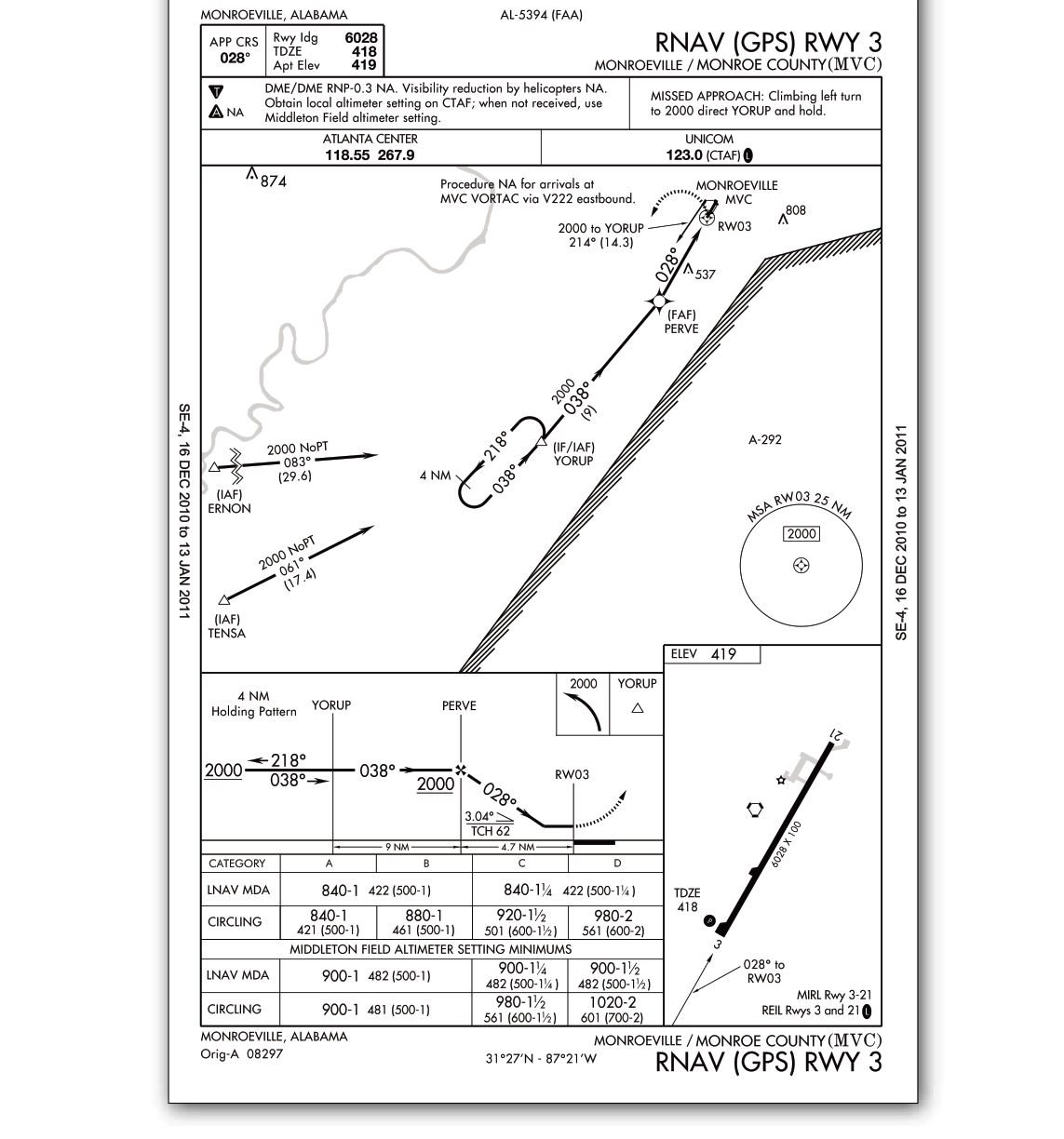
The procedure turn (PT) is one of the most misunderstood elements of the instrument approach. It is a published course reversal that allows a pilot to lose altitude and align with the final approach course when arriving at the initial approach fix (IAF) at an angle that makes a straight-in entry impractical. On a VOR approach, the procedure turn is usually depicted on the plan view as a barbed arrow with a specific heading and timing sequence. Understanding exactly when to fly one, how to enter it correctly, and how to time it properly is not just an exam requirement — it is a critical safety skill that separates competent instrument pilots from dangerous ones.
This article covers the regulatory framework from 14 CFR Part 91 and the instrument procedures guidance from the FAA's Instrument Flying Handbook (FAA-H-8083-15) and Instrument Procedures Handbook (FAA-H-8083-16), giving you both the conceptual understanding and the practical numbers you need to fly these procedures confidently in real IMC.
What a Procedure Turn Is and When It Is Required
A procedure turn is a maneuver designed to reverse course and intercept the final approach course inbound. When the procedure turn symbol — the barbed arrow — appears in the plan view of an approach chart, the procedure turn is authorized. When the notes section or the plan view contains the words "NoPT" (No Procedure Turn), or when the approach specifies a straight-in course reversal such as a hold-in-lieu-of-procedure-turn (HILPT), the procedure turn is not permitted unless ATC specifically clears you for it.
Under 14 CFR §91.175, pilots must follow the published procedure unless ATC issues different instructions. This means if you arrive via a radar vector to final, or if ATC clears you for a straight-in approach, you are not required — and generally not permitted — to fly the procedure turn. Conversely, if you are cleared for the approach and the procedure turn is published with no NoPT restriction applicable to your arrival direction, you must fly a course reversal unless otherwise instructed.
The Three Standard Procedure Turn Entry Methods
The FAA does not mandate a single method for flying the course reversal. Instead, the published procedure specifies the outbound heading and a maximum distance from the fix, and the pilot selects from three accepted methods. Each has distinct characteristics and appropriate use cases.
1. The 45/180 Procedure Turn
This is the most commonly depicted and tested method. After crossing the procedure turn fix, the pilot tracks outbound on the depicted heading, turns 45 degrees in the direction of the barb, flies for a specified time, then turns 180 degrees in the opposite direction to intercept the inbound course. This "teardrop" in miniature keeps the aircraft within the protected airspace and aligns it smoothly with the final approach course. The standard barb symbol on the chart represents this maneuver. Timing on the outbound 45-degree leg typically runs about one minute, though the pilot may adjust as needed to remain within the maximum distance limitation.
2. The 80/260 Procedure Turn
After crossing the fix and flying the outbound heading briefly, the pilot turns 80 degrees in one direction, then immediately reverses and turns 260 degrees in the opposite direction. This results in a tighter, faster course reversal useful when distance is limited. It requires a higher bank angle and more precise timing but places the aircraft on the inbound course in less distance than the 45/180. This method is less commonly depicted but may be used as an alternative when the terrain and protected airspace allow.
3. The Racetrack (Holding Pattern) Entry
When the chart depicts a holding pattern in lieu of a procedure turn (HILPT), the pilot flies a standard holding pattern entry. Unlike a traditional procedure turn, the HILPT is a holding pattern — it uses standard entry procedures (parallel, teardrop, or direct) and the pilot completes a minimum of one full circuit before proceeding inbound on the approach. The inbound leg of the holding pattern becomes the final approach course. It is critical to note that a HILPT is not the same as a procedure turn even though it achieves the same result; the two are handled differently in charting and phraseology.
Timing the Procedure Turn Outbound Leg
One of the most frequently tested specifics is the maximum distance the aircraft may fly outbound before beginning the course reversal. Charted procedure turns commonly specify a remain-within distance of up to 10 nautical miles from the procedure turn fix, but the actual charted distance varies by procedure and must always be checked on the plan view rather than assumed — some approaches specify shorter distances, such as 5 NM. Whatever distance is published is not a timing instruction — it is a boundary you must not exceed. The depicted one-minute or other timing on the 45-degree leg is a guideline to help you remain within that boundary at typical approach speeds.
In practice, timing the outbound leg requires you to account for groundspeed. At 90 knots groundspeed, one minute of flight covers 1.5 NM. If you are flying at 120 knots, one minute covers 2 NM. You must adjust the outbound timing downward at higher speeds to ensure you begin your inbound turn before reaching the charted distance boundary. The Instrument Procedures Handbook recommends pilots use a timing sequence that, combined with aircraft speed, comfortably keeps the reversal within protected airspace.
A practical rule: at higher approach speeds (above 150 knots), many turboprop and jet operators use published speeds and manufacturer guidance, and the controller expects a timely reversal. If you fly a procedure turn at a high speed, shorten your outbound time significantly — or request vectors to final to avoid the maneuver altogether.
Altitude During the Procedure Turn
The procedure turn altitude is the minimum altitude published for the procedure turn segment, found in the profile view of the approach chart. The pilot must remain at or above this altitude throughout the entire procedure turn — both outbound and while maneuvering — until established on the inbound final approach course and within the final approach segment. Descending below the procedure turn altitude before becoming established on the inbound course is a serious deviation and a common fatal error in accident reports.
Once established inbound and past the final approach fix (FAF) with the needle centered and stabilized, descent to the intermediate and then final approach segment altitudes is permitted per the published step-downs or glidepath.
When a Procedure Turn Is Not Authorized
Several situations prohibit a procedure turn even when the barb appears on the chart. Memorize these carefully because they appear often on the instrument knowledge test:
- ATC radar vectors to final: When a controller vectors you to intercept the final approach course, you are not cleared to fly the procedure turn. The vector replaces the course reversal.
- NoPT notation: When a specific arrival route or sector is annotated NoPT on the chart, arriving via that route or sector means no procedure turn is permitted.
- Timed approaches from a holding fix: ATC may sequence multiple aircraft using timed approaches; in this case, procedure turns are not allowed unless specifically cleared.
- Approach from a published feeder route or airway that joins the approach inbound: If you arrive on a route that feeds directly to the FAF in the inbound direction, no procedure turn is required or authorized.
- When specifically told by ATC: A clearance of "straight-in VOR Runway 27 approach" means no procedure turn regardless of what is charted.
Key Numbers and Rules
- Maximum procedure turn distance: commonly up to 10 NM from the procedure turn fix, but always confirm the actual charted distance, as shorter distances (e.g., 5 NM) are also published on many approaches.
- 45/180 method: Turn 45 degrees outbound, fly timed leg, turn 180 degrees opposite to intercept inbound course.
- 80/260 method: Turn 80 degrees one direction, then 260 degrees opposite — tighter, faster reversal.
- HILPT: Fly a standard holding pattern; minimum one circuit; use standard hold entries (parallel, teardrop, direct).
- Procedure turn altitude: Must be maintained at or above throughout the entire reversal until established inbound.
- NoPT: When published for your arrival direction, no course reversal of any kind is permitted.
- Speed consideration: Reduce outbound timing at higher groundspeeds to remain within the charted distance boundary.
Memory Aid
For the situations where a procedure turn is NOT allowed, many instrument students use the phrase "RATN" — Radar vectors to final, ATC says straight-in, Timed approaches from a holding fix, NoPT notation on the chart. While not an official FAA mnemonic, this four-letter check covers the most common exam scenarios and real-world situations where a procedure turn would be an unauthorized deviation.
Common Test Traps
- Confusing authorization with requirement: Just because a procedure turn barb is charted does not mean you must always fly it. ATC clearance and arrival direction determine whether it is required, authorized, or prohibited.
- Treating the charted distance as a timing instruction: The charted remain-within distance is a distance boundary, not a time directive. You must compute your own outbound timing based on groundspeed to stay within it.
- Descending below PT altitude too early: You may not descend to a lower altitude until you are established on the inbound course. Flying the PT at less than the published PT altitude is a violation of the approach procedure.
- Confusing a HILPT with a procedure turn: The two serve the same purpose but are procedurally different. A HILPT uses holding pattern entry rules; a procedure turn uses the 45/180 or 80/260 method. Mixing them up on the exam — or in the cockpit — leads to errors.
- Assuming NoPT on one sector applies to all arrivals: NoPT may be annotated only for specific arrival courses or altitudes. Arriving from a different direction may still require the procedure turn. Always check the full charted annotation, not just the NoPT note in isolation.
Mastering the procedure turn — its entries, its timing math, its altitude discipline, and the specific situations where it is prohibited — is one of the clearest signs that an instrument student truly understands approach procedure design. Get these concepts solidly into your study routine, and both the knowledge test and your checkride will reflect that depth of preparation.