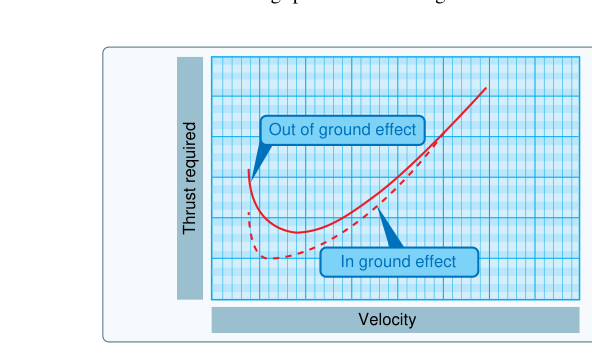
Every pilot has experienced that curious floating sensation just before touchdown — the aircraft seems reluctant to settle onto the runway, as though riding a cushion of air. That phenomenon is ground effect, and understanding it goes far beyond explaining a smooth landing. Ground effect fundamentally changes the aerodynamics of your aircraft whenever you fly within approximately one wingspan of the surface, and it can either help you or trap you, depending on whether you understand what is happening and why.
Ground effect is one of the most frequently tested topics on the FAA Private Pilot Knowledge Test, and it is one of the most practically important concepts you will carry into every takeoff and landing for the rest of your flying career. Let's break it down completely.
How Ground Effect Works
To understand ground effect, you first need to recall how wings generate lift. A wing moving through the air creates a pressure differential — lower pressure above, higher pressure below. At the wingtips, high-pressure air from beneath the wing curls upward and outward around the tips to meet the low-pressure region above, forming wingtip vortices. These rotating masses of air trail behind the aircraft and are a byproduct of lift production. They also produce a rearward-tilted component of lift called induced drag. The stronger the vortices, the greater the induced drag.
Now imagine flying very close to the ground — within about one wingspan of altitude. The ground physically interrupts the normal development of those wingtip vortices. The surface acts as a barrier that prevents the vortices from fully forming and expanding downward. Because the vortices are restricted, the downwash (the downward deflection of airflow behind the wing) is also reduced. Less downwash means the effective angle of attack of the wing is slightly higher than it would be out of ground effect, and crucially, induced drag is significantly reduced — sometimes by as much as 48 percent at very low altitudes (roughly 10 percent of wingspan above the surface).
The practical effect is that the aircraft generates the same (or more) lift for less drag when it is close to the ground. The wing simply becomes more efficient. This efficiency gain increases the closer the aircraft gets to the surface. At an altitude equal to one full wingspan, the reduction in induced drag is relatively small. At an altitude equal to one-quarter of the wingspan, the effect is very pronounced.
Changes in Pressure and Pitching Moment
Ground effect also changes the pressure distribution across the wing. The compression of the airflow between the wing and the ground slightly increases static pressure beneath the wing, which can further boost lift. Additionally, because downwash is reduced, the tail of the aircraft — specifically the horizontal stabilizer — experiences a change in the airflow it encounters. With less downwash reaching the horizontal stabilizer, the stabilizer produces less downward force. This shifts the pitching moment of the aircraft and can cause a nose-up pitching tendency as the aircraft enters ground effect and a nose-down tendency as it exits.
Ground Effect During Takeoff
During takeoff, ground effect creates a genuine hazard for pilots who do not recognize it. Here is the classic scenario: the aircraft accelerates down the runway and becomes airborne at a speed that might be slightly below the normal climb speed. Why? Because within ground effect, induced drag is reduced, so the aircraft can lift off at a lower airspeed than it could sustain in free air. The takeoff feels normal — even impressive — with the aircraft climbing away from the runway surface.
But here is the trap: as the aircraft climbs through approximately one wingspan of altitude, it exits ground effect. Suddenly, induced drag increases to its normal out-of-ground-effect value. If the aircraft was flying at an airspeed insufficient to maintain climb in free air, performance will degrade sharply. The aircraft may be unable to climb further, or it may actually settle back toward the ground. On a short or soft field, or when operating at high density altitude or near maximum gross weight, this transition out of ground effect can be the difference between a successful departure and an accident.
The lesson for pilots is clear: do not attempt to climb out of ground effect prematurely. On short-field or soft-field takeoffs, the Airplane Flying Handbook recommends allowing the aircraft to accelerate in ground effect to a safe climb speed before attempting to climb away. Pulling back too aggressively to clear an obstacle may keep you in ground effect briefly, but attempting to climb at an insufficient speed once you exit that cushion will cost you dearly.
Ground Effect During Landing
During landing, ground effect works in reverse — it causes the aircraft to float past the intended touchdown point. As you descend on final approach and enter ground effect (typically within 10 to 20 feet of the surface for most general aviation aircraft), induced drag suddenly decreases. The aircraft is now more aerodynamically efficient than it was on final, and if you maintain the same power and pitch, it will continue flying rather than descending onto the runway. This is the floating sensation every pilot knows.
If you are flying a stabilized approach at the correct airspeed, a modest float is normal and manageable. The aircraft will eventually settle as speed bleeds off. However, if you are fast on approach — carrying extra airspeed from nerves, wind shear correction, or poor technique — the float will be extended significantly. An aircraft that is 10 knots fast on approach can float for hundreds of feet down the runway before settling, potentially causing a runway overrun.
Ground effect during landing is also affected by surface type. Landing over a smooth, hard surface (paved runway) produces a more pronounced ground effect than landing over rough terrain or water, because a smooth, hard surface more completely restricts the vortex formation beneath the aircraft.
Why It Matters
Ground effect is not merely an academic curiosity — it has been a contributing factor in real aircraft accidents. The most dangerous scenarios include:
- Underpowered or overweight departures: An aircraft that lifts off in ground effect but cannot sustain flight once it exits can crash just beyond the departure end of the runway.
- High-density-altitude takeoffs: At high elevation airports on hot days, the margin between the airspeed needed to fly in ground effect and the airspeed needed to climb in free air narrows considerably. Pilots have crashed departing mountain airports by flying too slowly out of ground effect.
- Runway overruns on landing: Excessive approach speed combined with ground effect floating causes a disproportionate number of general aviation landing accidents each year.
- Seaplane operations: Flying just above the surface of water in ground effect is tempting for efficiency, but exiting it unexpectedly (for example, encountering a wave that forces a climb) can cause a rapid loss of performance.
Key Numbers and Rules
- Ground effect is significant within one wingspan of the surface. For a Cessna 172 with a 36-foot wingspan, that means ground effect is felt below approximately 36 feet AGL.
- Maximum effect occurs at very low altitudes. At 10 percent of wingspan height (about 3-4 feet for a 172), induced drag reduction can approach 48 percent.
- At one full wingspan of altitude, induced drag reduction is only about 1-2 percent — essentially negligible.
- At one-fourth wingspan height, induced drag is reduced by approximately 23 percent.
- At one-tenth wingspan height, induced drag is reduced by approximately 48 percent.
- Ground effect reduces induced drag — it does NOT eliminate parasite drag or total drag entirely.
- Ground effect can allow an aircraft to become airborne below normal climb speed — a fact the FAA Knowledge Test exploits repeatedly.
Common Test Traps
- "Ground effect increases drag" — Wrong. Ground effect decreases induced drag. Students who confuse ground effect with the compression of air (thinking it must add drag) answer this incorrectly.
- Confusing ground effect altitude with height above obstacles — Ground effect is measured in terms of the aircraft's wingspan, not a fixed number like 50 feet. The FAA will give you a specific wingspan and ask you to identify when ground effect becomes significant.
- "The aircraft can always maintain flight once airborne" — False. An aircraft that lifts off in ground effect at below-normal climb speed may be unable to sustain flight after leaving ground effect. Do not confuse becoming airborne with being able to climb.
- Pitching tendency confusion — Students forget that entering ground effect tends to cause a nose-up pitch, while exiting it tends to cause nose-down. This happens because downwash on the horizontal stabilizer changes as the aircraft transitions in and out of ground effect.
- Assuming ground effect always helps the pilot — Ground effect is a double-edged sword. It helps a short-field takeoff roll end sooner, but it can also seduce a pilot into climbing away at a speed that will not sustain flight out of ground effect.
Understanding ground effect is ultimately about respecting the difference between apparent performance and real performance. Within one wingspan of the ground, your aircraft is operating in a modified aerodynamic environment. Climb speed is not the same as liftoff speed. A floating landing is a warning sign, not a sign of skill. Know when you are in ground effect, know when you are leaving it, and fly the numbers — and ground effect will never catch you off guard.